
Warm, earthy shades always bring fresh life to classic manicures, making pretty fall nails autumn french one of the easiest ways to embrace the season without giving up a timeless look. Rich neutrals, glossy finishes, soft metallics, and creative details transform traditional french tips into styles that feel elegant and distinctly autumn-inspired. Every design offers its own personality while preserving the clean, polished finish that makes french manicures so enduring. From subtle everyday looks to statement-worthy nail art, these autumn french manicure ideas and fall french tip designs showcase just how versatile the classic style can be.
1. Cinnamon Glazed French Tips
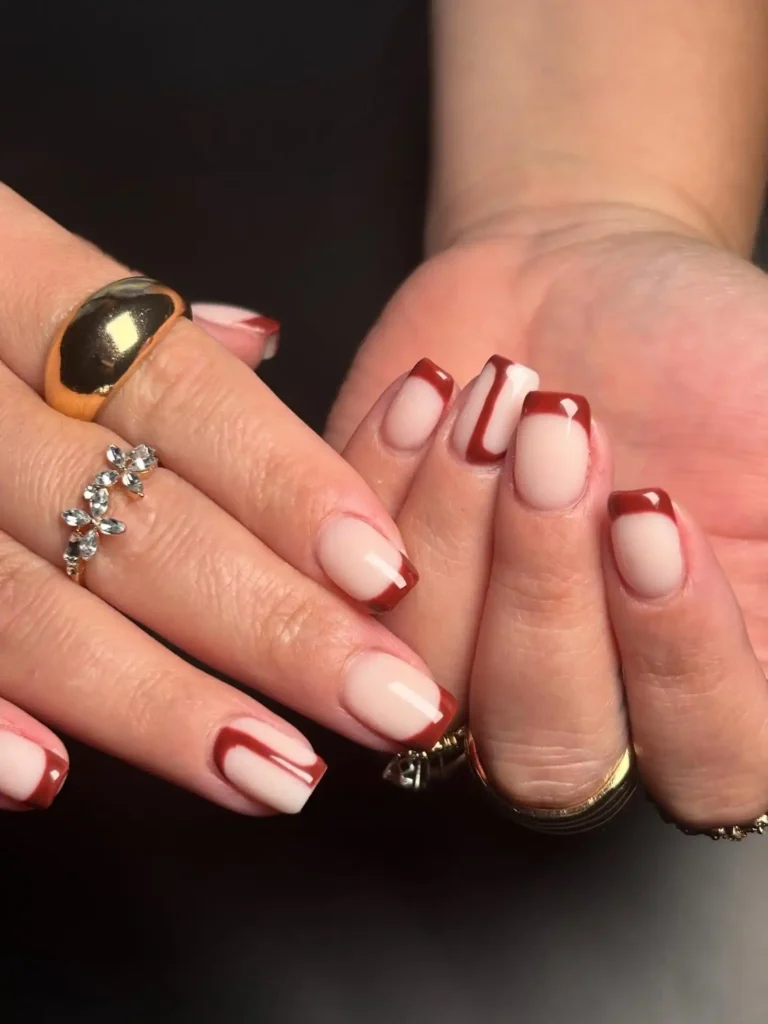
Cinnamon Glazed French Tips arrange a warm, spiced line along the nail edge, replacing the usual crisp white tip with a glazed cinnamon tone. Depth builds where the color meets the natural nail bed, softening the transition instead of leaving a hard edge. Light catches the glazed surface differently depending on the angle, giving the tip line a slight shimmer without any added glitter. Placement stays consistent across all ten nails, keeping the overall composition even and deliberate.
2. Burnt Amber Micro French Nails
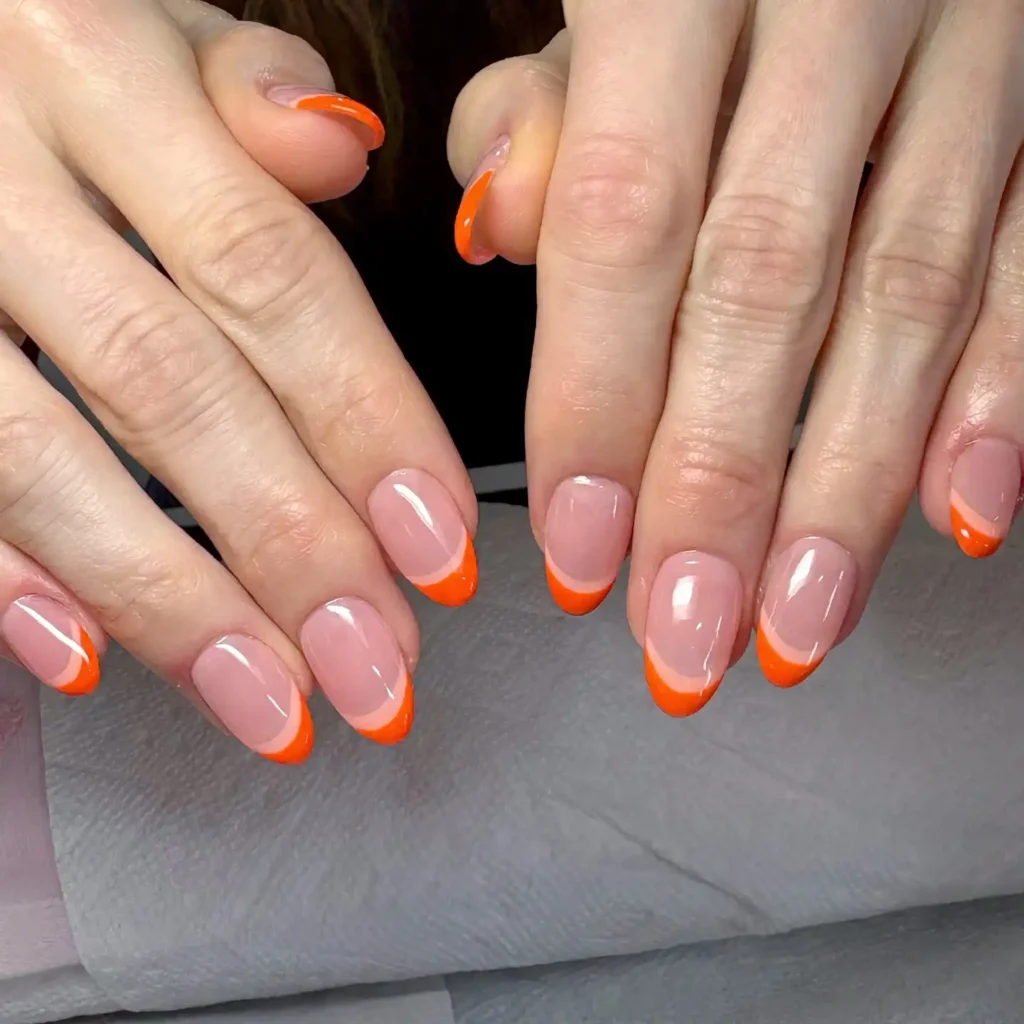
Burnt Amber Micro French Nails trace an especially thin line across the tip, scaling the traditional shape down to a fraction of its usual width. Precision matters here, since the narrow band leaves little room for uneven edges or shaky strokes. Color intensity stays concentrated within that slim strip, letting the deep amber tone read as a quiet accent rather than a bold statement. Negative space dominates the rest of the nail, keeping attention on the fine, controlled line.
3. Espresso Outline French Manicure
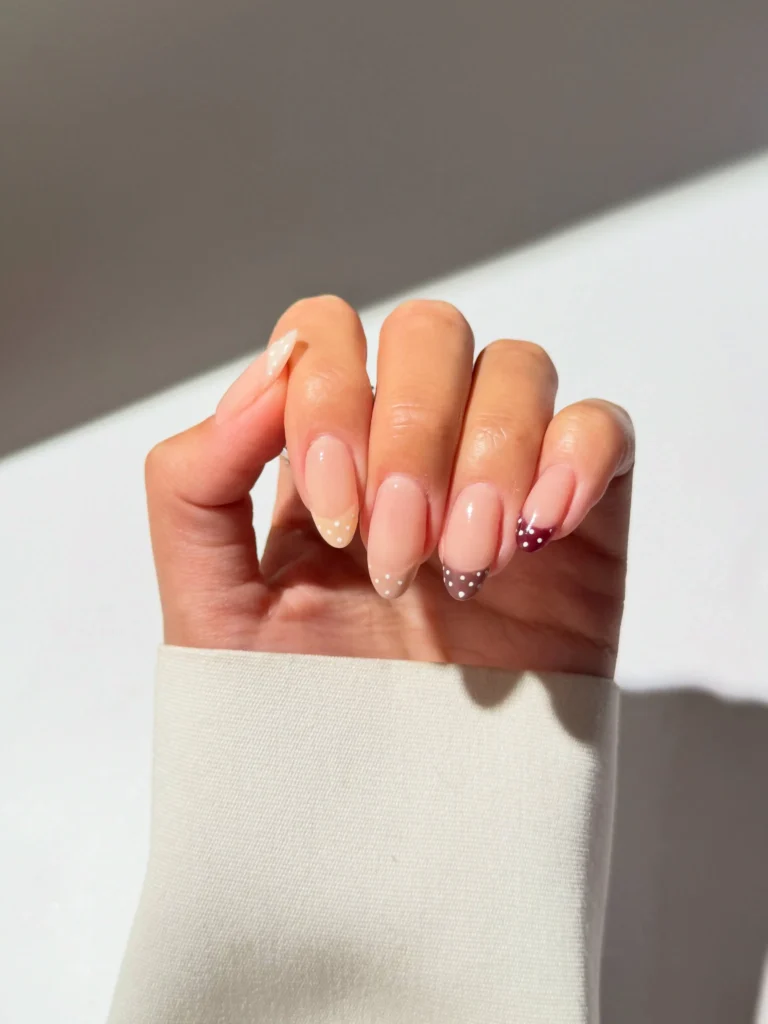
Espresso Outline French Manicure traces the tip in a fine, unbroken line rather than filling the space with solid color. Contrast forms between the dark outline and the bare nail bed left untouched beneath it. Symmetry becomes especially noticeable in this style, since any wobble in the line is immediately visible against the open background. Edges stay sharp from cuticle to tip, giving the outline a graphic, almost hand-drawn quality.
4. Maple Leaf Accent French Nails
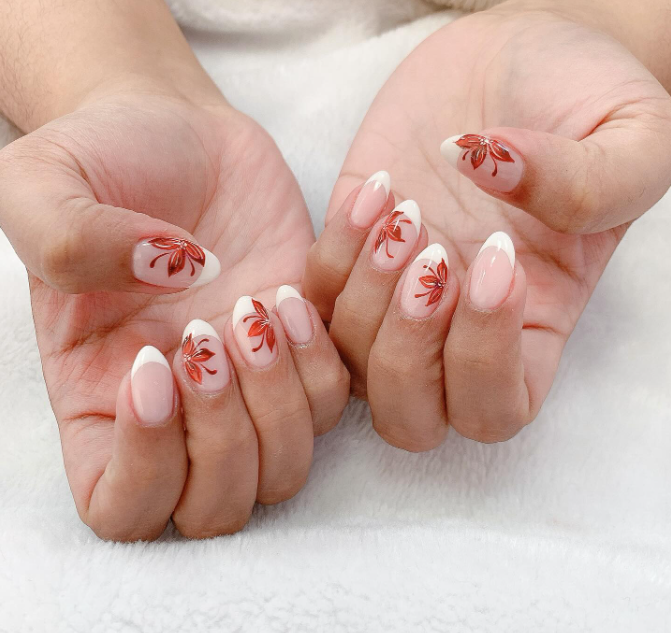
Maple Leaf Accent French Nails place a small leaf illustration on a single nail, leaving the rest of the set in a traditional tip shape. Detail work concentrates on that one accent, with fine linework tracing the veins and pointed edges of the leaf shape. Balance comes from restraint, since only one nail carries the artwork while the others stay uncomplicated. Focal interest shifts naturally to that accent finger whenever the hand moves.
5. Caramel French Tips
Caramel French Tips wind a curved ribbon of color across the tip instead of a straight, uniform band. Movement runs through each curve, with the line thickening and thinning as it curls back on itself. Depth builds where two layers overlap, creating a subtle sense of dimension within the tip area. Every nail carries its own pattern, so no two tips repeat the exact same curve.
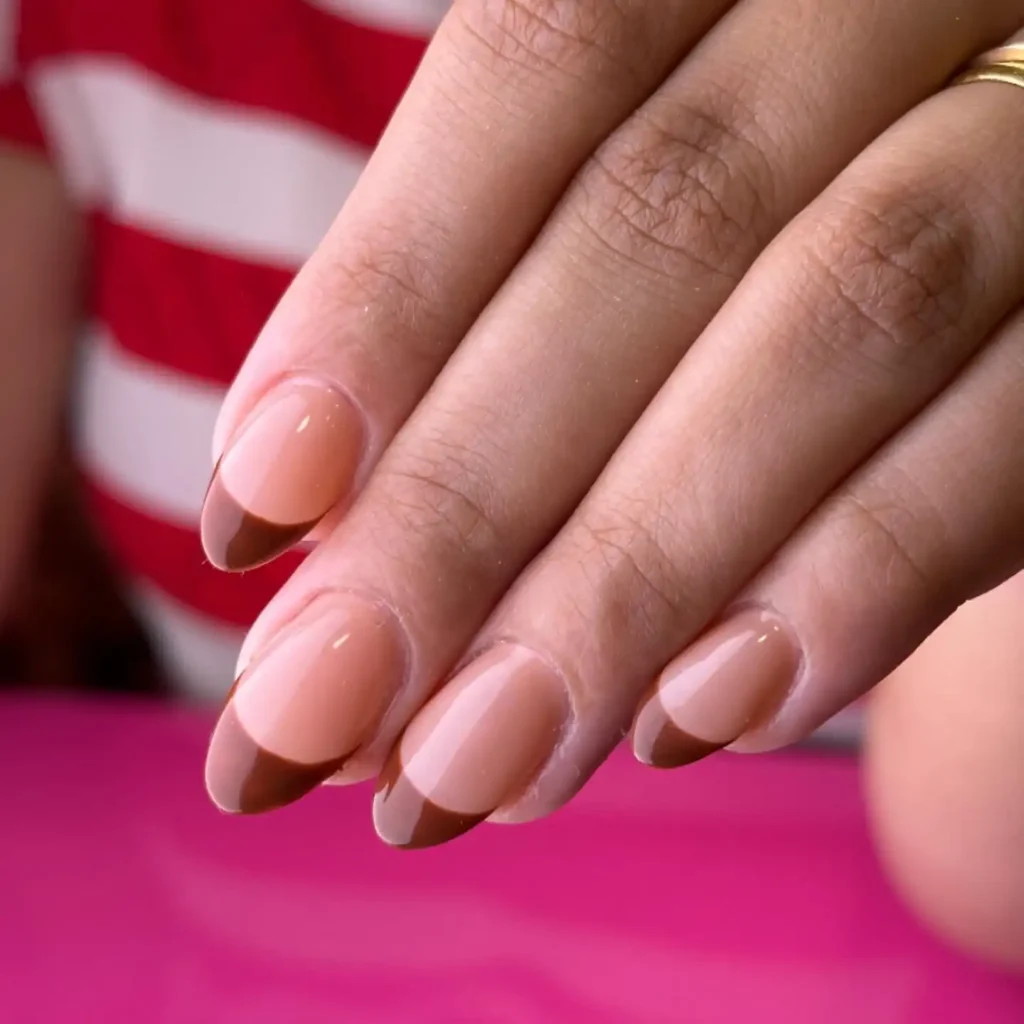
6. Maple Syrup Jelly French Tips
Maple Syrup Jelly French Tips apply the tip color in a translucent, semi-sheer layer that lets light pass through it. Transparency gives the syrup-toned finish a liquid quality, similar to how syrup pools and thins at its edges. Buildup near the very tip deepens the color slightly, while the rest of the jelly layer stays lighter. Coverage remains soft rather than opaque, keeping the natural nail visible underneath.
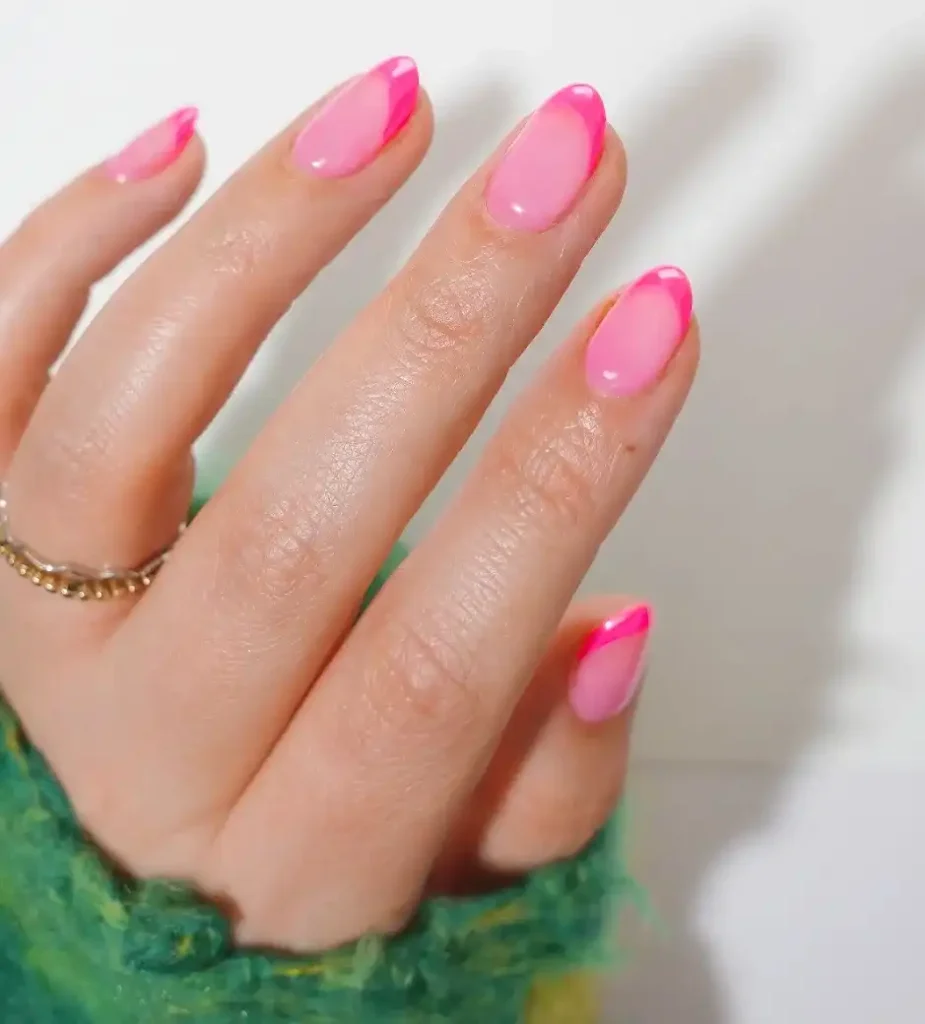
7. Olive Green Curved French Tips
Olive Green Curved French Tips bend the tip line into a rounded arc rather than the sharp angle of a standard french shape. Curvature softens the overall silhouette of the nail, pulling focus toward the smooth sweep of the line. Green tones settle unevenly along the arc, deepening slightly near the center point of the curve. Consistency across the set comes from repeating that same rounded angle on every nail.
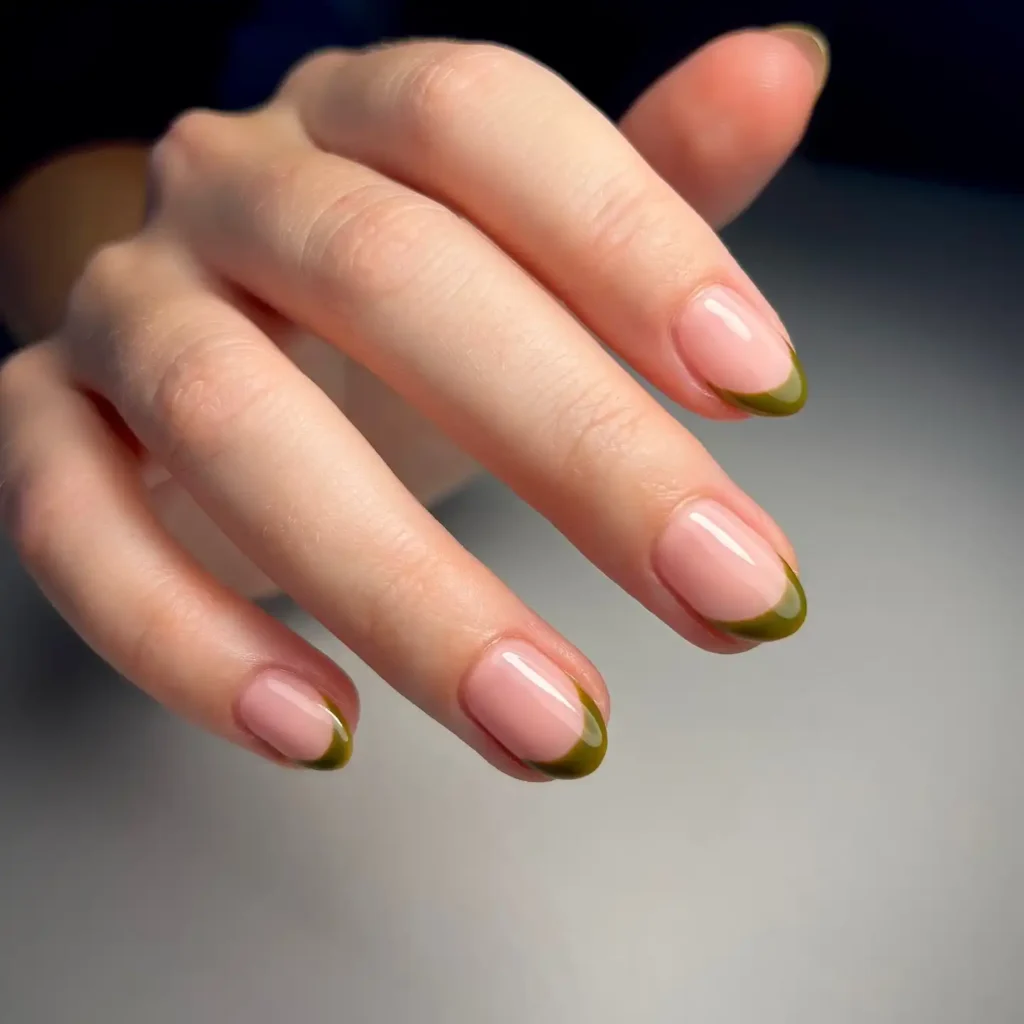
8. Smoky Taupe Double French Nails
Smoky Taupe Double French Nails stack two tip lines instead of one, layering a pale taupe band beneath a deeper smoky shade. Layering creates a stepped effect near the edge, where each band remains visible as a distinct stripe. Gradual shift happens between the two tones, since neither line has a hard boundary separating it from the other. Structure stays clear despite the layering, with both bands following the same curved edge.
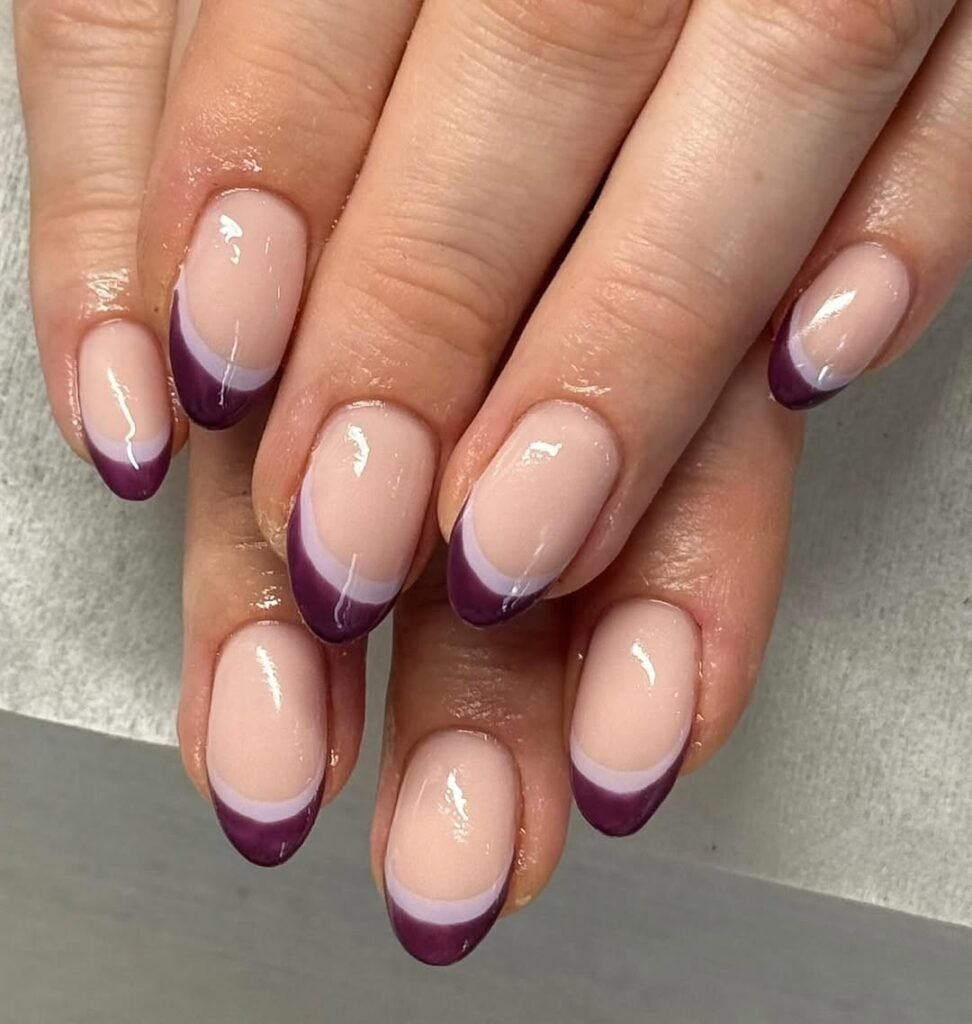
9. Burgundy Glass French Tips
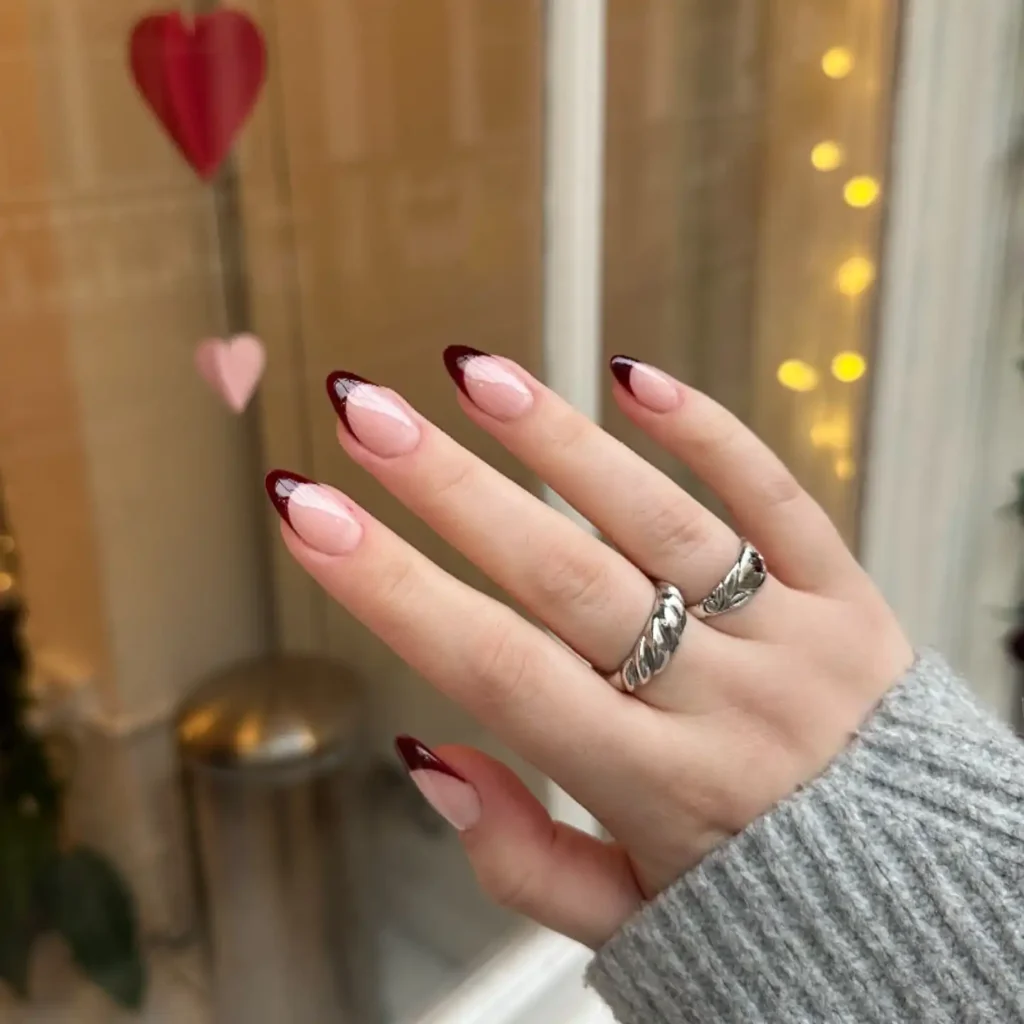
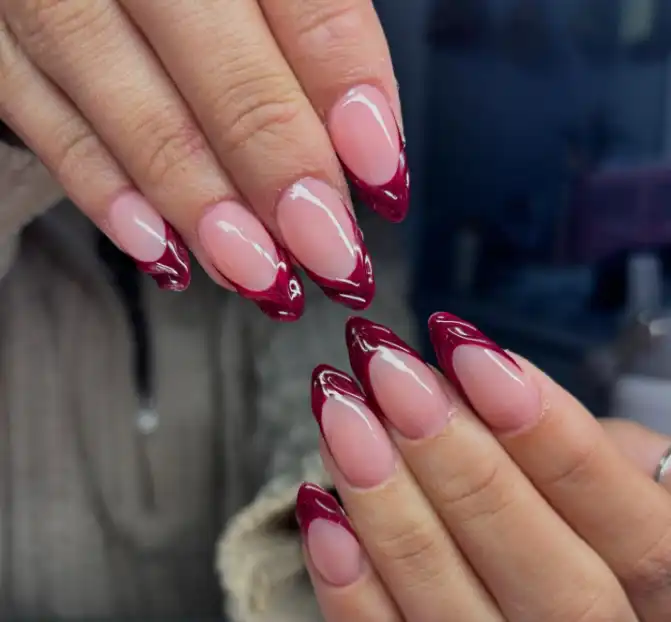
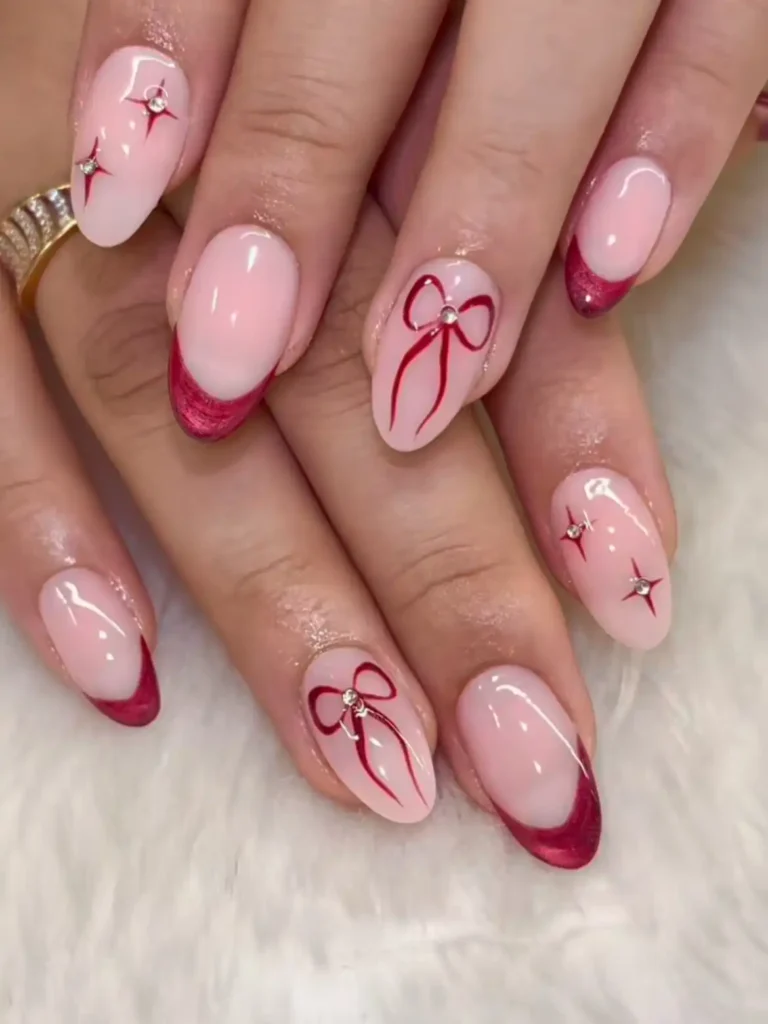
Burgundy Glass French Tips apply the tip color in translucent layers, letting the natural nail show faintly beneath the wine-toned finish. Transparency changes the way the color reads under different lighting, shifting between deep red and near-black depending on the angle. Reflection plays across the glassy surface, adding a wet-looking dimension to the tip area. Buildup happens gradually with each layer, deepening the burgundy without losing its see-through quality.
10. Copper Chrome French Nails
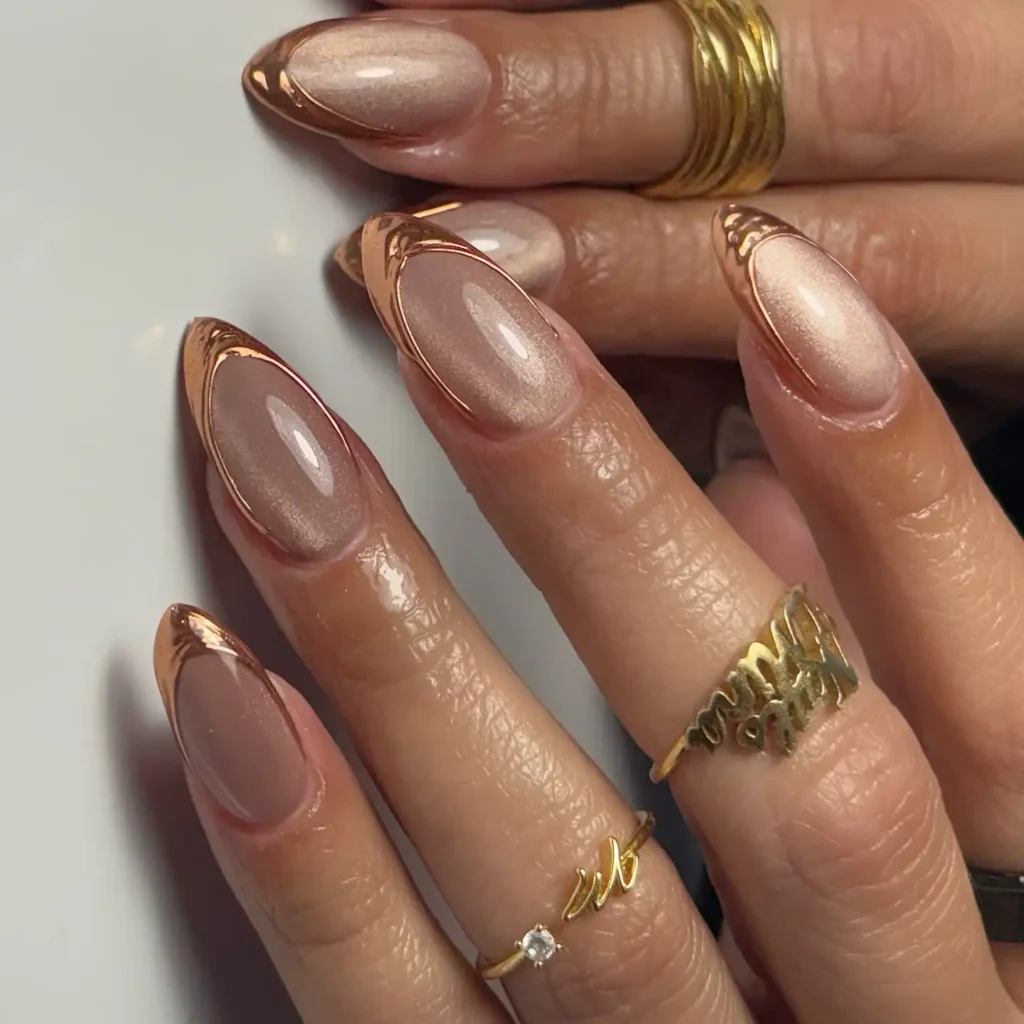
Copper Chrome French Nails coat the tip in a metallic finish that mirrors light across its surface rather than absorbing it. Reflection becomes the dominant visual element, with the chrome quality catching every shift in angle or movement. Golden warmth runs through the copper base tone, distinguishing it from cooler silver or gold chrome alternatives. Precision along the tip line matters more here, since the mirrored surface makes any imperfection immediately visible.
11. Toasted Almond French Manicure
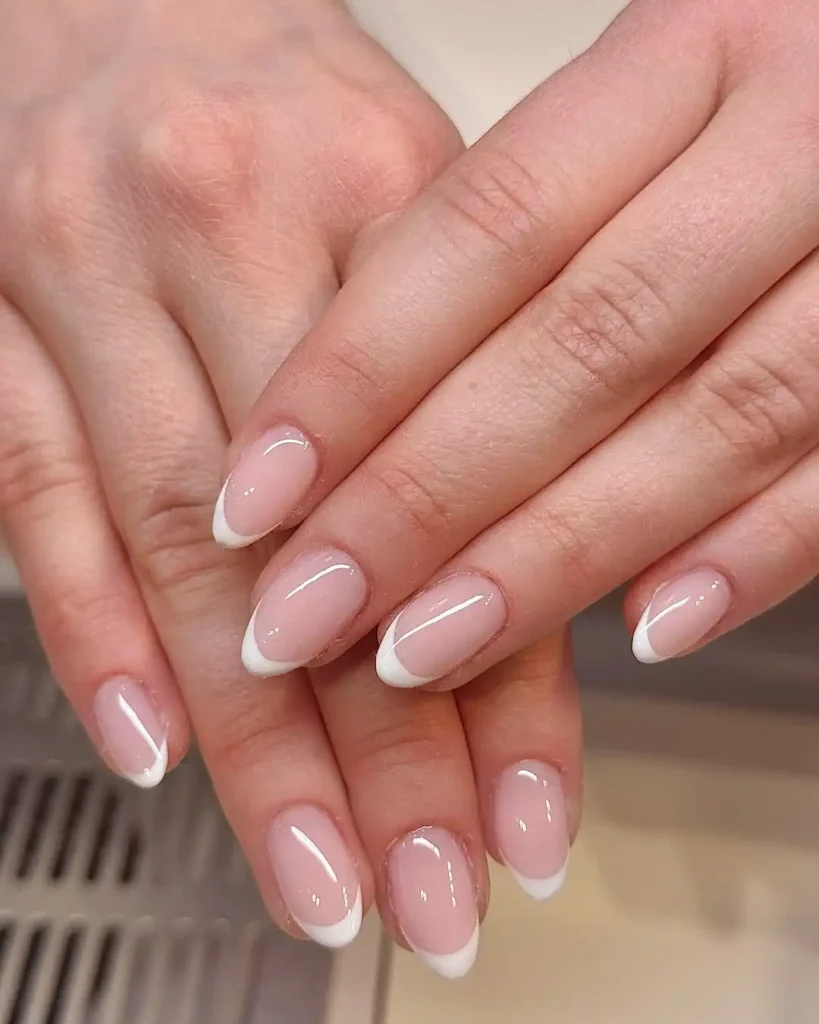
Toasted Almond French Manicure warms the tip with a soft, roasted beige tone that sits between cream and light brown. Subtlety defines this style, since the color shift from nail bed to tip stays gentle rather than dramatic. Undertones lean slightly golden, giving the beige a warmth that plain neutral tones typically lack. Application stays even across the set, keeping the toasted shade consistent from thumb to pinky.
12. Rustic Plaid Accent French Nails
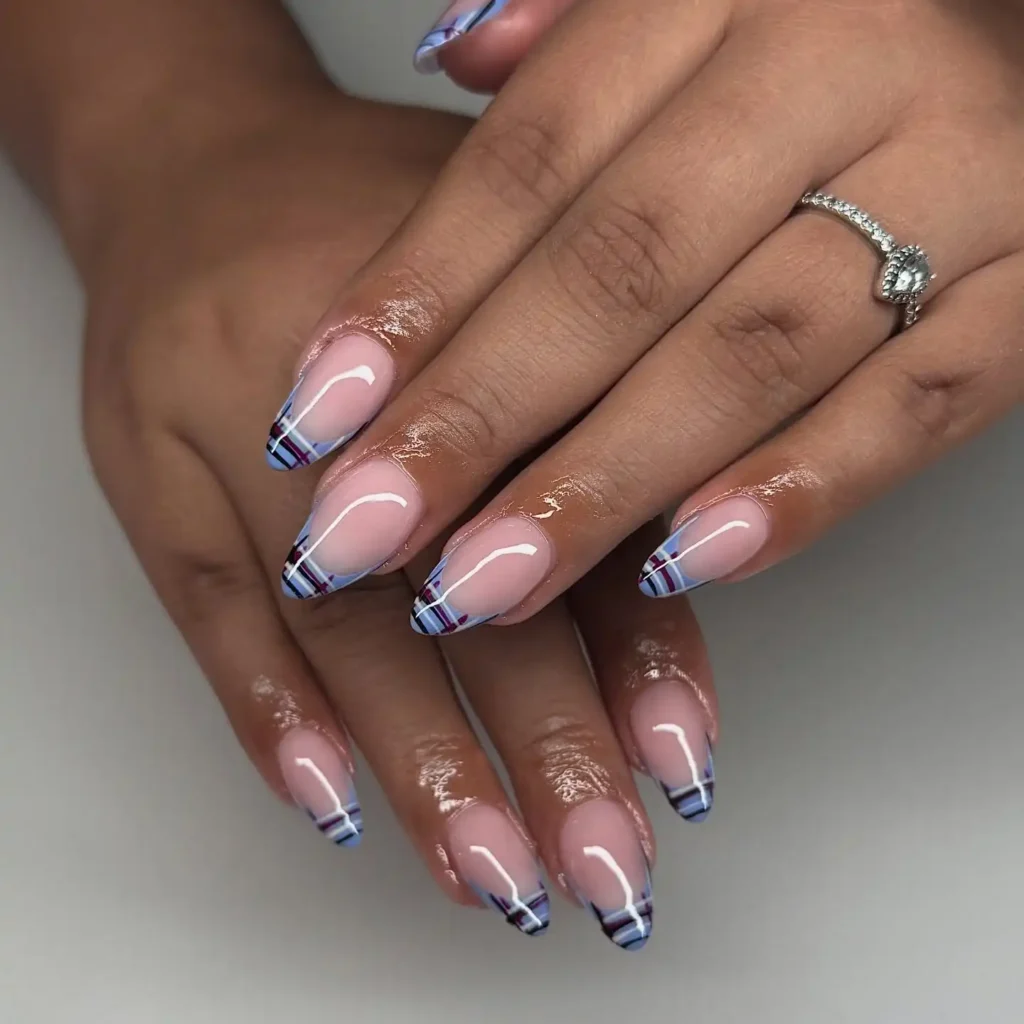
Rustic Plaid Accent French Nails introduce a woven grid pattern on one nail while the rest keep a standard tip shape. Crisscrossing lines form the plaid design, intersecting at regular intervals to build the checked texture. Placement on a single accent nail keeps the pattern from overwhelming the rest of the set. Detail density stays high within that small space, since plaid requires multiple intersecting strokes to read clearly.
13. Cocoa Marble French Tips
Cocoa Marble French Tips swirl brown veining through the tip area, mimicking the uneven patterns found in natural stone. Veining moves unpredictably across the surface, with thinner and thicker lines branching off from each other. Contrast forms between the darker cocoa veins and the lighter background tone surrounding them. Randomness defines the pattern, since no two marbled tips end up arranged the same way.
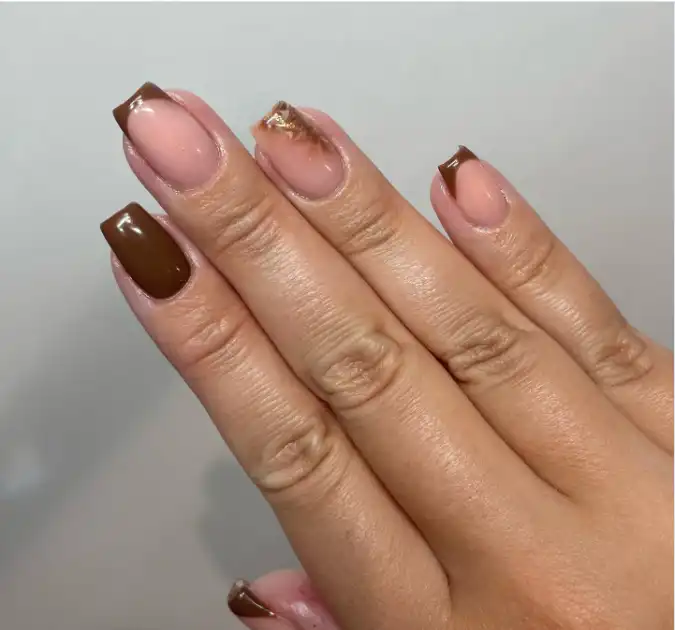
14. Soft Mocha Aura French Nails
Soft Mocha Aura French Nails blur the tip line into a soft-edged glow rather than a defined stripe. Gradient softness spreads outward from the tip, fading gradually into the bare nail without a visible seam. Warmth concentrates near the edge, with the mocha tone lightening as it moves toward the cuticle. Diffusion gives the aura effect its rounded, cloud-like quality along every nail.
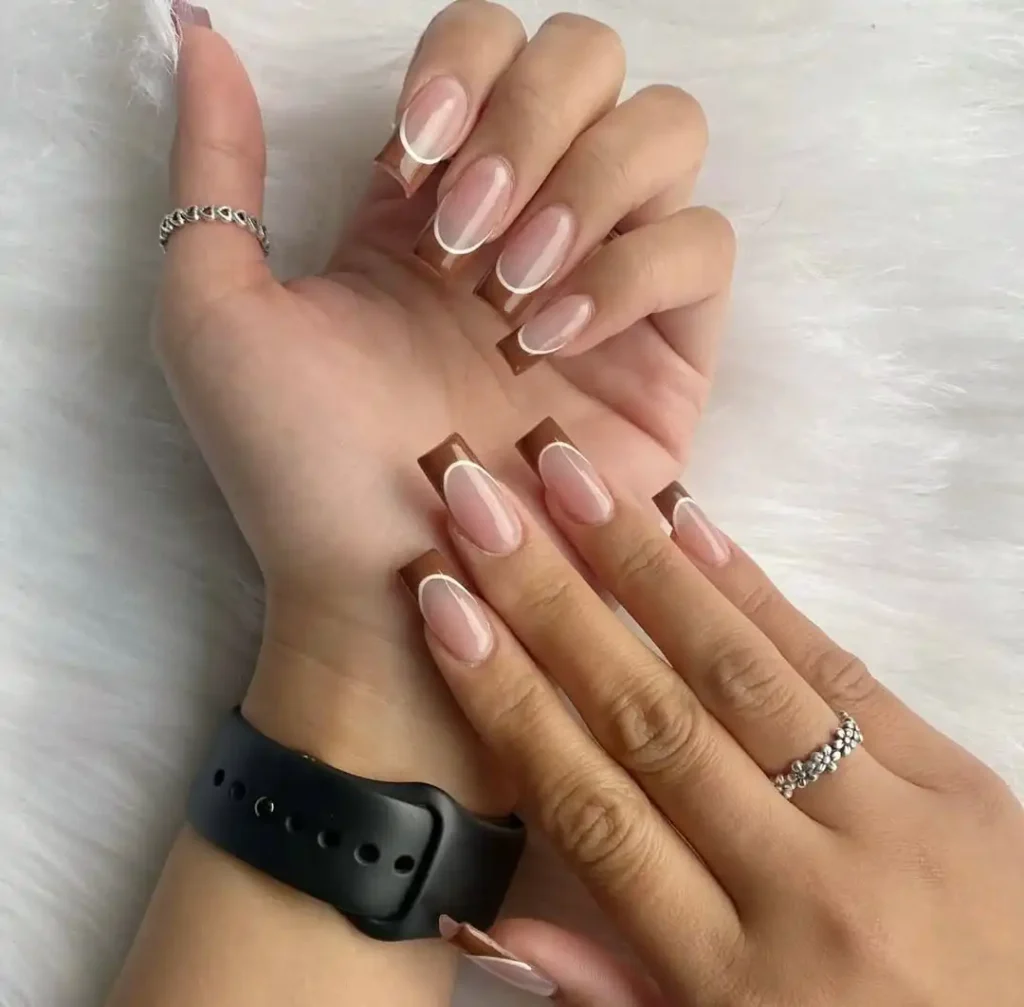
15. Bronze Foil French Manicure
Bronze Foil French Manicure presses metallic fragments onto the tip, creating a fractured, reflective texture instead of a smooth line. Fragmentation gives the foil its irregular pattern, with each small piece catching light at a slightly different angle. Coverage varies across the tip, leaving some spots denser with foil while others reveal more of the base beneath. Shimmer intensifies whenever the hand catches direct light.
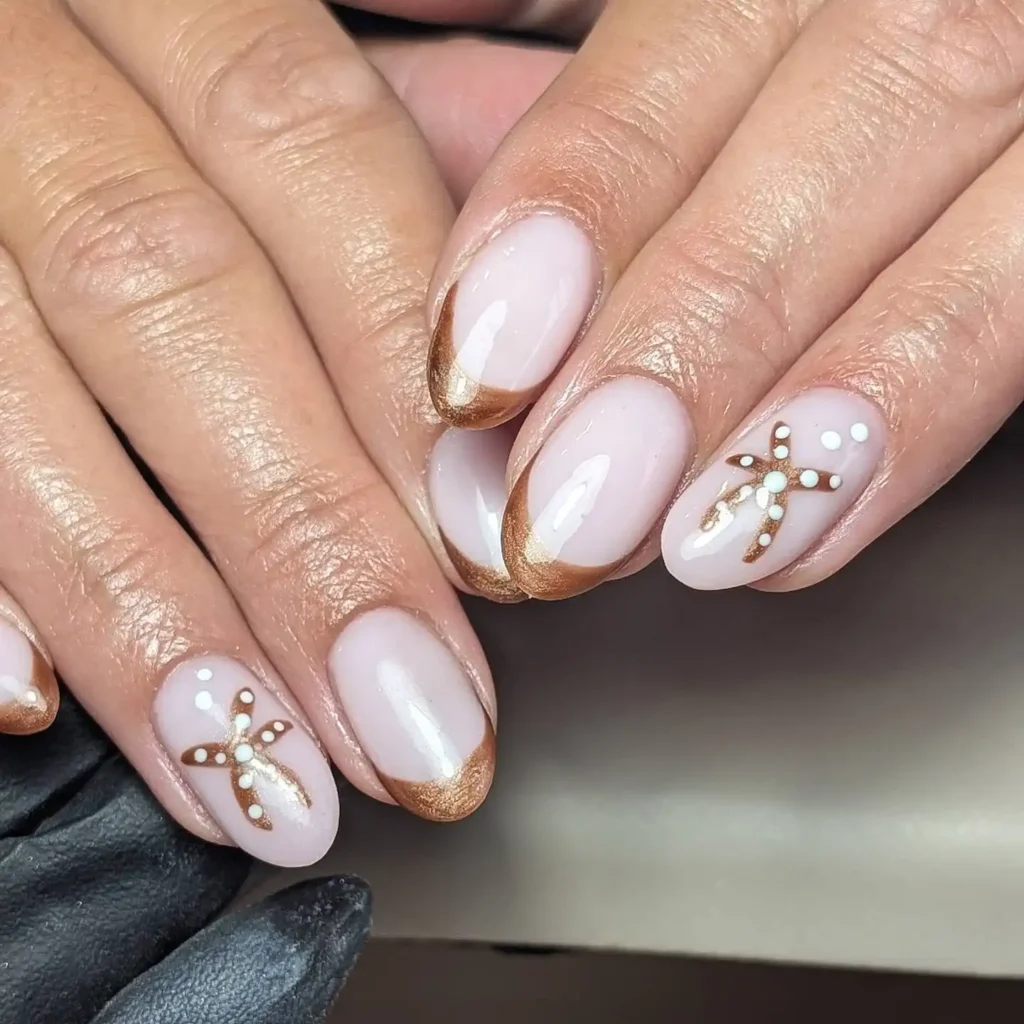
16. Matte Chestnut French Tips
Matte Chestnut French Tips flatten the tip color into a non-reflective, velvety brown that absorbs light instead of bouncing it back. Surface texture reads differently under the matte finish, appearing softer and less defined than a glossy equivalent. Depth still exists within the chestnut tone, though shadows read more subtly without a shine to emphasize them. Uniformity across the set relies on an even matte coat applied without streaking.
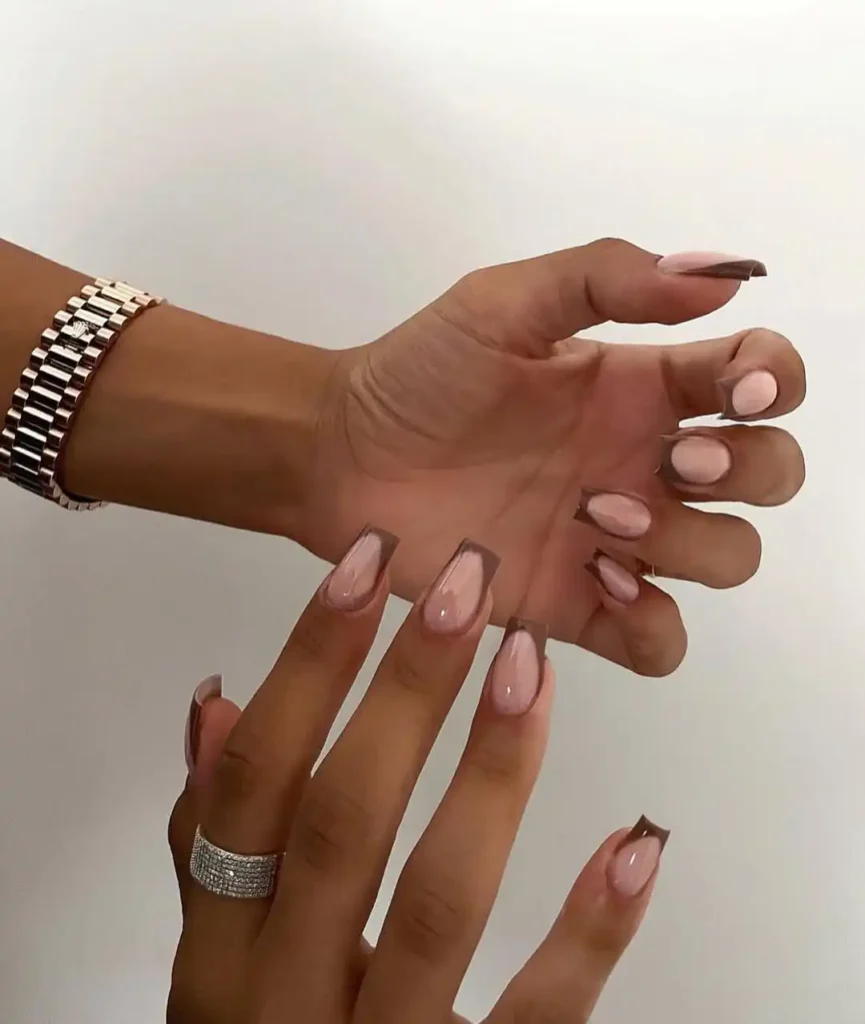
17. Cranberry Glazed French Nails
Cranberry Glazed French Nails coat the tip in a glossy red shade with a syrupy, wet-looking finish. Saturation stays high throughout the tip area, giving the cranberry tone a concentrated, jewel-like intensity. Shine pools along the curved edge of the nail, catching light in small, bright highlights. Coverage remains smooth and even, avoiding any patchiness within the glazed section.
18. Forest Moss French Tips
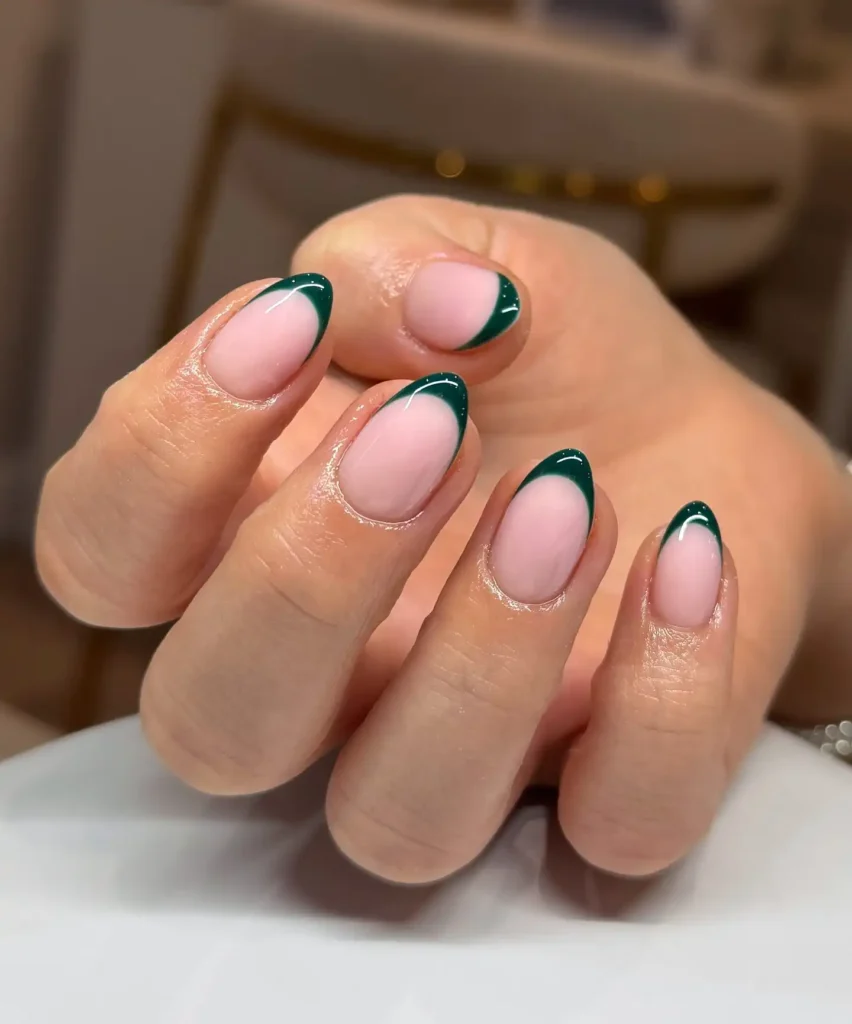
Forest Moss French Tips shift the tip color into a muted, earthy green that reads closer to foliage than pure color. Texture within the moss tone appears slightly uneven, echoing the organic irregularity found in actual plant growth. Depth builds through subtle variation across the tip, rather than one flat, uniform shade. Edges stay defined despite the earthy coloring, keeping the tip line legible against the nail bed.
19. Honey Beige Reverse French Nails
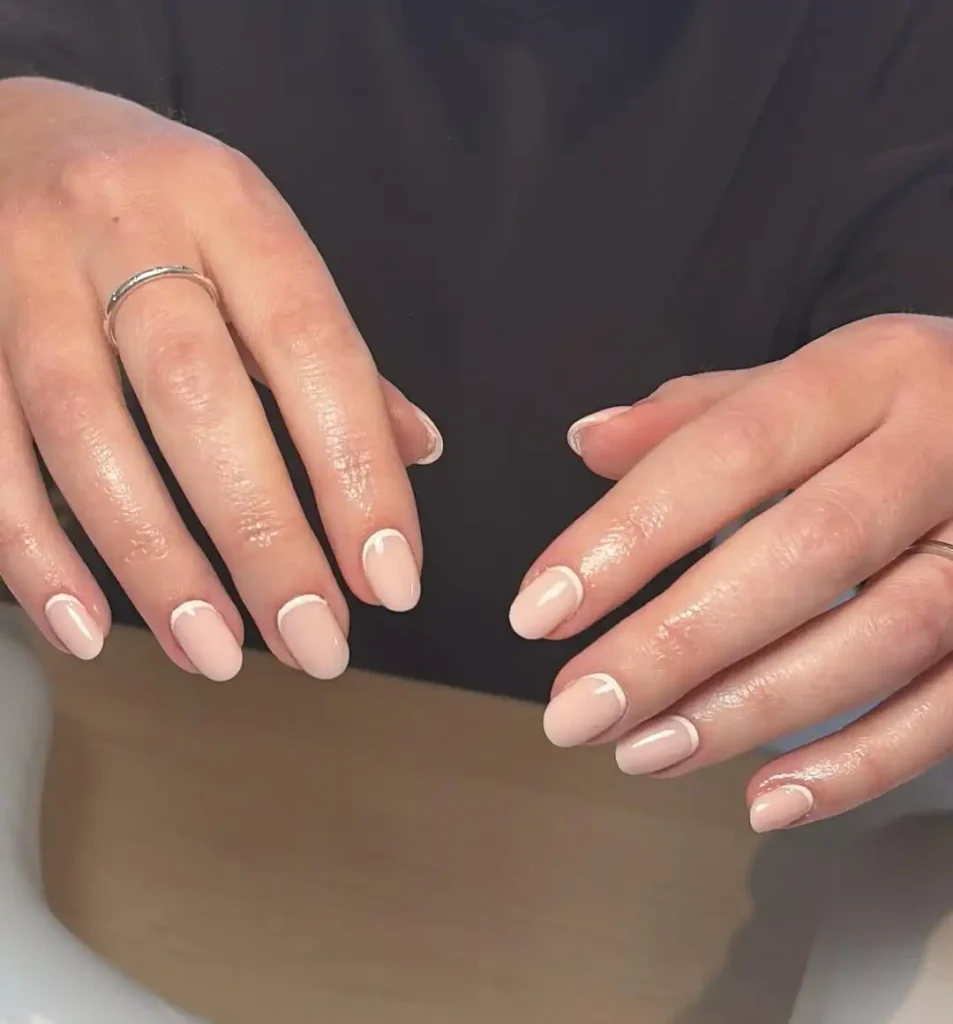
Honey Beige Reverse French Nails flip the traditional placement, positioning the tip color near the cuticle instead of the nail edge. Reversal changes how the eye tracks the design, drawing initial attention toward the base of the nail. Richness from the honey tone settles closest to the skin, while the remaining nail stays in its natural shade. Line placement stays curved, following the cuticle’s natural shape rather than a straight edge.
20. Walnut Tortoiseshell French Nails
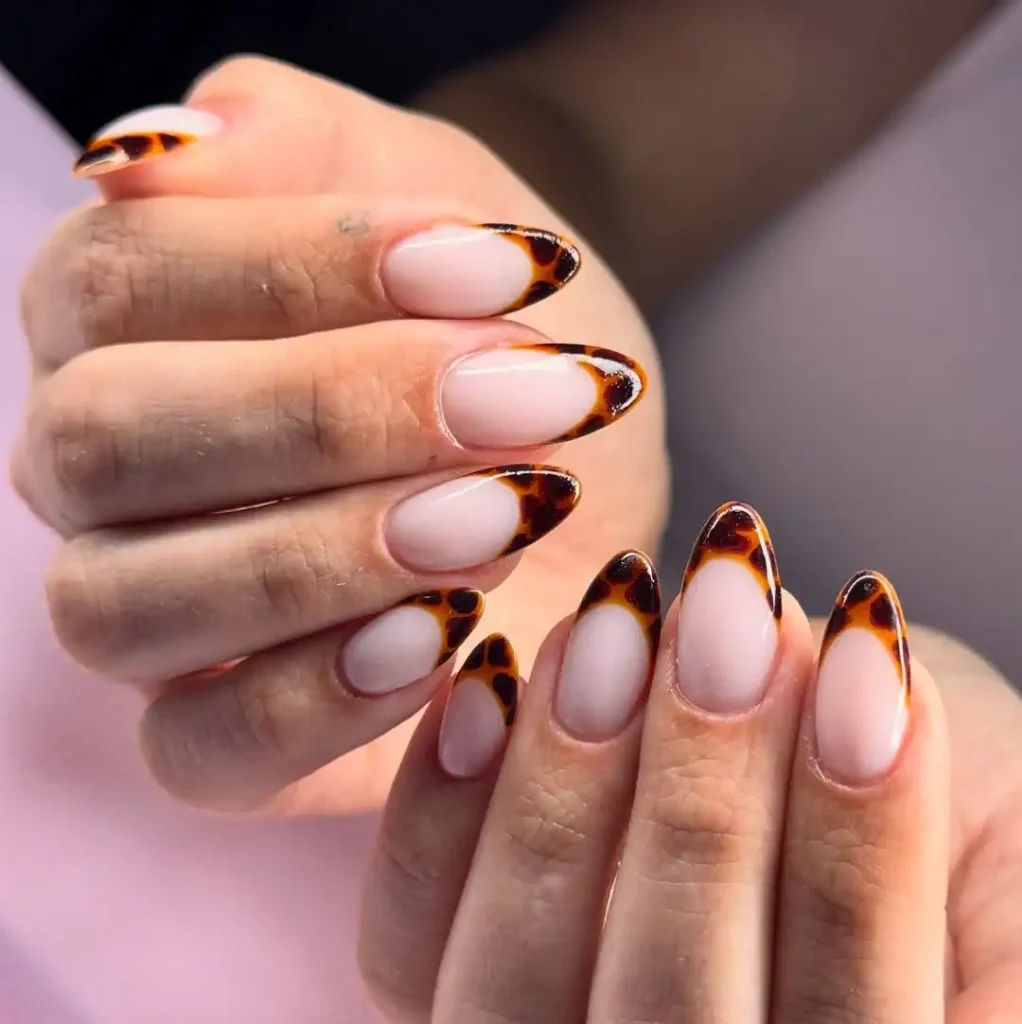
Walnut Tortoiseshell French Nails layer irregular patches of brown and amber across the tip, echoing the mottled pattern found in tortoiseshell material. Patchwork spreads unevenly, with darker walnut sections breaking up lighter, honey-toned areas. Depth increases where multiple patches overlap near the tip line, thickening the color in those spots. Irregularity defines the overall look, since no patch repeats in size or placement across the set.
21. Spiced Chai French Manicure
Spiced Chai French Manicure layers warm, spiced tones along the tip, echoing the blended notes found in a steeped cup. Layering creates subtle variation within the tip band, rather than relying on a single flat tone. Warmth radiates outward from the center of the tip, softening slightly as it nears the edge. Balance between the layered tones keeps neither note overpowering the other.
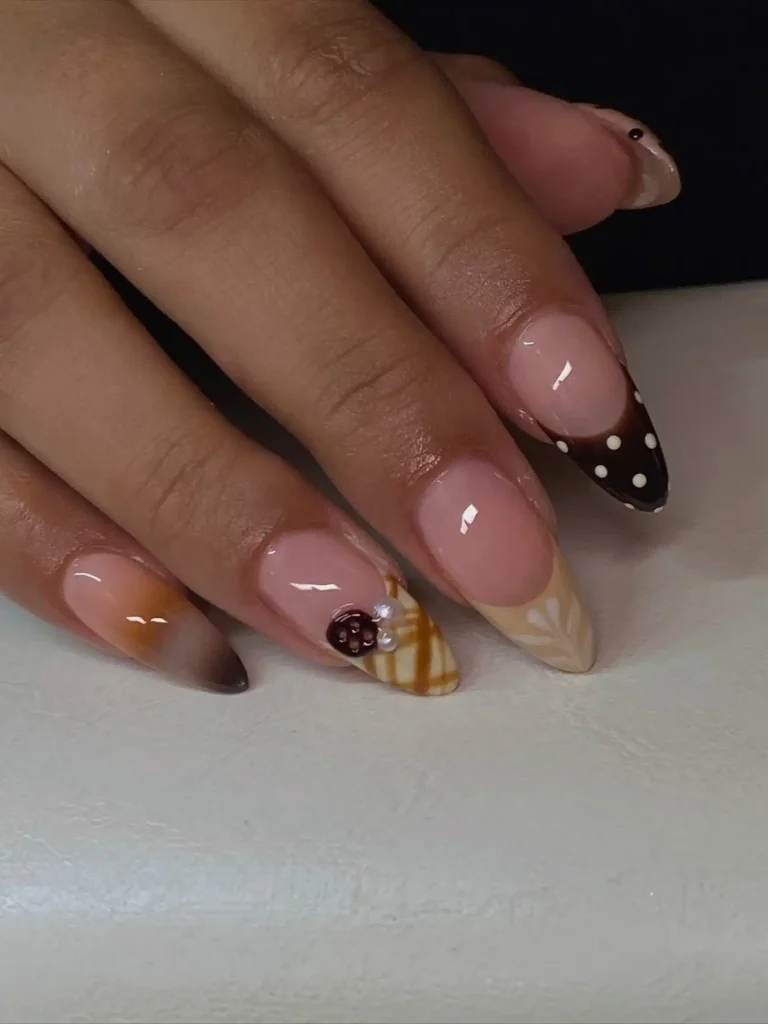
22. Cashmere Nude French Nails
Cashmere Nude French Nails soften the tip line into a pale, muted neutral that barely separates from the natural nail bed. Subtlety defines the transition point, with the nude tone blending gently rather than creating sharp contrast. Softness extends across the entire nail, giving the cashmere reference a tactile, gentle quality even in a still image. Consistency across the set keeps every nail matching in tone and coverage.
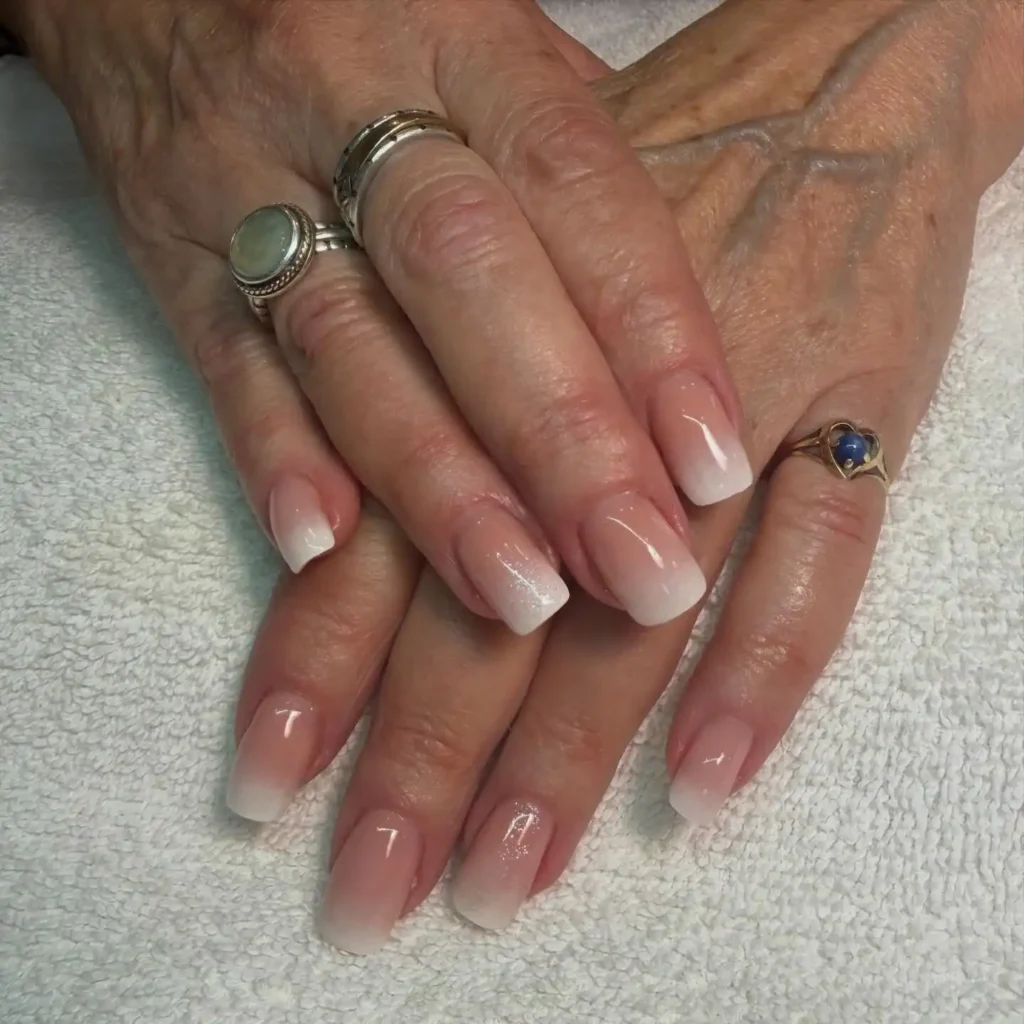
23. Copper Glitter Fade French Tips
Copper Glitter Fade French Tips scatter metallic particles that thin out gradually as they move away from the tip edge. Density concentrates heaviest right at the tip, thinning into single scattered flecks farther down the nail. Sparkle catches unevenly across the fade, since glitter particles sit at different depths within the finish. Transition between glitter and bare nail stays gradual, without a hard stopping point.
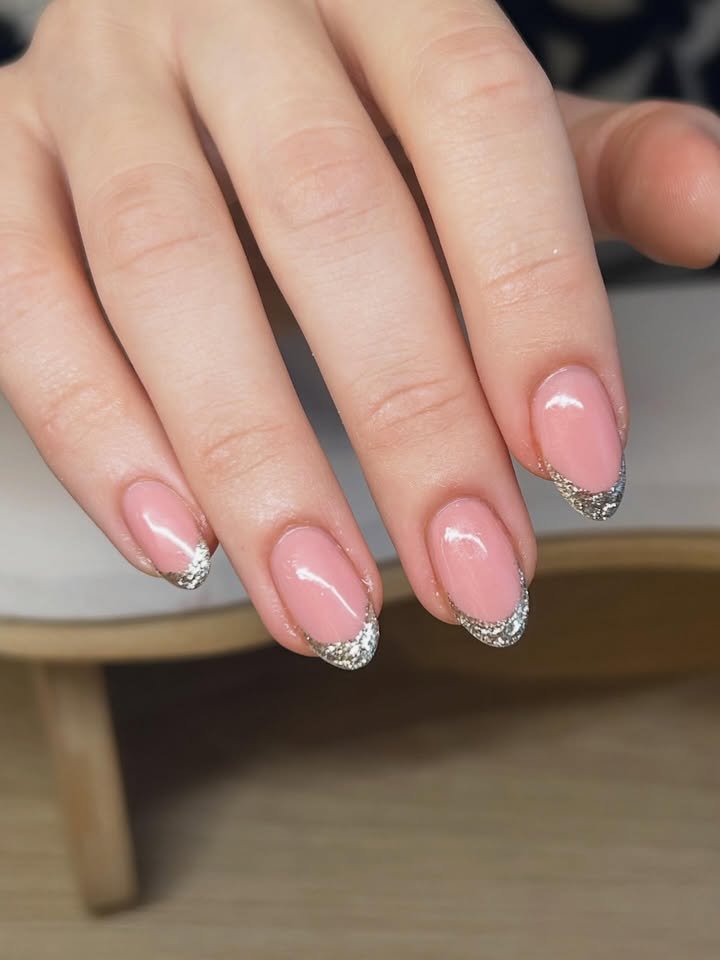
24. Chocolate Velvet French Nails
Chocolate Velvet French Nails coat the tip in a deep, soft-looking brown that reads more like fabric than polish. Texture becomes the focal point of this style, since the velvet effect changes how light behaves across the surface. Shadows settle into the tip line rather than reflecting outward, giving the color a muted, absorbed quality. Cuticle to tip, the shade holds its richness without any visible sheen breaking up the surface.
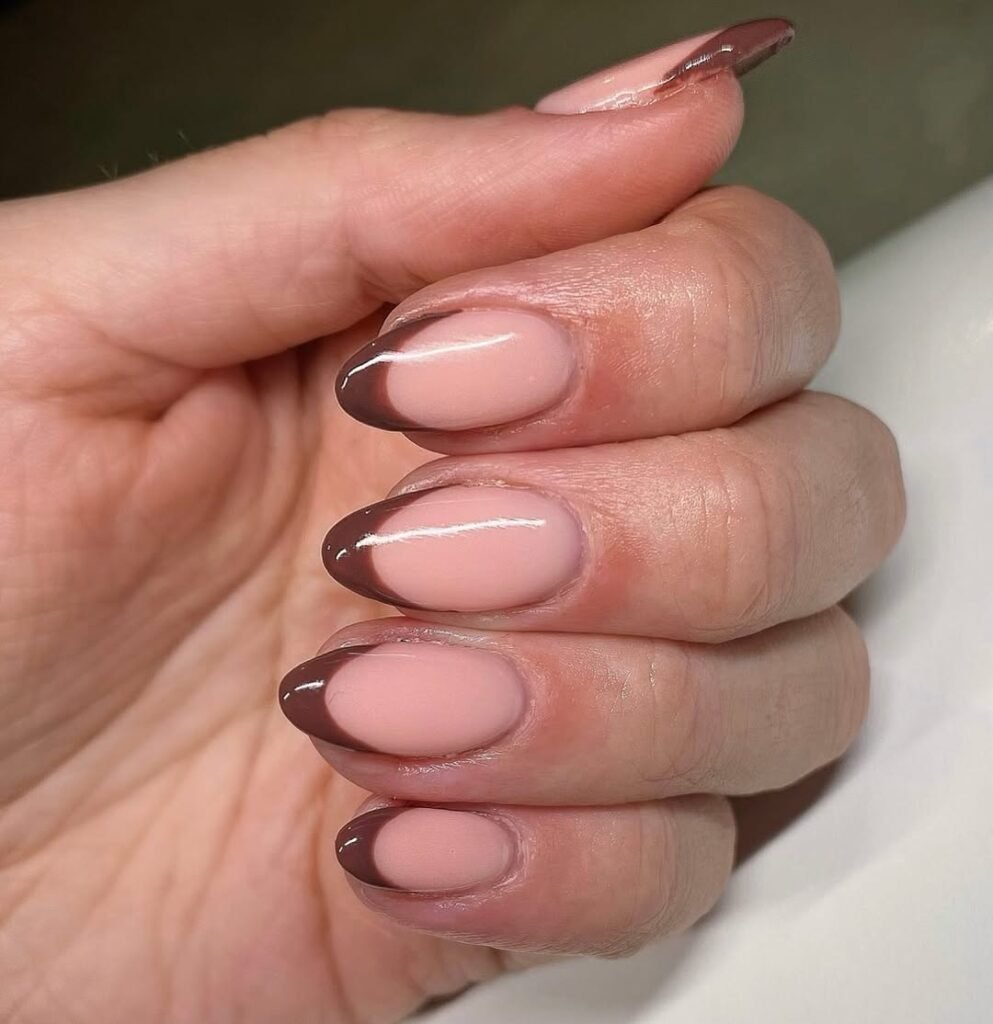
25. Velvet Ribbon French Manicure
Velvet Ribbon French Manicure wraps a matte band across the tip, shaped to resemble a folded strip of ribbon. Shape plays a larger role here than color, since the ribbon form curves and overlaps rather than sitting flat. Texture contrast appears where the matte ribbon meets the smoother nail surface beneath it. Placement stays centered along the tip, keeping the ribbon shape consistent across the set.
Conclusion
Warm seasonal shades can give French manicures plenty of personality without making the overall look feel excessive. Pretty fall nails autumn french designs offer polished options ranging from understated neutral tips to rich burgundy, copper, chocolate, and detailed autumn accents. Elegant finishes work beautifully for everyday wear, while bolder textures and artistic details can create a more noticeable manicure. Fall French tips leave plenty of room to match personal style while keeping the finished look sophisticated.
Pingback: Fall Cat Eye Nails With Rich Color and Magnetic Shimmer Ideas -