Small placements can create a surprisingly strong visual effect, especially when the artwork follows the natural shape of the ear. Ear tattoos offer plenty of room for delicate symbols, botanical details, celestial artwork, and darker graphic styles without requiring a large area of skin. Subtle ear ink can stay discreet when needed, while more expressive designs can extend toward the neck or cheek. Ear tattoo designs also work beautifully with jewelry, piercings, and different personal aesthetics, giving this placement plenty of creative flexibility.
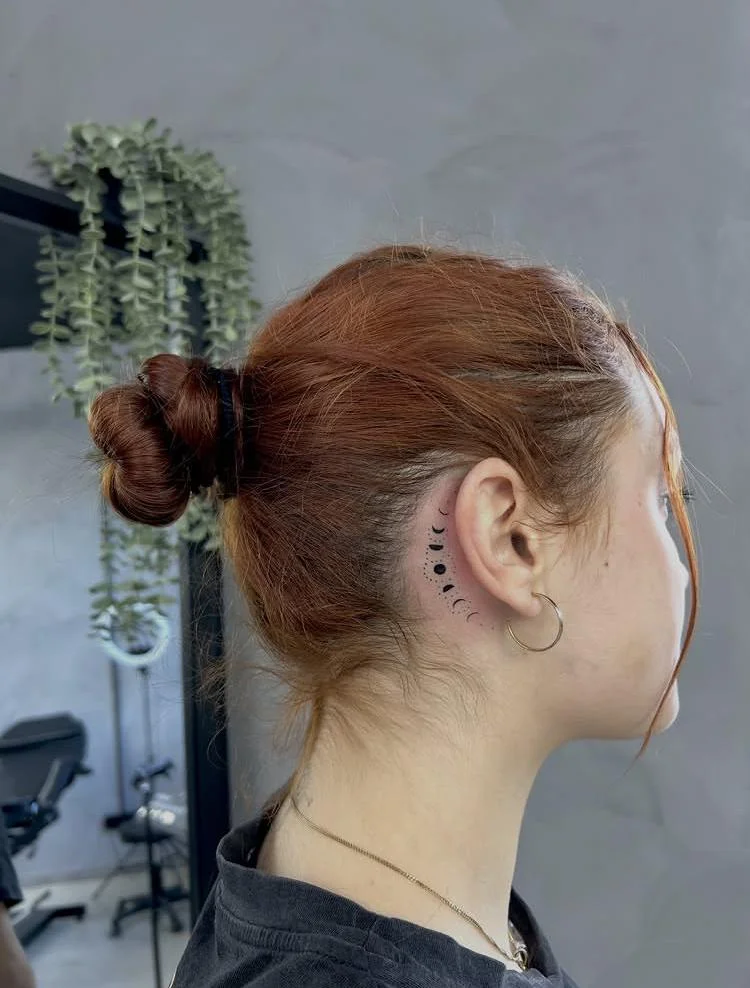
1. Moon Phases Behind the Ear
Celestial artwork creates a calm, thoughtful mood when several moon phases sit vertically behind the ear. Crescent shapes, full circles, and tiny dots can create a balanced sequence without taking up much space. Soft spacing between each phase keeps the design easy to read from different angles. Placement along the narrow area behind the ear also gives the lunar pattern a naturally elongated shape. Small stars can add extra detail while keeping the overall composition clean and refined.
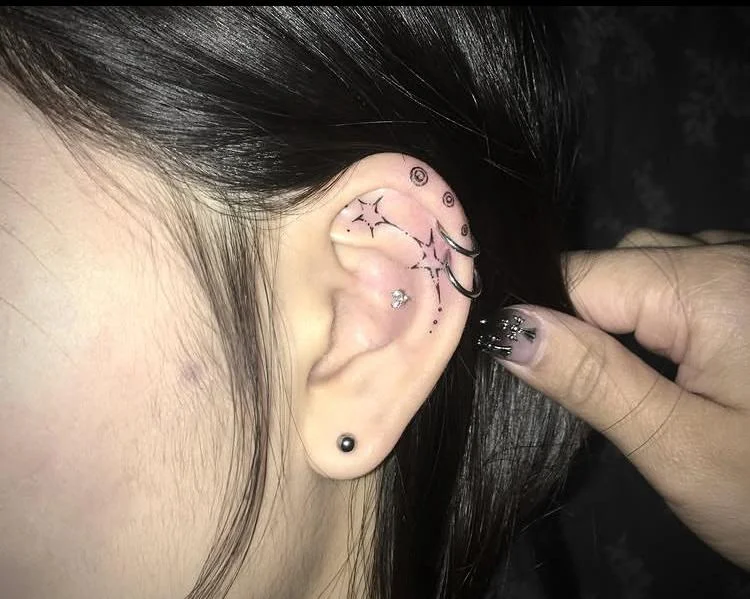
2. Starry Details Across the Cartilage
Small stars and scattered dots can turn the upper ear into a compact celestial design. Fine lines help each element remain distinct while following the curved structure of the cartilage. Several star shapes can vary slightly in size, creating movement without making the tattoo feel crowded. Placement around existing piercings can also create an intentional relationship between jewelry and ink. Black linework keeps the design versatile, making it suitable for both understated and more alternative personal styles.
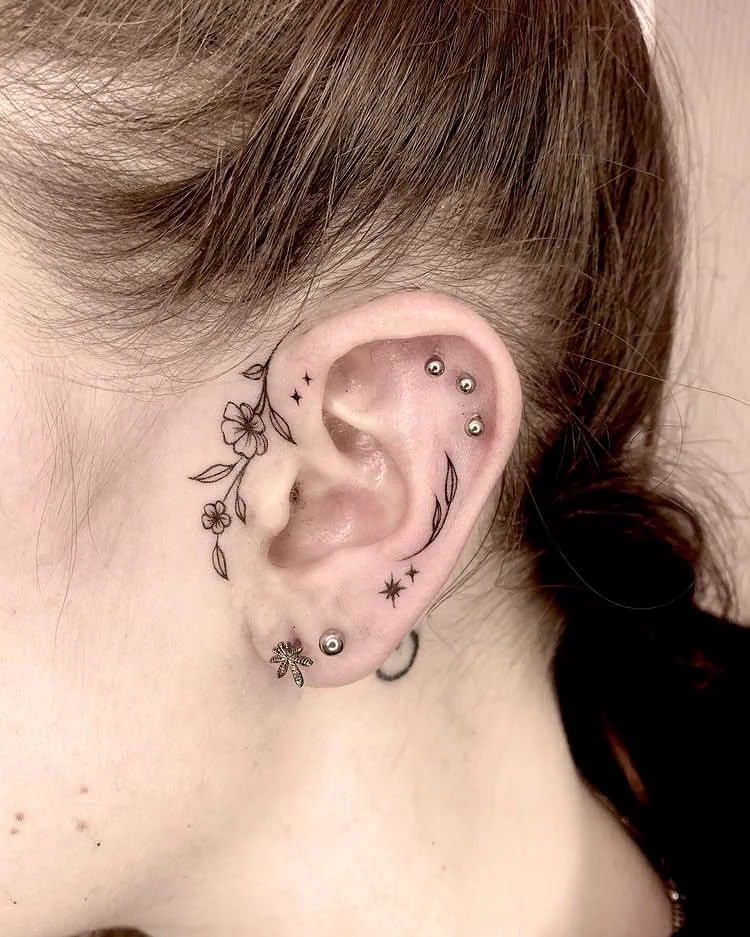
3. Fine-Line Florals Around the Ear
Botanical artwork can create a soft frame around the ear without overwhelming its natural shape. Thin stems, small leaves, and simple flowers provide enough detail while keeping the composition airy. Curved lines can follow the outer edge, creating a design that feels connected to the ear rather than placed randomly. Delicate floral work also suits people who prefer understated tattoos with a feminine touch. Careful spacing between each botanical element helps preserve clarity as the design wraps around the area.
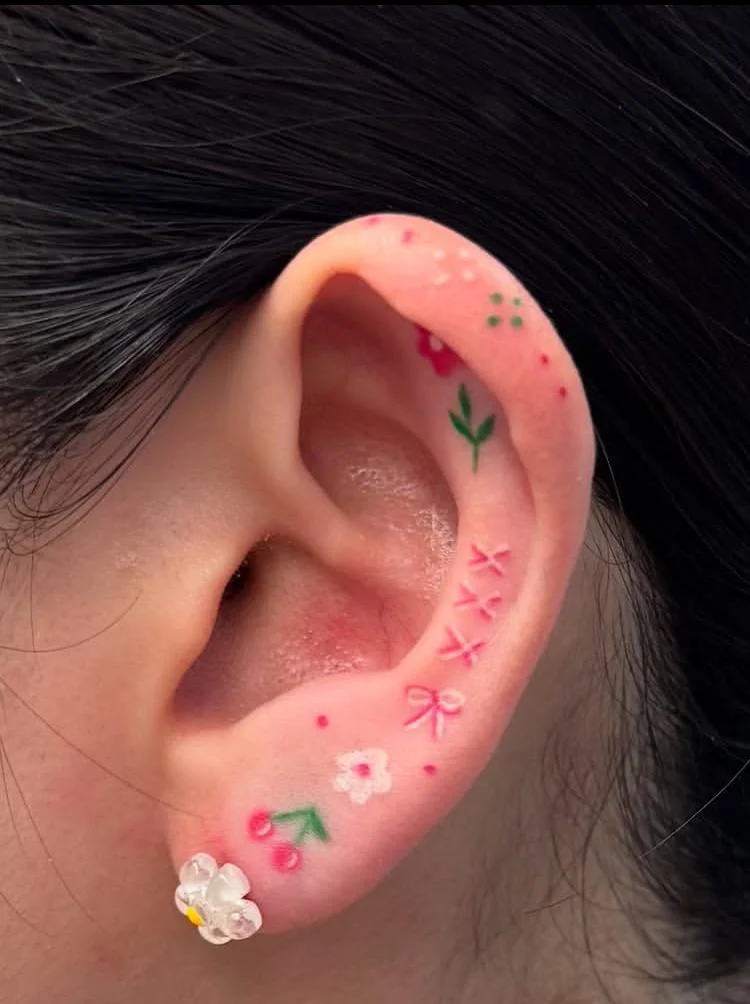
4. Tiny Colorful Ear Doodles
Playful micro artwork brings a cheerful personality to the ear through several small decorative elements. Tiny bows, flowers, cherries, dots, and simple shapes can create a lively mix without requiring one dominant image. Small areas of color help separate individual motifs and give the composition a youthful character. Scattered placement also makes the design feel more spontaneous than a traditional single-symbol tattoo. Short lines and compact shapes work particularly well when the goal is fun detail in a very limited space.
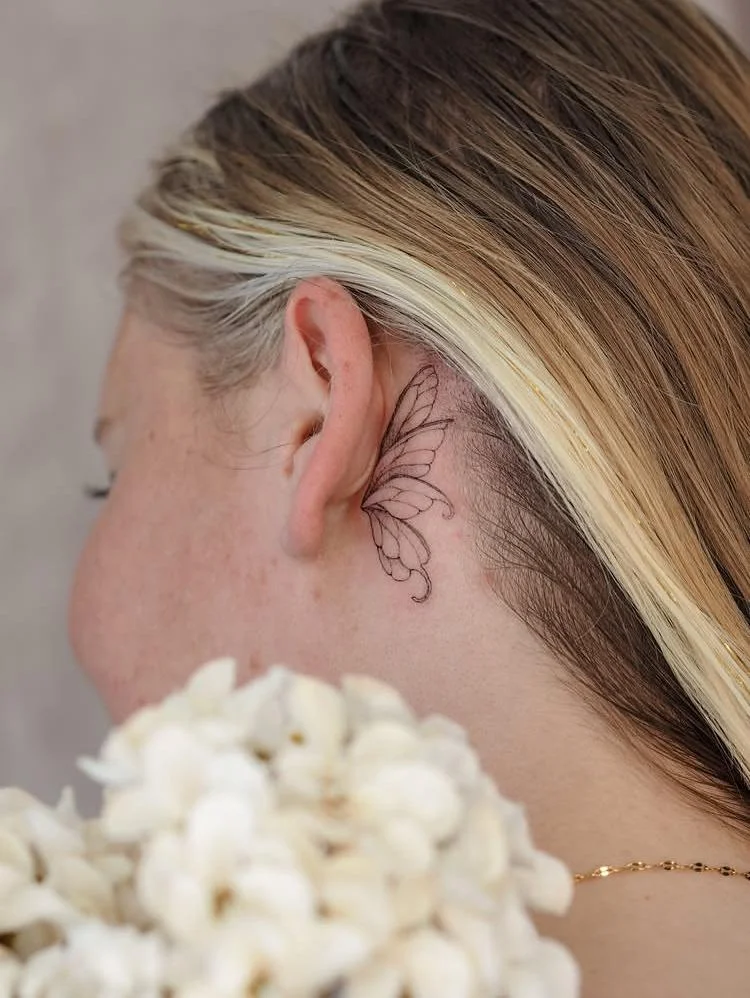
5. A Wing Peeking from Behind the Ear
Wing imagery can create an interesting sense of movement when part of the design appears from behind the ear. Fine outlines keep the feathers visually light while allowing enough space for recognizable details. Curved feather sections can follow the direction of the ear and create a smooth transition toward the surrounding skin. Slightly larger proportions give the artwork more presence than a typical micro tattoo. Placement behind the ear also creates a partially hidden effect that feels personal without becoming difficult to notice.
6. Abstract Lines with a Cosmic Edge
Abstract linework gives ear placement a more artistic direction when conventional symbols feel too predictable. Flowing black curves can move around the ear while tiny stars and dots introduce a subtle celestial influence. Open spaces between the lines prevent the composition from appearing overly dense. Uneven shapes can add movement and create a less structured appearance than traditional tattoo layouts. Such artwork suits people who prefer expressive designs that feel modern, unusual, and connected to the natural contours of the ear.
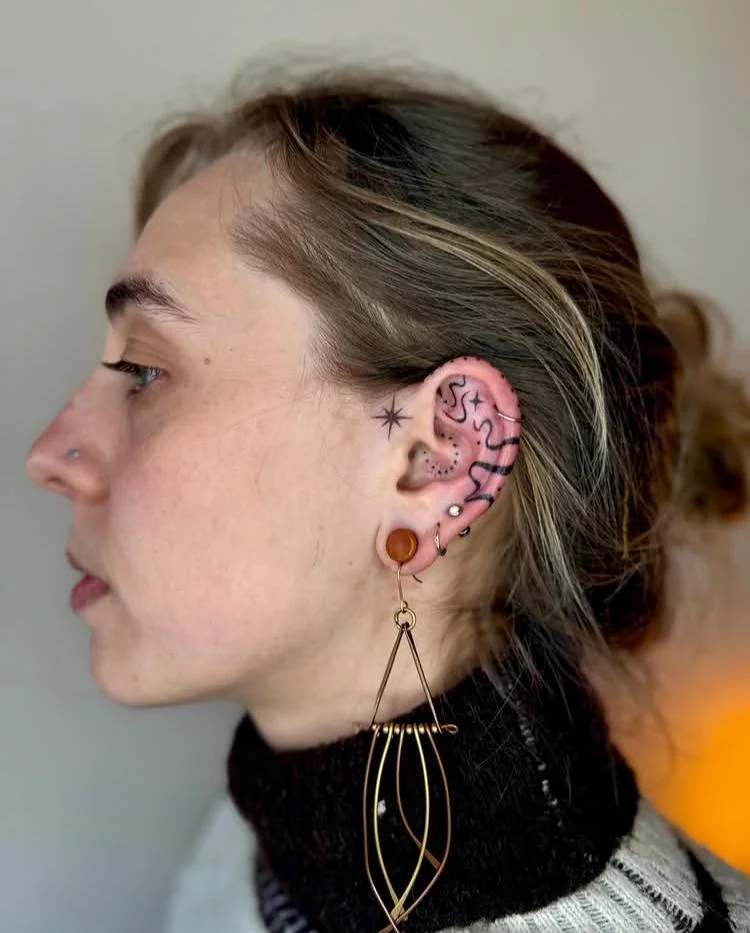
7. A Tiny Floral Garden in Color
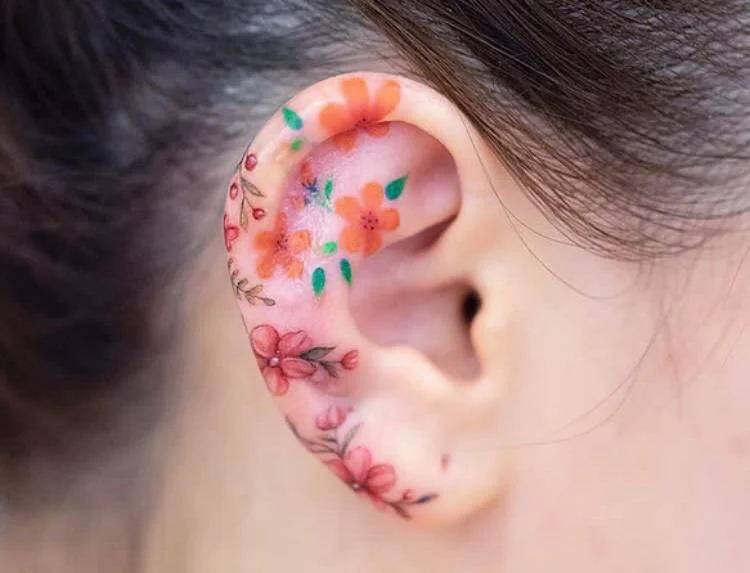
Colorful botanical details can turn the ear into a miniature garden filled with flowers and leaves. Small blossoms in different shades can create visual variety while keeping each element compact enough for the placement. Green foliage provides separation between neighboring flowers and helps the composition feel naturally connected. Careful scale prevents bright colors from making the tattoo look visually heavy. People who enjoy cheerful artwork may appreciate this approach for its decorative character and lively appearance.
8. Dotwork Flames Inside the Ear
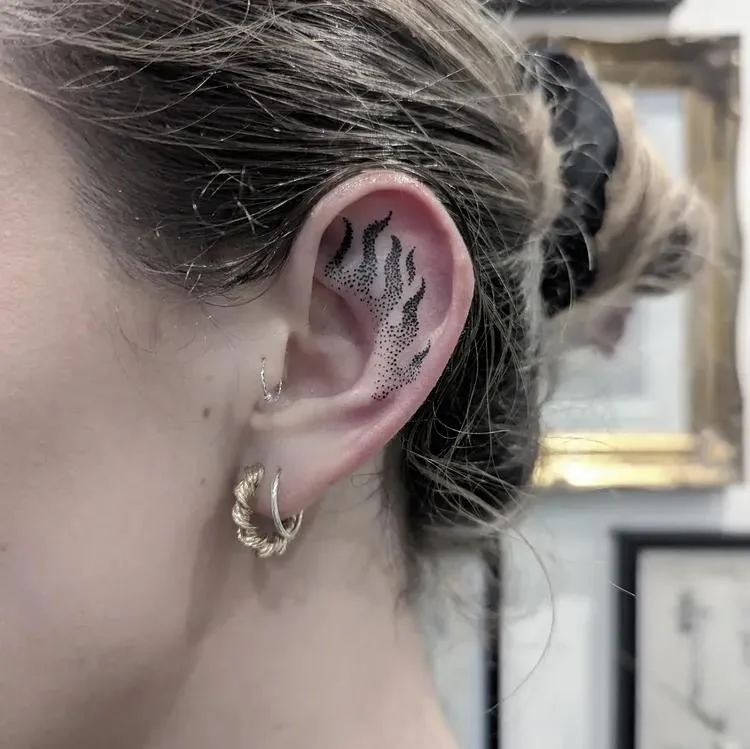
Flame-inspired shapes can create an edgy tattoo while fitting neatly within the inner ear. Dotwork shading adds texture through clusters of tiny marks instead of relying on large solid areas. Curved flame tips can follow the inner structure and make the artwork feel integrated with the placement. Dark ink gives the design a stronger visual presence despite its compact size. Such detailing works well for people who want something bold and unconventional without extending the tattoo far beyond the ear.
9. Ornamental Dotwork with Floral Shapes
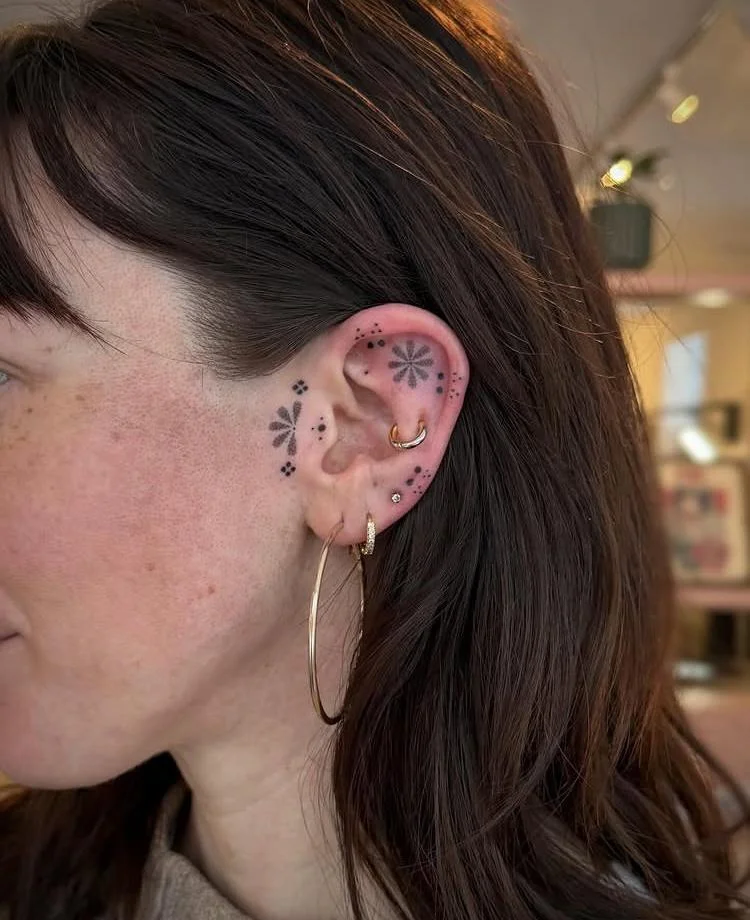
Ornamental patterns can combine floral forms with carefully placed dotwork for a decorative ear tattoo. Repeated shapes create visual rhythm, while small dots provide texture around the main elements. Curved sections can follow the ear and extend slightly outward to create a connected composition. Balanced spacing keeps individual details recognizable instead of allowing them to merge together. People who enjoy jewelry-inspired artwork may find this style especially appealing because its structure can resemble a small permanent accessory.
10. Dark Botanical Work Flowing Beyond the Ear
Dark botanical artwork can create a stronger visual statement when flowers and leaves extend beyond the ear. Shaded petals and curved stems can move downward or outward, giving the composition more length than a compact design. Open skin between darker areas helps preserve separation and prevents the artwork from becoming one heavy block. Extended placement also creates a more illustrative appearance than simple micro tattoos. Such designs suit people who want botanical imagery with a moodier and more expressive character.
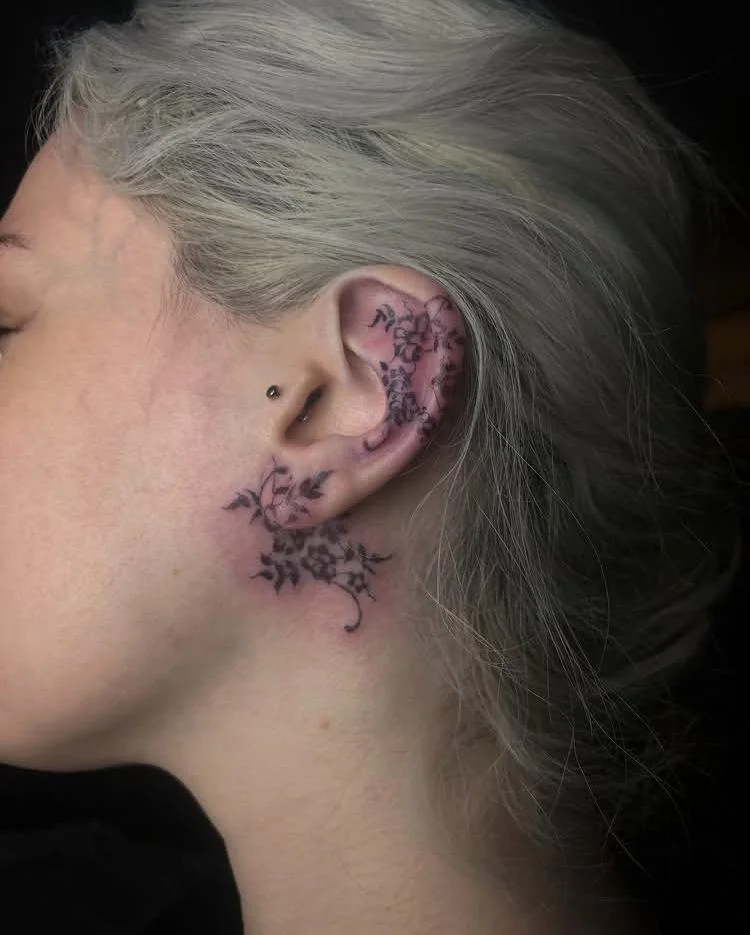
11. Jewelry-Inspired Ornamental Details
Ornamental tattoo work can imitate the visual rhythm of earrings through slim shapes placed beneath or behind the ear. Vertical lines, small motifs, and decorative curves create the impression of hanging jewelry without requiring an actual accessory. Fine detailing keeps the design refined while allowing several elements to connect into one composition. Placement can also complement existing earrings rather than compete with them. People drawn to decorative tattoos may enjoy this approach because it combines body art with the appearance of personal adornment.
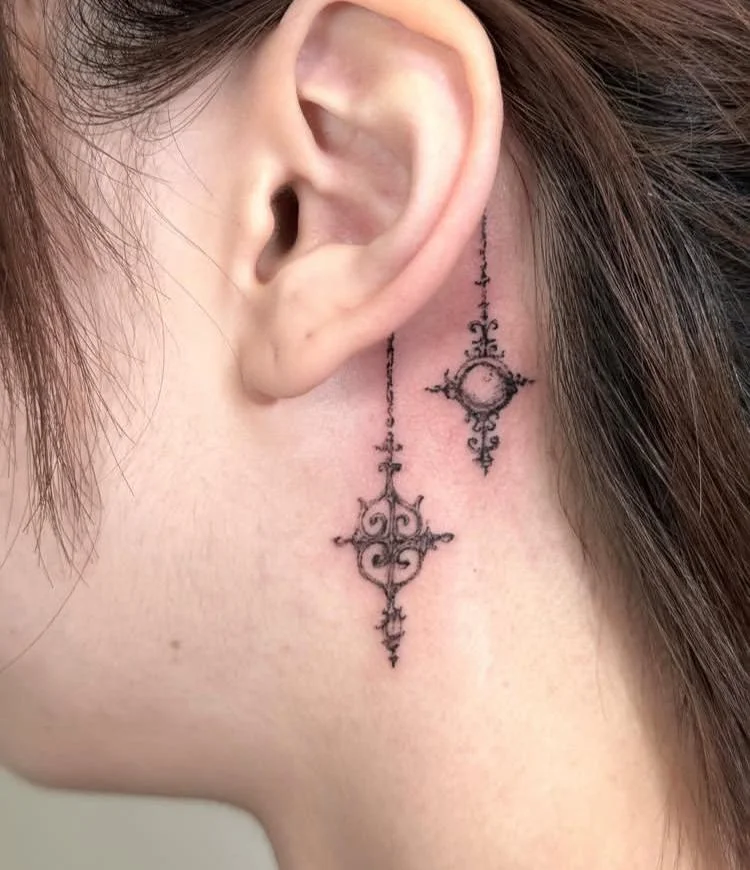
12. A Beaded Curve with a Starry Finish
Small circular details can create the appearance of beads when arranged along curved lines behind the ear. Consistent spacing gives the design a neat rhythm, while a tiny star or pointed shape can provide a distinctive ending. Curved placement allows the artwork to follow the natural movement of the area without appearing rigid. Fine black lines keep the design visually light and easy to pair with jewelry. Such a composition offers a simple way to achieve a decorative look without excessive detail.
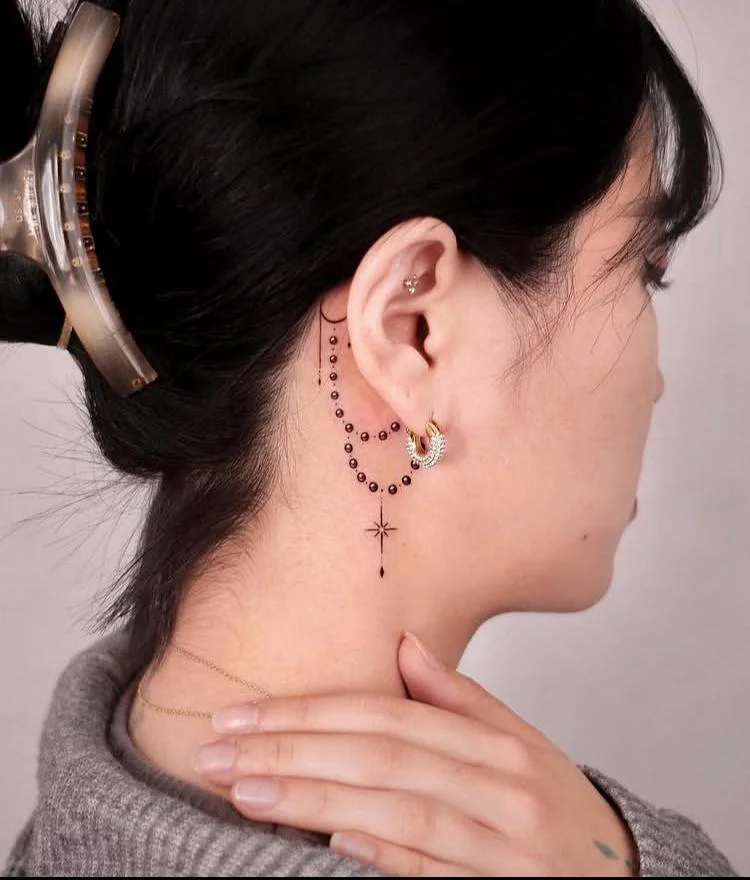
13. Spiderweb Drama Behind the Ear
Spiderweb artwork can bring a darker character to the narrow space behind the ear. Fine web lines create a structured pattern, while a small spider can extend downward for added visual interest. Careful line spacing helps each section remain visible instead of blending into one dark shape. Placement behind the ear keeps the design partly concealed when hair covers the area. People who enjoy alternative tattoo styles can use this concept to create something recognizable, dramatic, and still relatively compact.
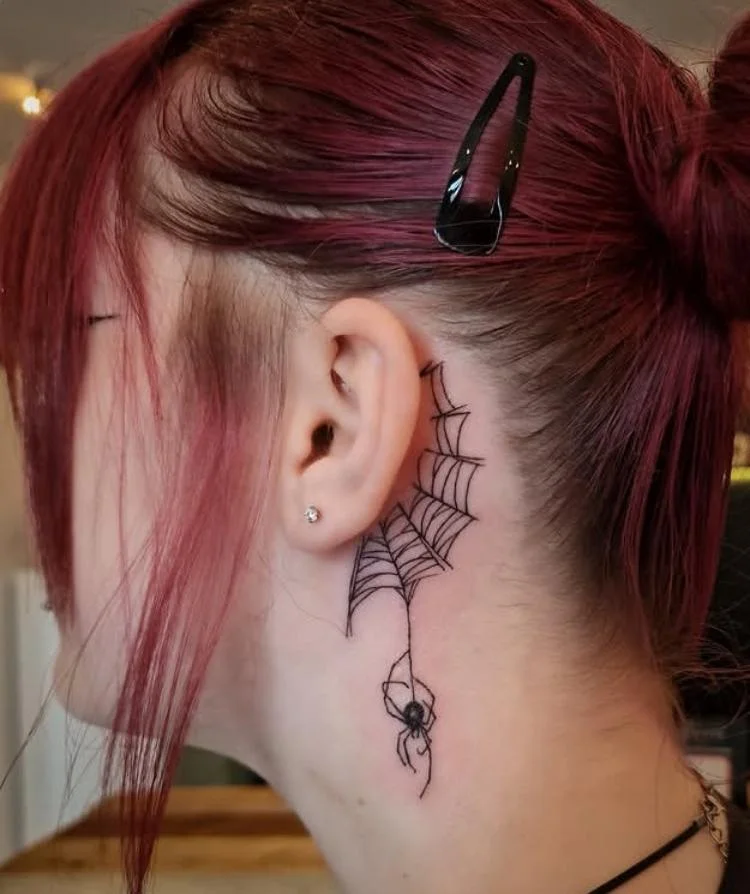
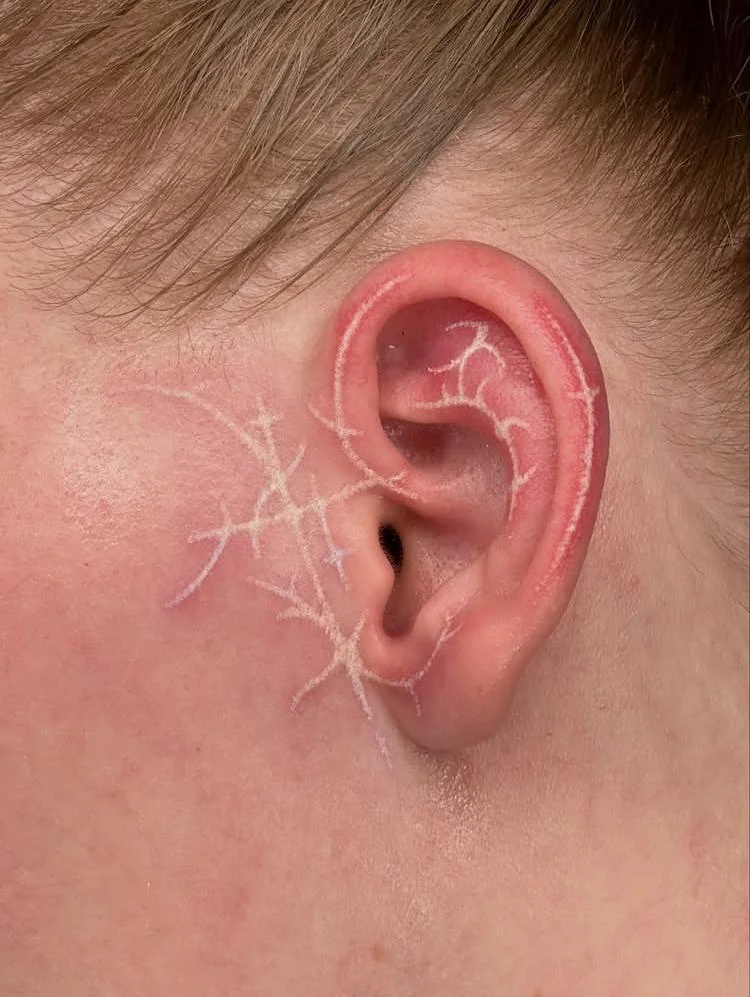
14. White Ink with a Barely-There Effect
White ink creates a softer visual direction for people who prefer subtle body art. Fine abstract lines can follow the ear and surrounding skin while creating a design that appears lighter than traditional dark ink. Branching shapes can add movement without relying on heavy outlines or dense shading. Visibility may vary depending on skin tone, healing, and lighting, so the final effect can remain understated. Careful placement makes this approach especially interesting for people seeking an unusual alternative to conventional black tattoos.
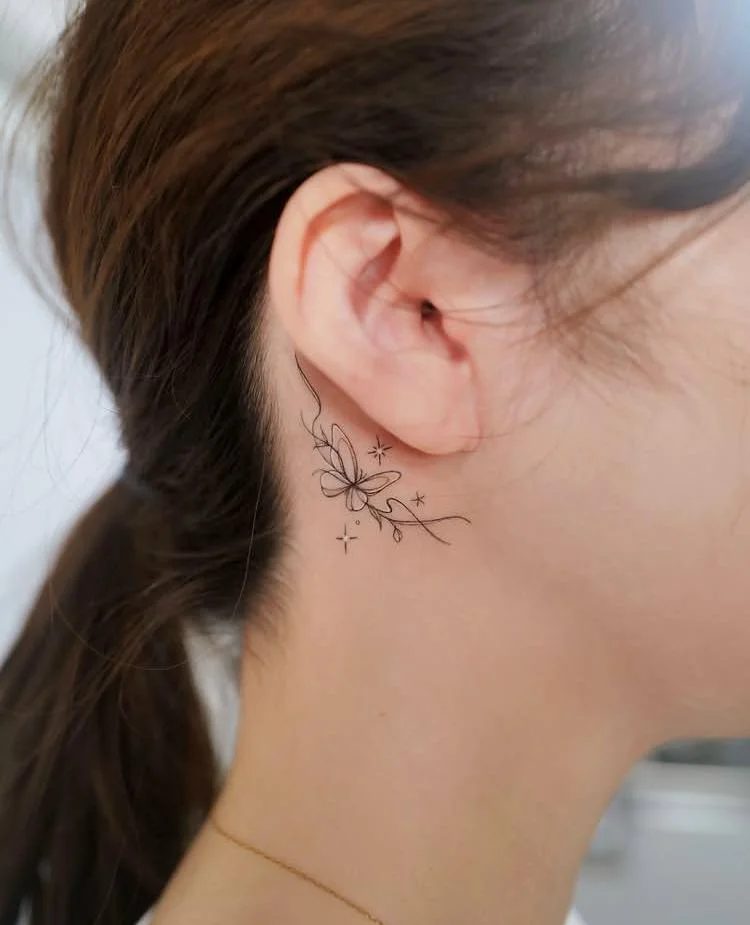
15. Tiny Florals with a Little Sparkle
Small flowers can create a delicate composition when paired with thin trailing lines and tiny decorative marks. Petal shapes remain visually gentle when the artwork uses restrained proportions and clear spacing. A small butterfly or star-like detail can introduce another focal point without overpowering the floral elements. Placement beneath or beside the ear keeps the design connected to the natural curve of the area. Such artwork suits people who want feminine detail with a light appearance and limited visual weight.
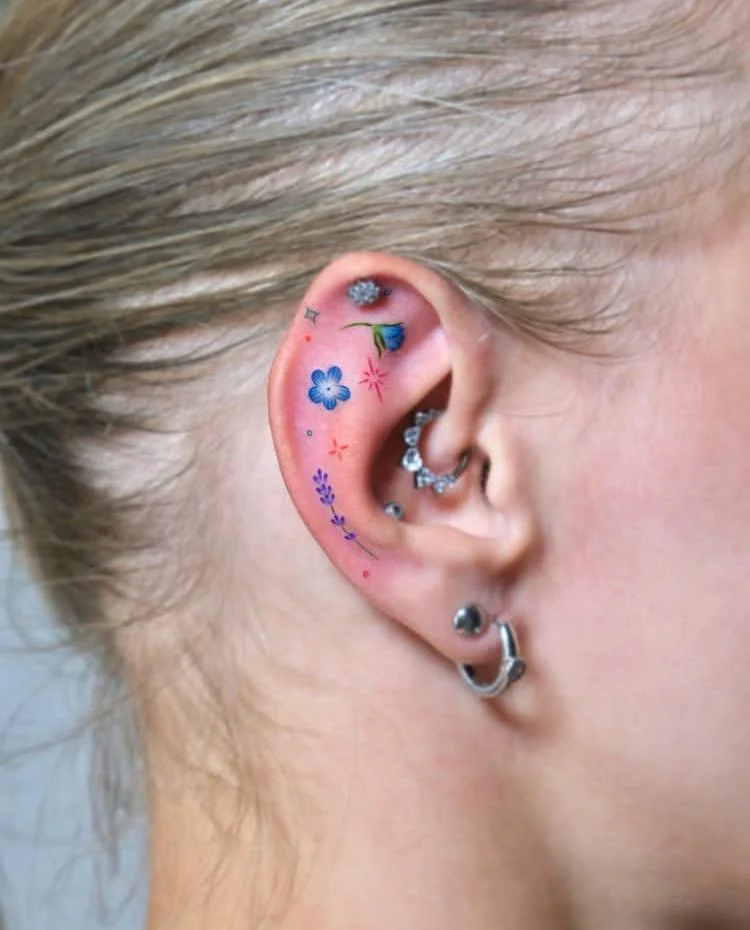
16. A Miniature Garden in Color
Tiny colored flowers can form a compact garden effect when several botanical motifs sit close together. Blue, purple, pink, and green details can separate different flowers while giving the artwork a cheerful character. Small decorative marks can fill limited spaces without making the design look overly dense. Rounded petals and short stems help each motif remain recognizable at a small scale. People who prefer colorful micro tattoos may enjoy this concept because it feels playful while still maintaining a clear overall structure.
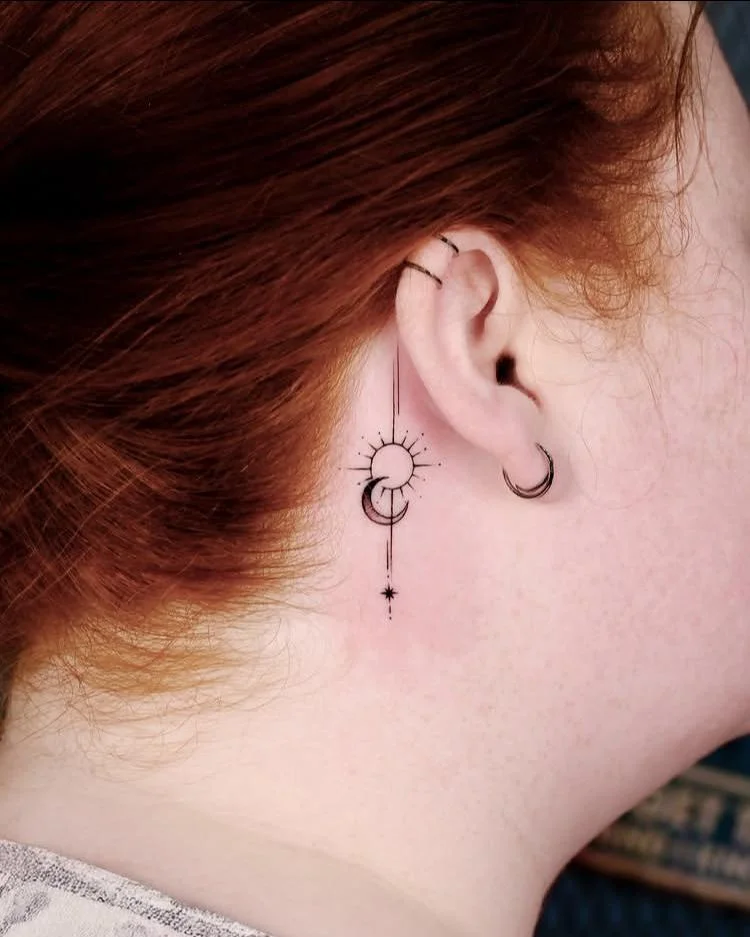
17. Sun and Crescent in Perfect Balance
Sun and moon imagery can create a balanced vertical tattoo when both symbols share one narrow composition. Radiating lines around the sun can contrast nicely with the curved shape of a crescent. Small dots or stars can fill limited spaces while preserving enough open skin around the main symbols. Vertical placement works naturally behind the ear because the area already provides a slim canvas. Such celestial artwork offers recognizable symbolism while keeping the overall design clean, structured, and visually controlled.
18. A Sharp Black Starburst
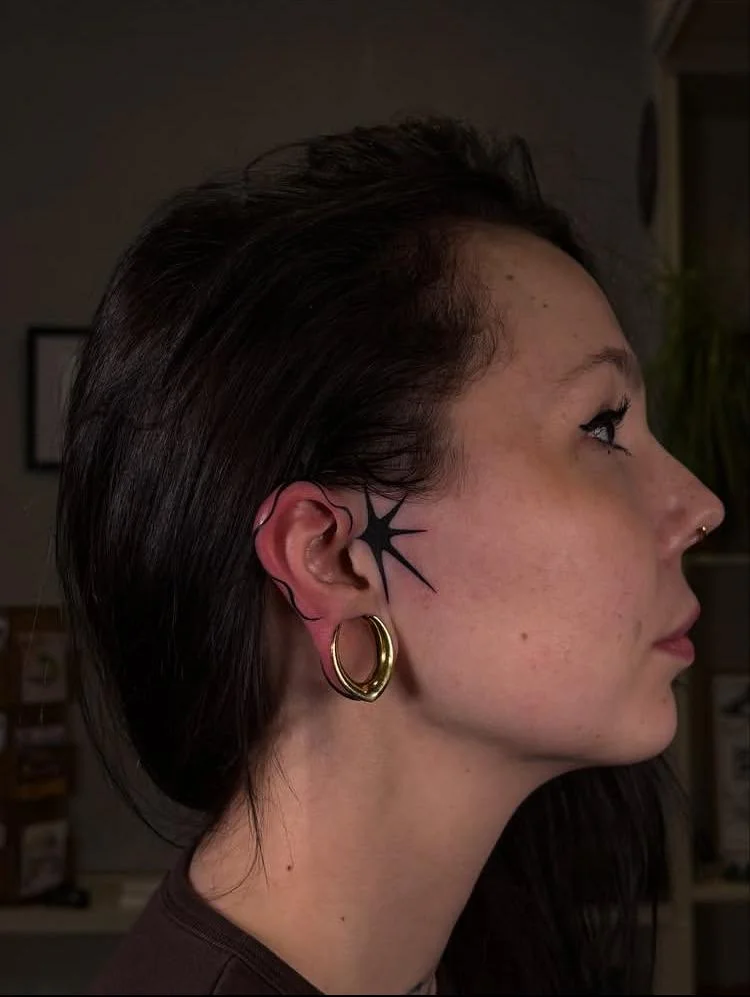
Bold starburst artwork can create immediate impact through strong pointed shapes and solid black ink. Short rays extending from one central point can make the design appear larger without requiring a large tattooed area. Placement near the ear can create an interesting contrast between the organic curve of the anatomy and the sharp geometry of the artwork. Clean edges help maintain the graphic appearance. People who prefer alternative designs may appreciate this option for its direct, modern, and confident visual character.
19. Bold Ornamental Blackwork
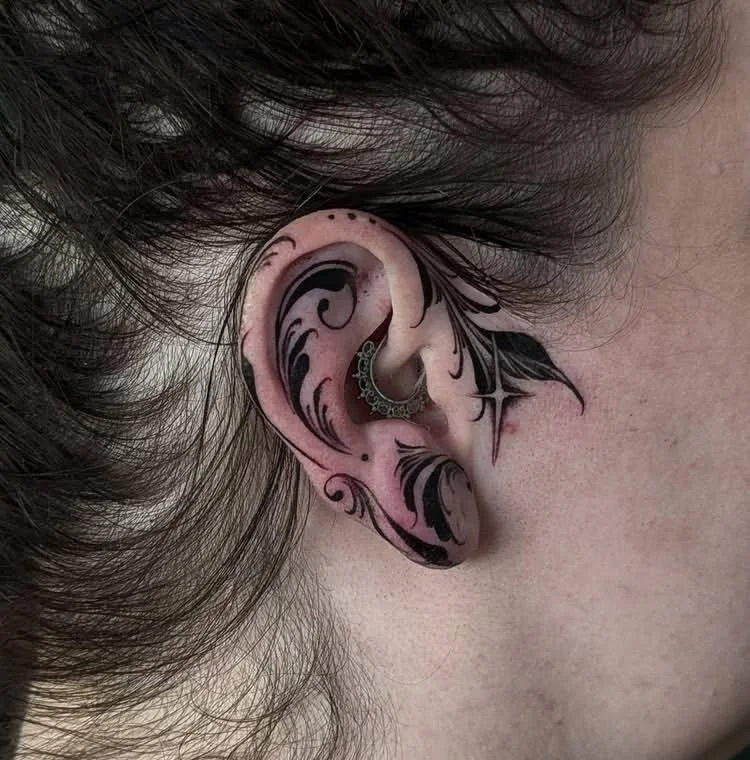
Heavy blackwork can transform the ear into the central focus of a more dramatic tattoo composition. Thick curves and pointed shapes can follow the cartilage while leaving sections of skin visible between darker areas. Negative space becomes important because it prevents dense ink from looking completely solid. Strong contrast gives the artwork a graphic quality that differs from delicate ear tattoos. Such placement works best for people who want their tattoo to feel intentional, noticeable, and distinctly alternative.
20. Fine Lines That Follow the Ear
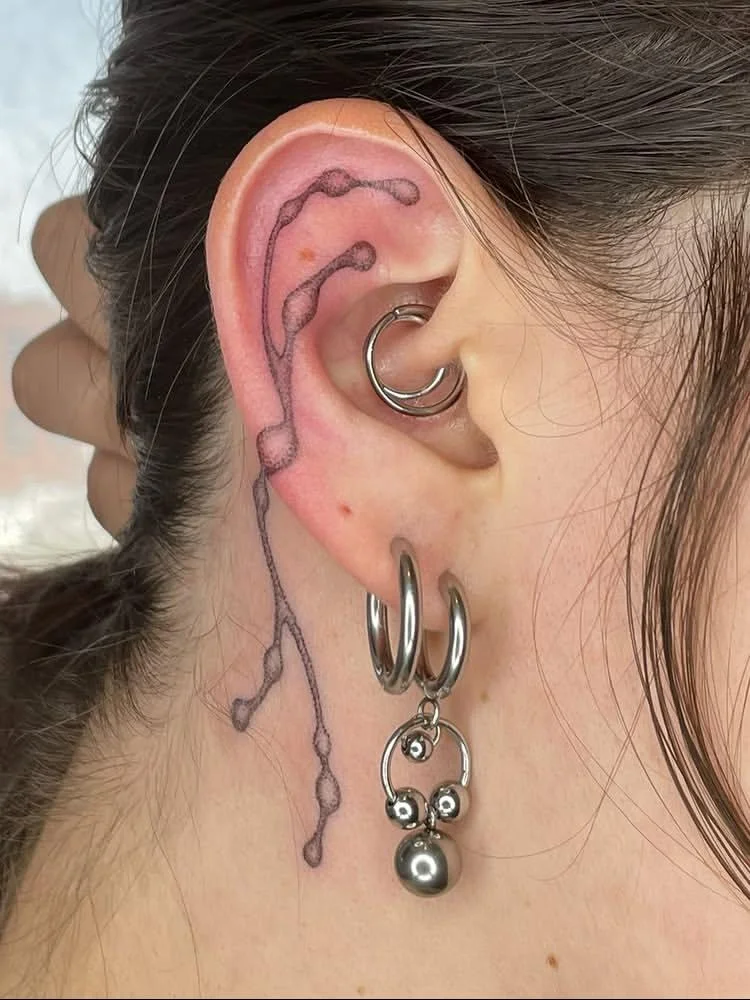
Long, delicate lines can create an unusual effect by tracing the natural movement of the upper ear. Curved sections may continue downward beside the ear, giving the artwork a connected appearance instead of a separate symbol. Thin grey-black linework can produce a softer visual weight while maintaining enough definition for the shape to remain recognizable. Placement becomes part of the design itself, making the tattoo feel closely linked to the anatomy. Minimal styling keeps the final composition experimental without becoming visually complicated.
21. Graphic Blackwork Around the Ear
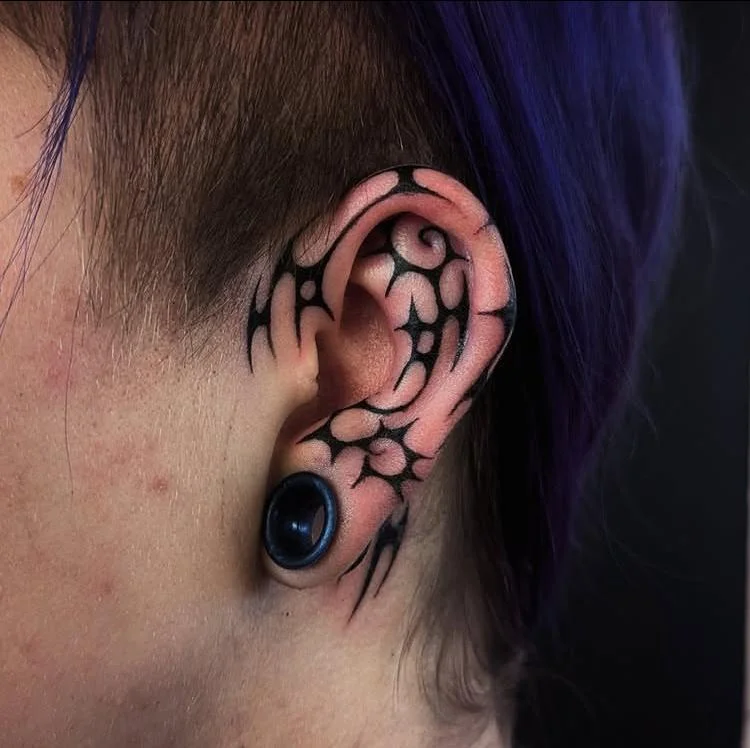
Graphic blackwork can use strong shapes and open skin to create a striking composition around the ear. Curved sections may follow the cartilage while extending slightly onto nearby skin for additional impact. Negative spaces help divide the darker forms and preserve the structure of the artwork. Such contrast gives the tattoo a modern alternative character rather than a delicate micro-tattoo appearance. People who enjoy bold body art may prefer this direction when they want unusual placement with a strong visual identity.
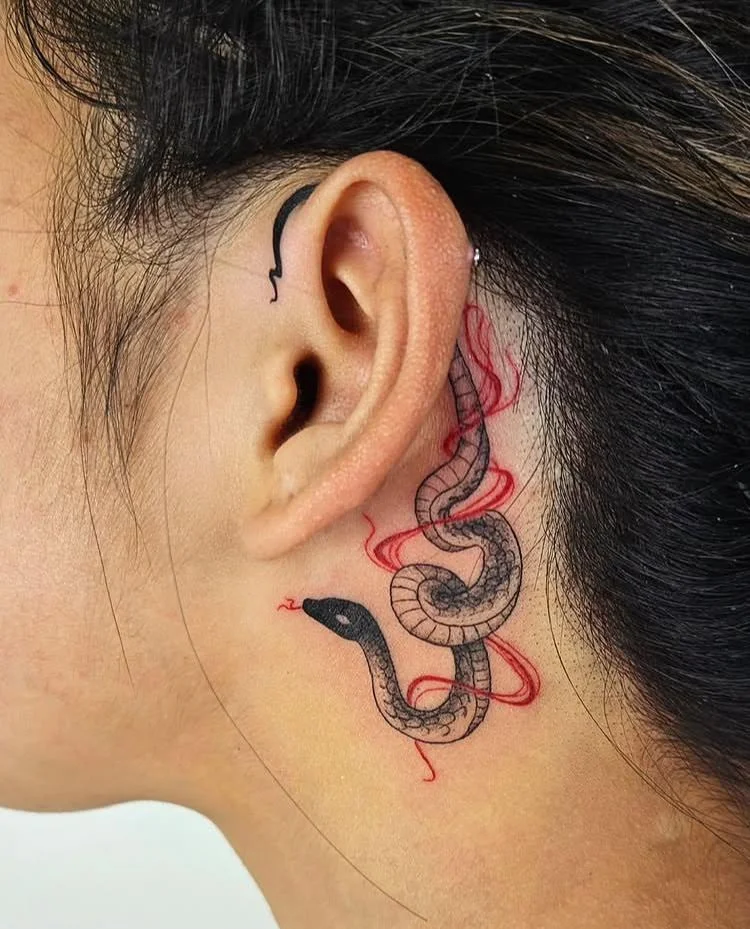
22. A Snake Curling Behind the Ear
Snake imagery fits naturally into the narrow vertical space behind the ear because its body can bend and follow the available area. Curving sections create movement, while small scale details can suggest the texture of the body without overwhelming the design. A vertical layout also allows the head and tail to remain visually connected. Subtle color accents can introduce contrast when desired, while darker linework keeps the overall form recognizable. Such artwork brings a confident, slightly rebellious quality to ear placement.
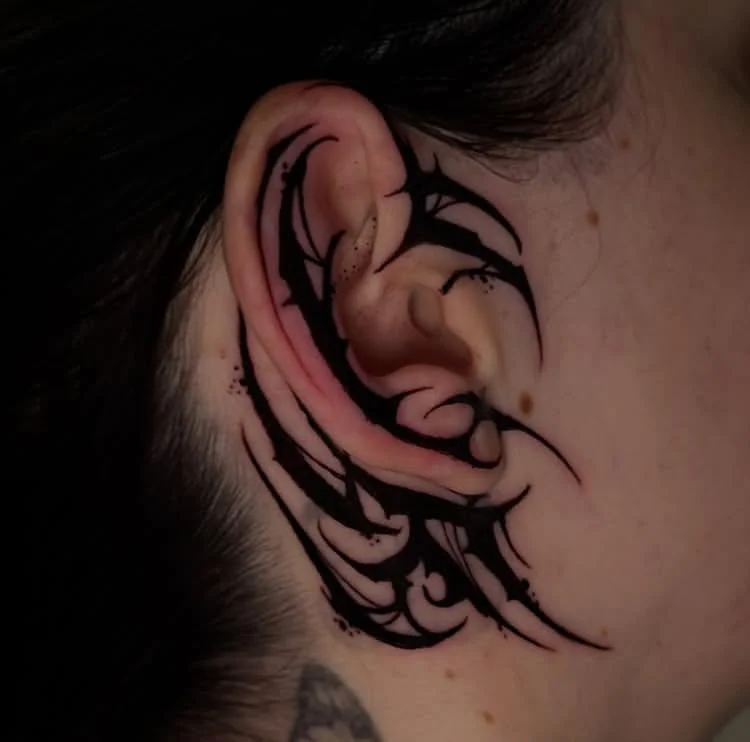
23. Sweeping Blackwork Around the Ear
Sweeping black shapes can create a sculptural appearance when they wrap around the natural contours of the ear. Curved sections may overlap different areas while open skin separates the heavier portions. Strong directional lines can guide the eye around the design and make the tattoo feel larger than its actual footprint. Bold blackwork offers a clear alternative to tiny symbolic tattoos. People who prefer graphic body art can use this approach to turn an unusual placement into a major visual feature.
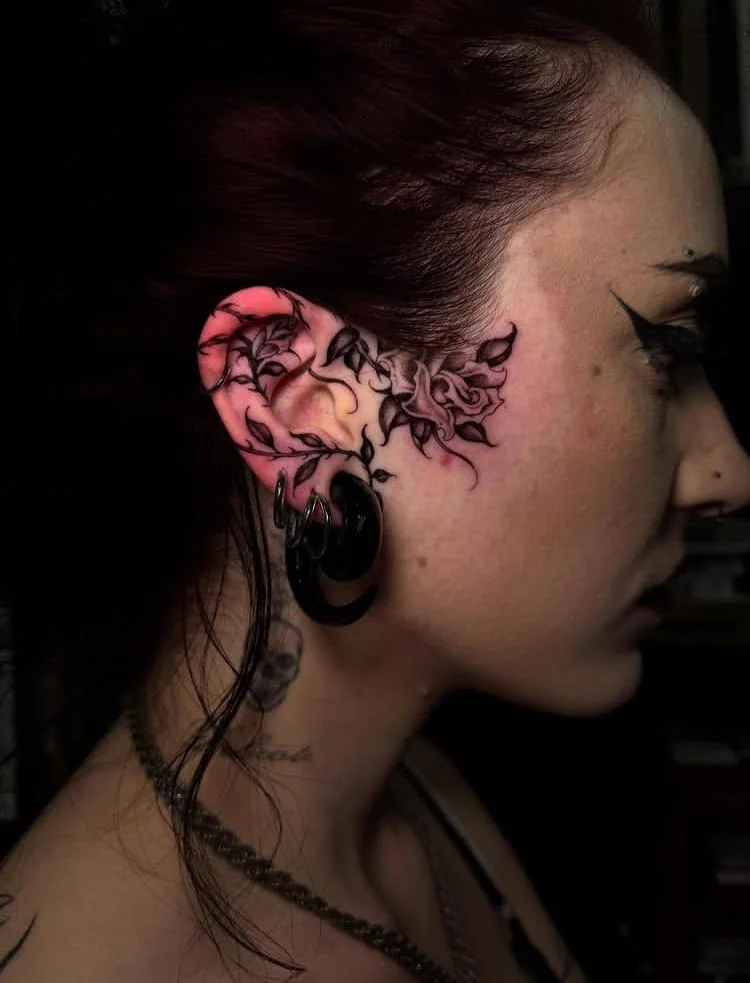
24. Dark Florals Flowing Toward the Face
Dark floral artwork can extend from the ear toward the cheek for a more expressive composition. Deeply shaded flowers and curved leaves create contrast while winding stems provide a sense of direction across the skin. Placement toward the face makes the tattoo more noticeable than a design hidden behind the ear. Open areas around the botanical forms help preserve definition and prevent the artwork from appearing overly dense. Such styling suits people who want floral imagery with a dramatic, artistic, and confident presence.
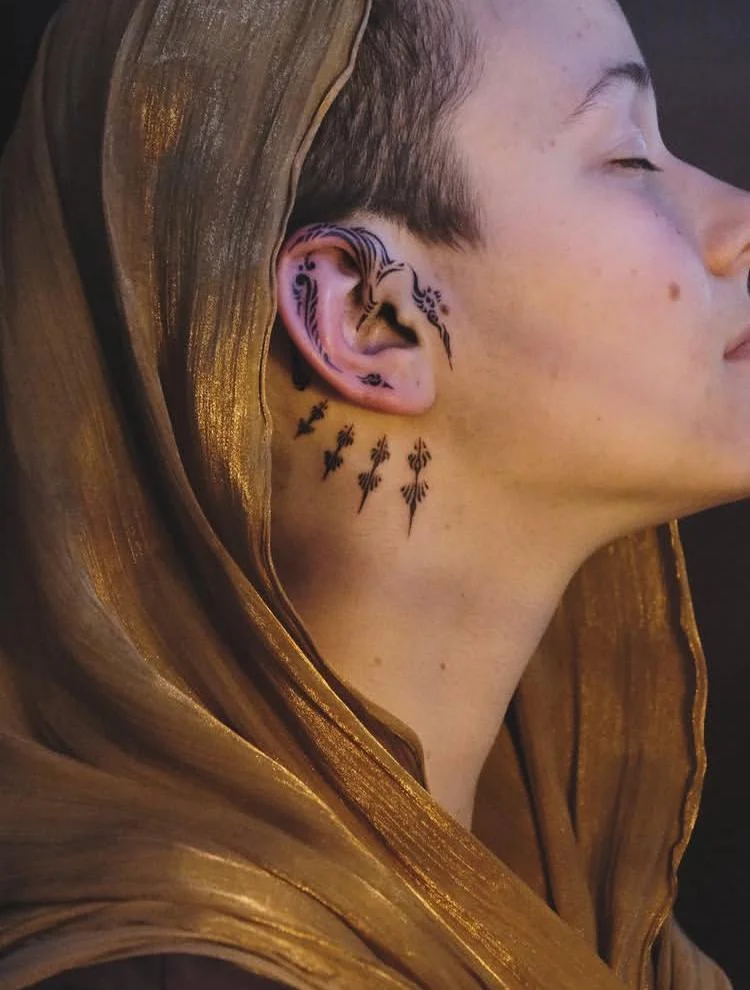
25. Ornamental Details with a Draped Effect
Hanging ornamental shapes can create a draped effect when several slim motifs extend from the ear toward the neck. Repeated forms provide rhythm while different lengths keep the composition from looking too uniform. Fine black lines can preserve detail without making the design feel excessively heavy. Vertical placement also creates the visual impression of decorative jewelry without copying a traditional earring shape. People who enjoy intricate body art may like this direction for its unusual structure and elegant sense of movement.
Conclusion
Creative ear tattoo inspiration can range from tiny celestial symbols and soft botanical artwork to dramatic blackwork and colorful micro designs. Ear ink ideas can also work around jewelry, piercings, hair, and personal styling without requiring a large tattoo. Placement, line weight, spacing, and scale all influence how the final piece looks on the ear. Tattoo ideas for the ear become especially interesting when the artwork follows its natural curves instead of treating the area like a flat canvas.