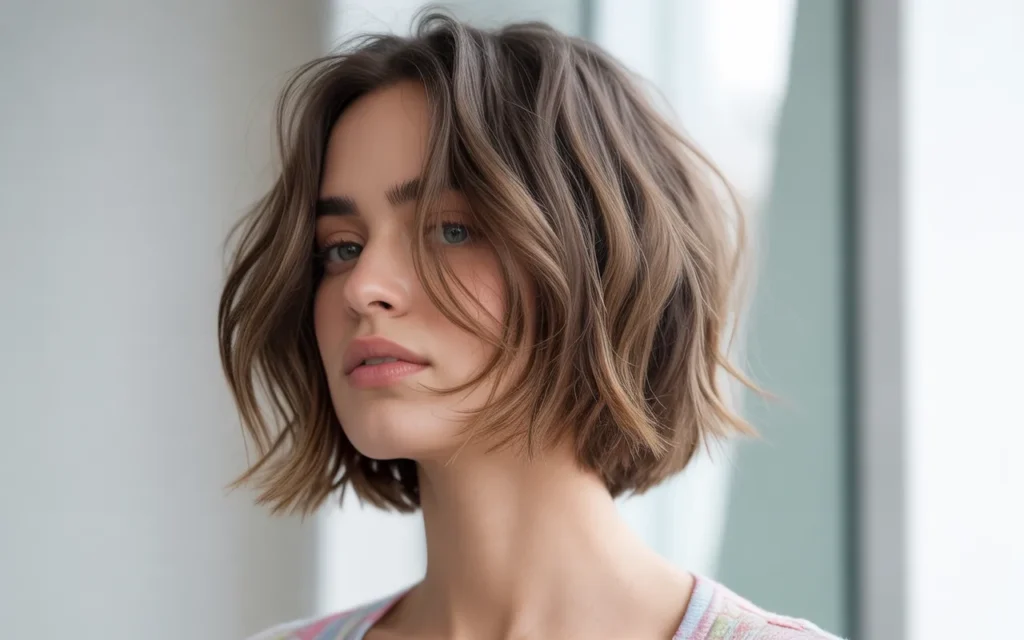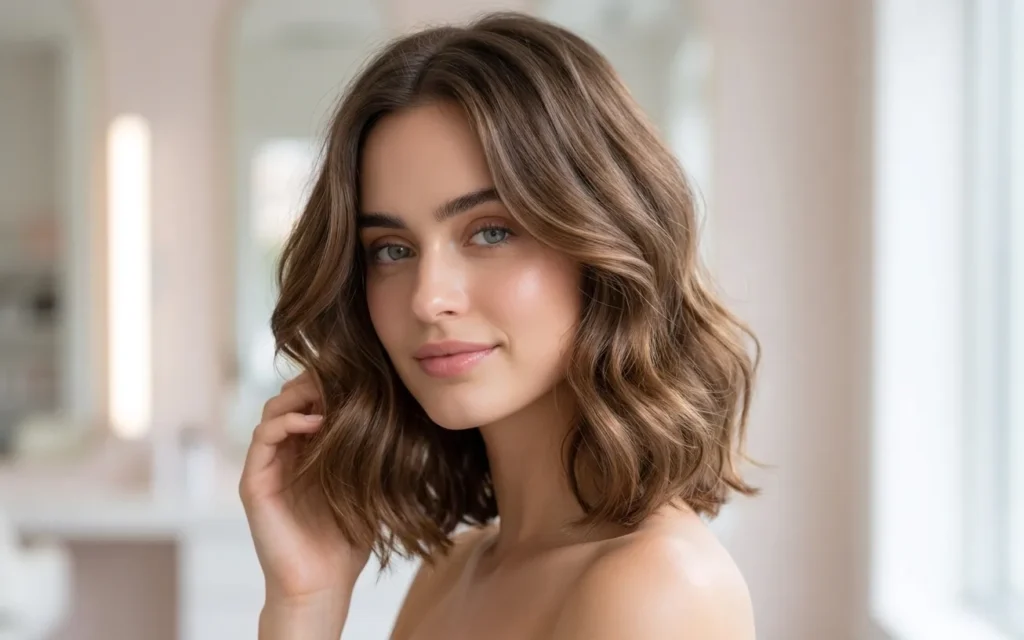
Fresh inspiration often comes from refining the details you already love instead of making a dramatic change. Smooth textures, clean lines, and thoughtfully shaped cuts create endless possibilities for a polished seasonal update without sacrificing simplicity. Fall Hairstyles for Short Straight Hair bring together timeless silhouettes, modern fringes, sleek finishes, and easy styling ideas that complement naturally straight strands throughout the cooler months. From precision bobs and layered cuts to chic bangs and effortless half-up styles, each look highlights the crisp definition that straight hair offers. Whether you’re planning a salon appointment or searching for a low-maintenance everyday style, these carefully selected hairstyles make it easy to find a look that feels fresh, flattering, and perfectly suited to autumn.
1. French Bob
French Bob sits just below the jaw with blunt ends that skim the chin in a straight, unbroken line. Relatively flat, the crown stays smooth while the perimeter carries slight weight, giving the silhouette a rounded, compact edge. Minimal texturizing keeps the ends crisp rather than feathered. Symmetry holds through a center or slightly off-center parting from every angle.
2. Bixie Cut
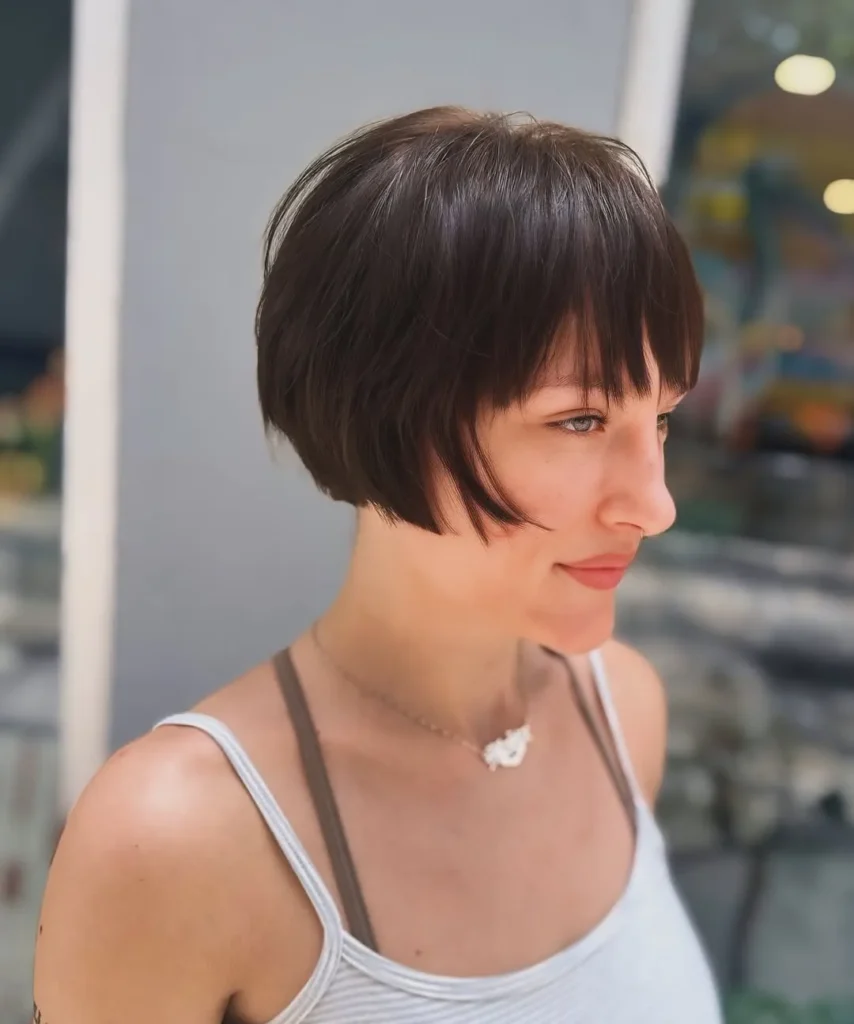
Bixie Cut blends the cropped sides of a pixie with the softer length retention of a bob, landing somewhere between the ear and the jaw. Wrapping around the ears, shorter layers taper at the nape while the top section stays slightly longer for lift. Visible height builds through the crown without looking spiked. Straight texture keeps every layer distinct instead of blurring together.
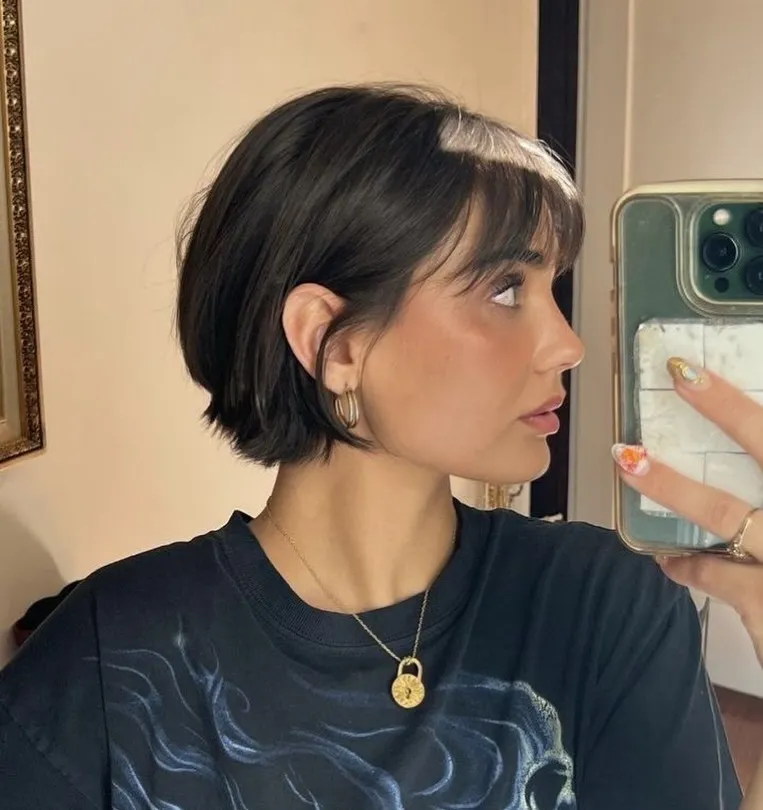
3. Mixie Cut
Mixie Cut takes the bixie concept further by mixing in choppier, more fragmented layering throughout the crown and sides. Uneven lengths cut on purpose create a jagged, broken outline rather than a smooth taper. Close-cropped at the nape, noticeable volume builds through the top. Straight strands make each fragmented layer stand apart clearly instead of melting into the next.
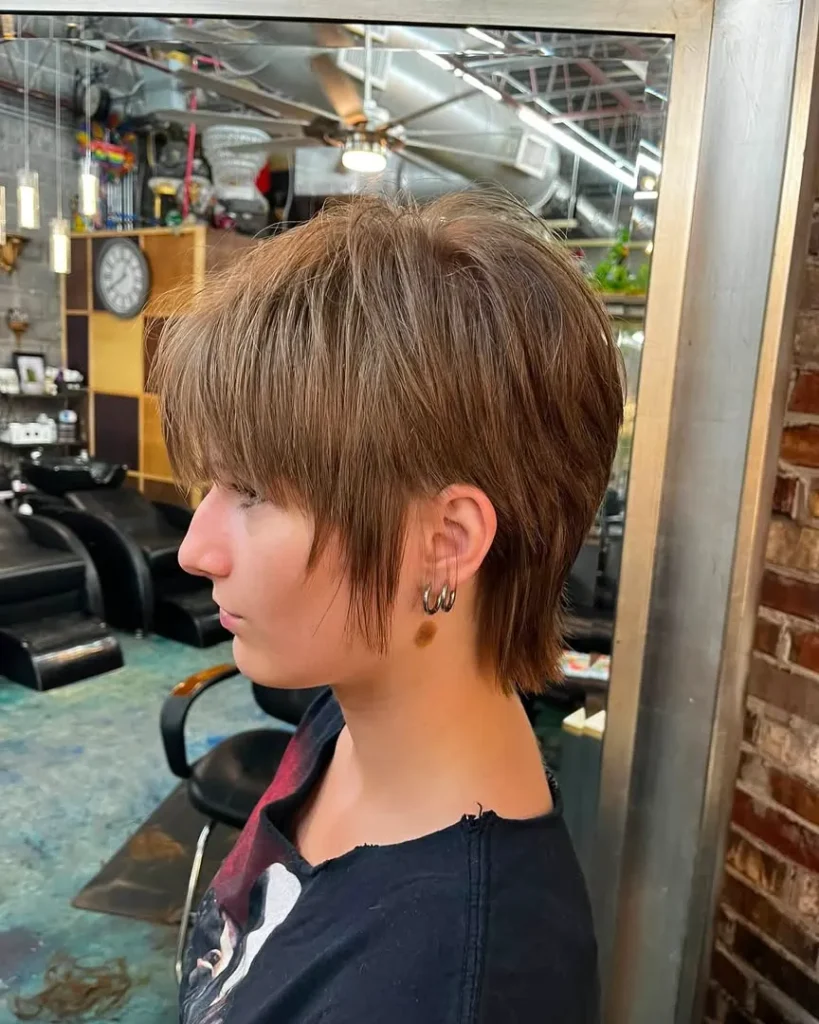
4. Short Wolf Cut
Short Wolf Cut stacks heavy layers through the crown that build outward into choppier, shaggier ends toward the perimeter. Deliberate volume and separation hold through the top section, while the lower layers thin out and flick outward at the tips. Fringe often blends into the front layers rather than sitting as a separate piece. Shaggy and lived-in, the overall shape reads far from neatly stacked.
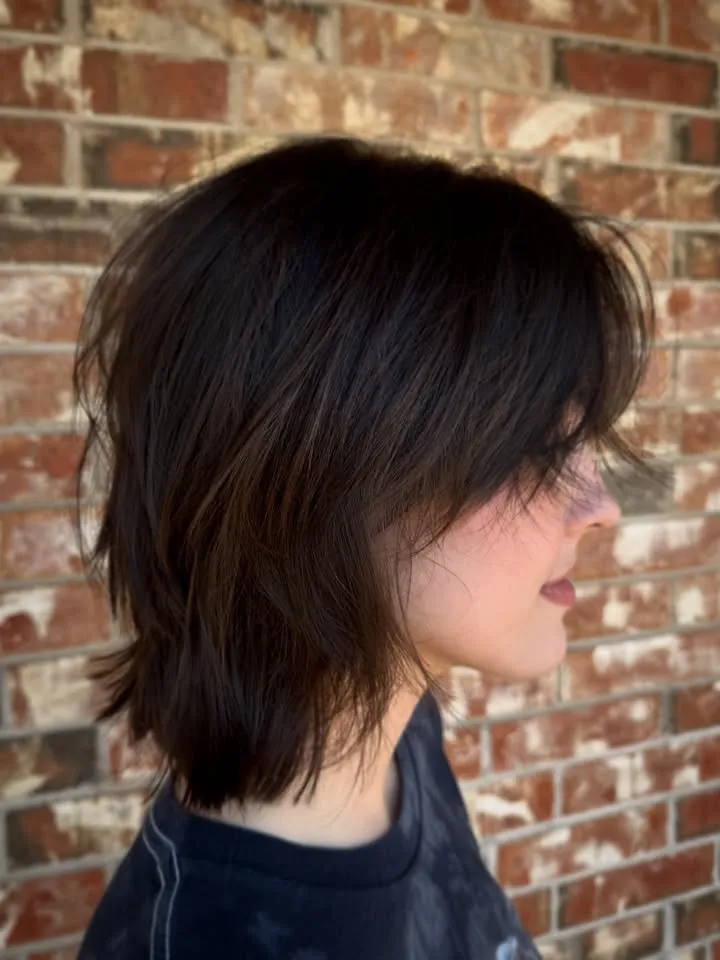
5. Mushroom Cut
Mushroom Cut rounds out at the crown and curves inward along the perimeter, mimicking the dome-and-cap shape of a mushroom top. Consistent length wraps around the head, with ends turning slightly under rather than out. Blending into the sides, the fringe area softens where the cap shape meets the face. Rounded and close, the silhouette defines the entire cut from crown to nape.
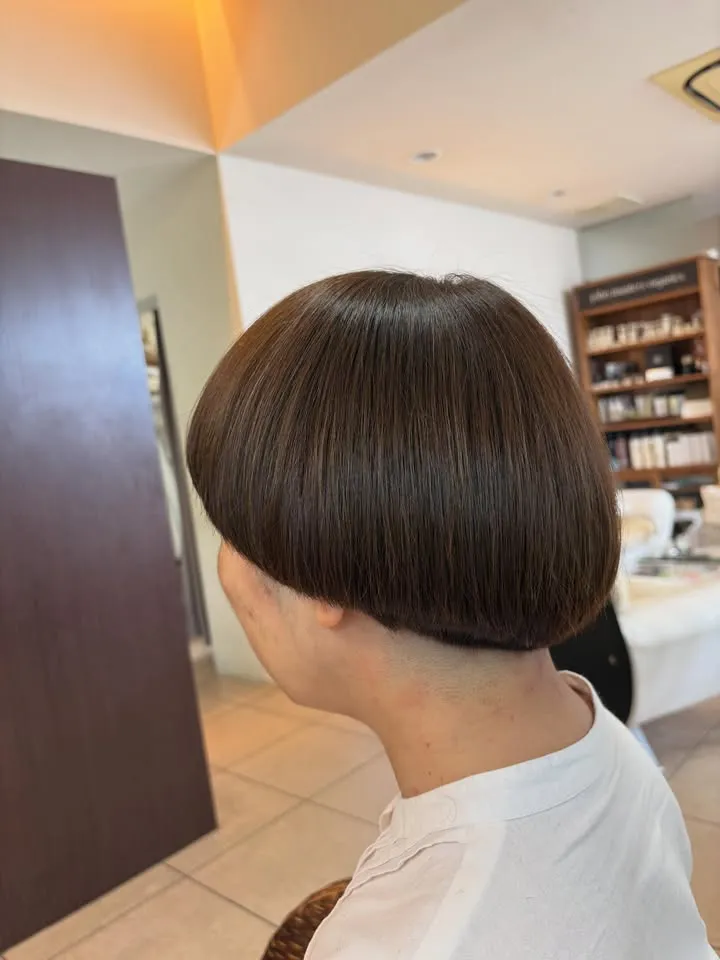
6. Pageboy Hairstyle
Pageboy Hairstyle falls just below the chin with ends that curve inward in a soft, uniform sweep. Smooth and close to the head, the crown avoids excess volume or lift. Blunt bangs or a fringe typically pair with the rounded perimeter, closing off the front of the face. Even length runs throughout, with almost no layering breaking up the line.
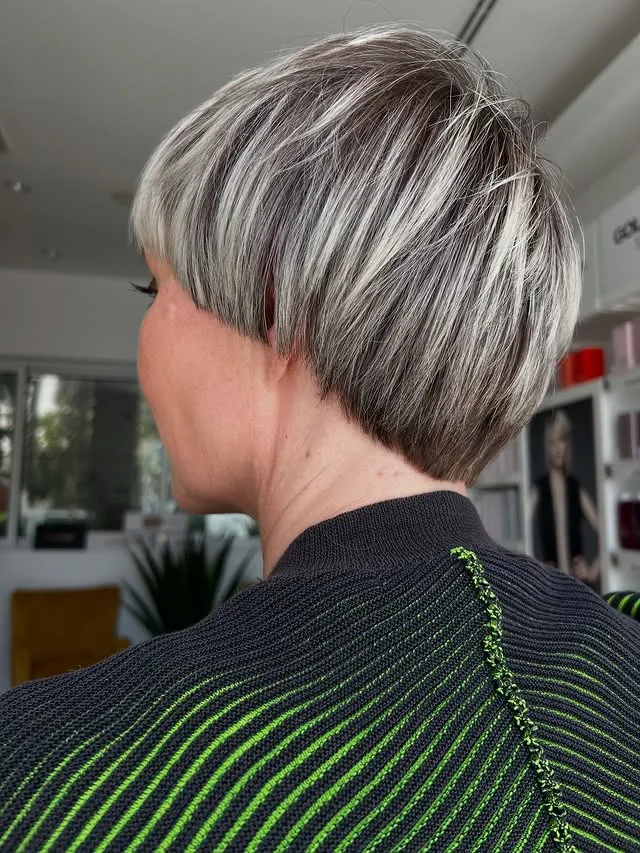
7. Bowl Cut
Bowl Cut keeps length uniform around the entire head, following a rounded line that sits above the ears and across the forehead. Minimal volume shows through the crown, staying flat and close to the scalp. No graduation separates the sides from the back, so the perimeter reads as one continuous, unbroken edge. Geometric roundness gets emphasized through straight strands along the outline.
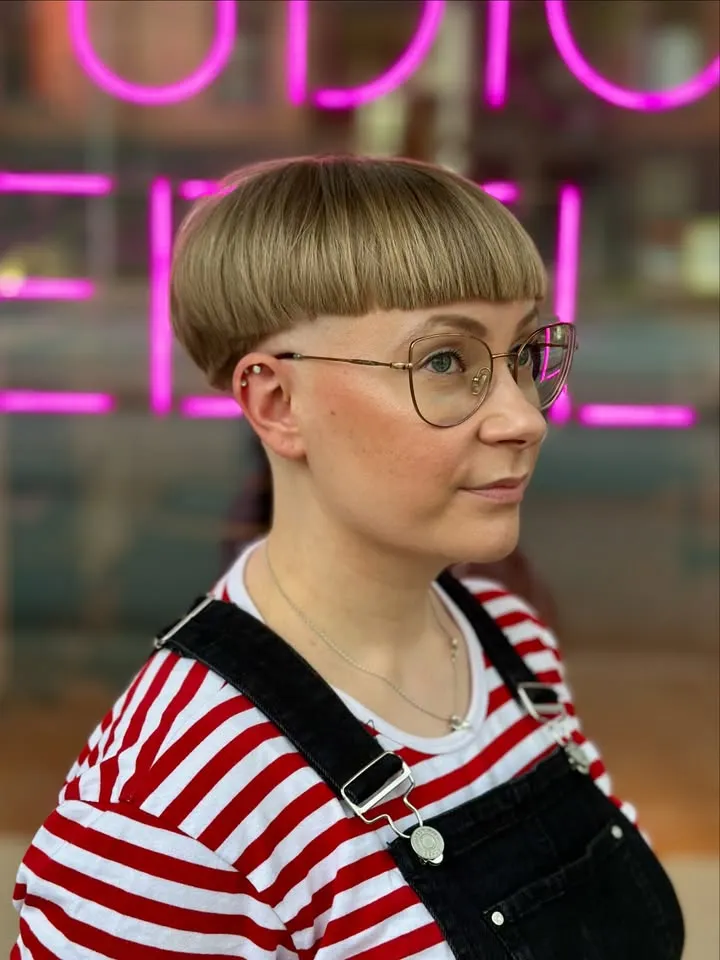
8. Razor Layer Cut
Razor Layer Cut uses a razor blade instead of shears to slice through the ends, leaving edges that are soft, splintered, and slightly uneven rather than blunt. Gradually thinning, layers throughout the crown and sides reduce bulk without adding obvious steps. Movement builds naturally from the feathered tips rather than from heavy layering underneath. Airy rather than solid, the finish carries lightly along the perimeter.
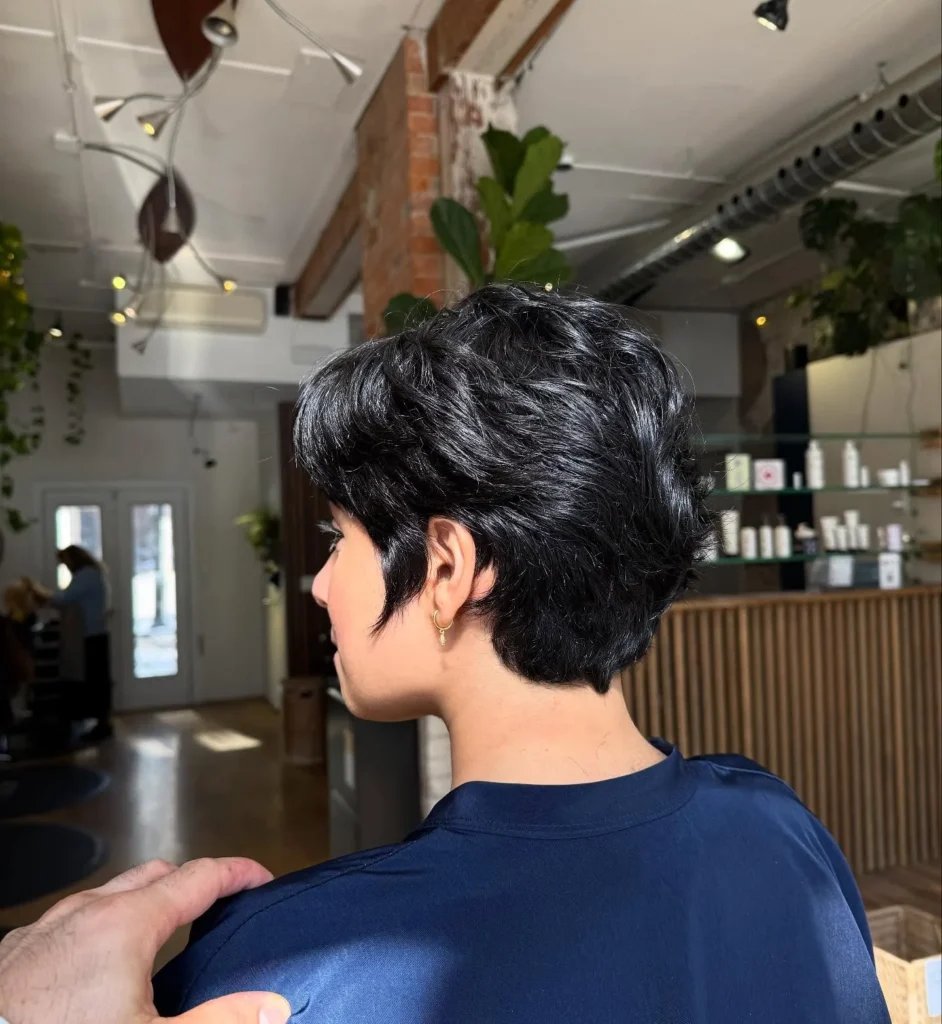
9. Feathered Layers
Feathered Layers taper gradually from root to tip, thinning the ends into fine, wispy points rather than leaving them thick. Blending into one another, sections through the crown and sides show almost no visible line between layers. Slight outward flicks at the bottom of the perimeter add lightness to the overall shape. Straight hair lets each feathered strand separate cleanly instead of clumping.
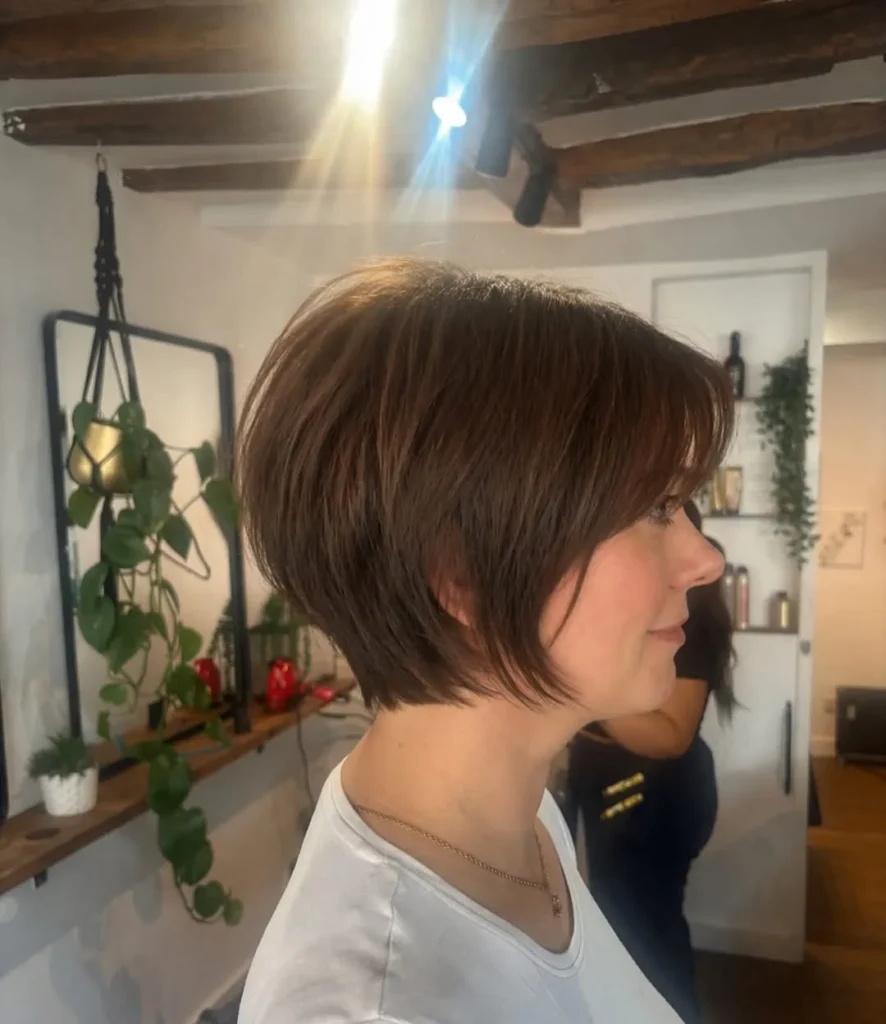
10. Butterfly Layers
Butterfly Layers work in two distinct tiers: shorter, face-framing pieces up top and longer layers cascading beneath, resembling wings spreading outward. Lift and movement build near the crown through the shorter top layers, while the lower layers maintain length and weight. Visible length gaps between the two tiers create the winged effect. Closer to the cheekbones, the framing pieces sit forward.
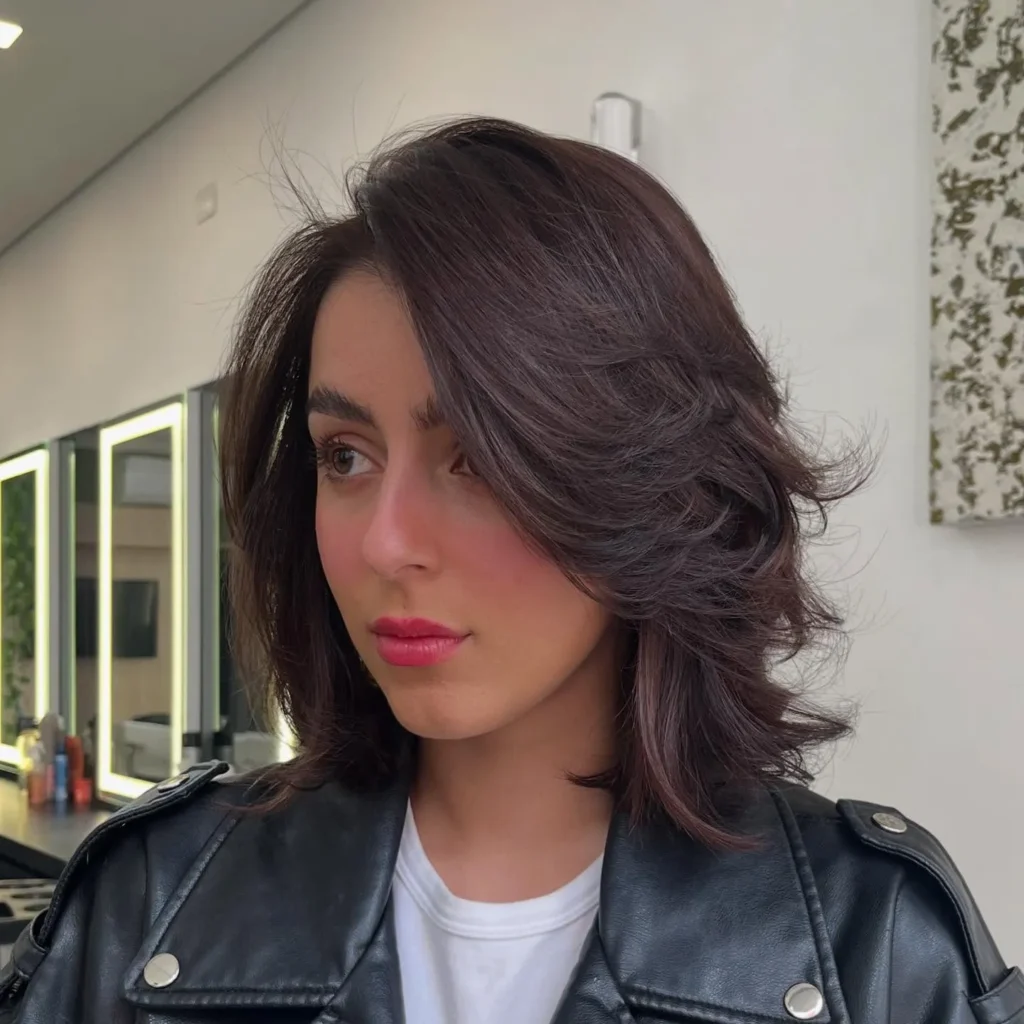
11. Hime Cut
Hime Cut pairs blunt, straight-across bangs with two separate side panels that extend past the shoulders, framing the face while the rest of the hair stays shorter behind. Layered or blunt, the back portion often sits at a shorter length than the front panels. Defined separation marks where the face-framing sections meet the back length. Sleek against the cheeks, straight texture holds the side panels close.
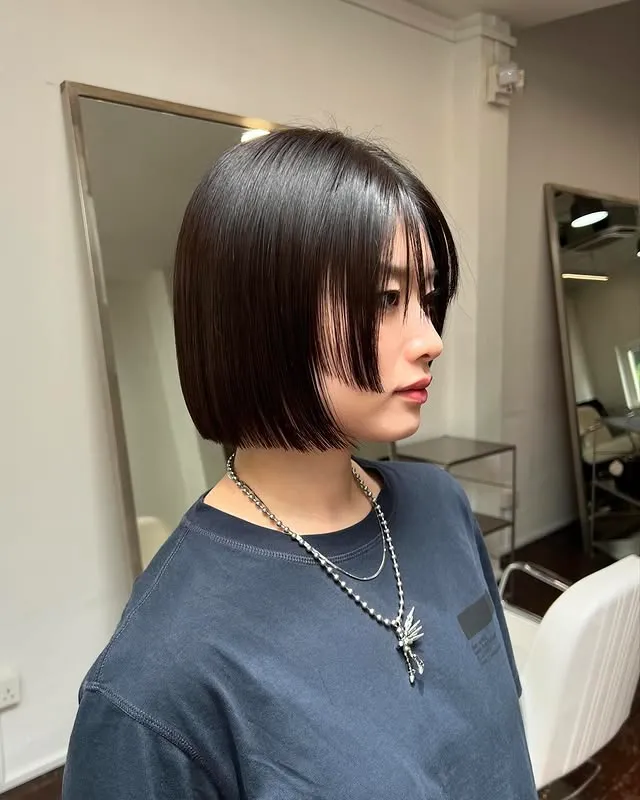
12. Blunt Bangs
Blunt Bangs are cut straight across the forehead in one solid, unbroken line, typically sitting just above the eyebrows. No layering or texturizing softens the edge, so sharpness carries from corner to corner. Length behind the bangs can vary, but the fringe itself remains a single dense panel. Precision rather than tapering defines how the ends are cut.

13. Curtain Bangs
Curtain Bangs part down the center of the forehead and sweep outward to both sides, leaving a gap above the nose where the two sections divide. Longer toward the temples, each side tapers as it moves outward, blending into the length near the cheekbones. Lightly framing the brow area, the center stays shortest. Feathered rather than blunt, softness lets the two panels fall outward.
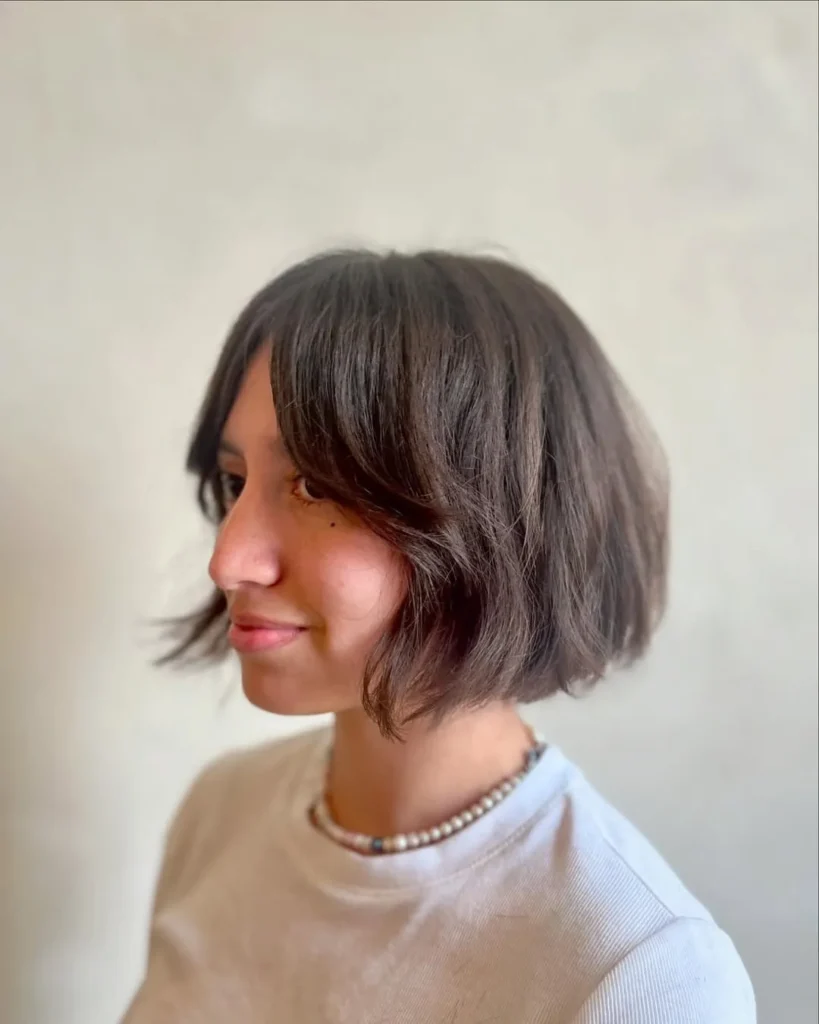
14. Wispy Fringe
Wispy Fringe consists of thin, separated pieces rather than one dense panel, allowing gaps of skin to show through along the forehead. Pointed and fine, the ends taper to almost nothing at the tips. Length typically sits above the brow, keeping the fringe light rather than heavy. Uneven falls avoid the uniform edge found in denser bang styles.
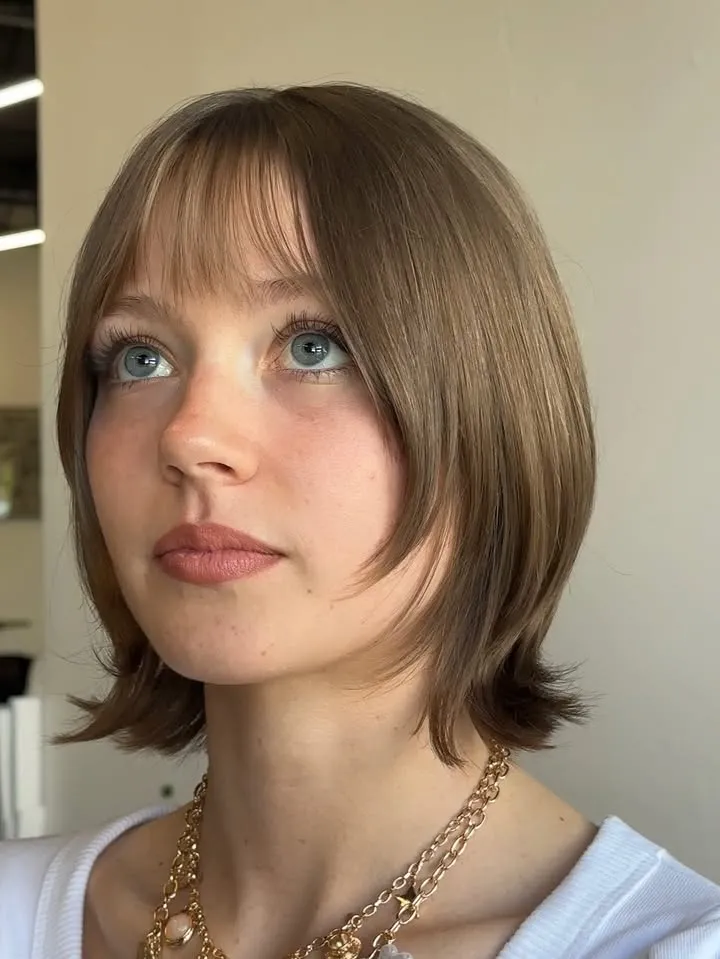
15. Side-Swept Fringe
Side-Swept Fringe directs the entire front section diagonally across the forehead toward one side rather than falling straight down. Graduating in length, shorter pieces near the part grow longer where they meet the cheek or temple. Covering part of one eyebrow, the diagonal line leaves the opposite side of the forehead exposed. Thin tapering near the ear blends the ends into the surrounding layers.
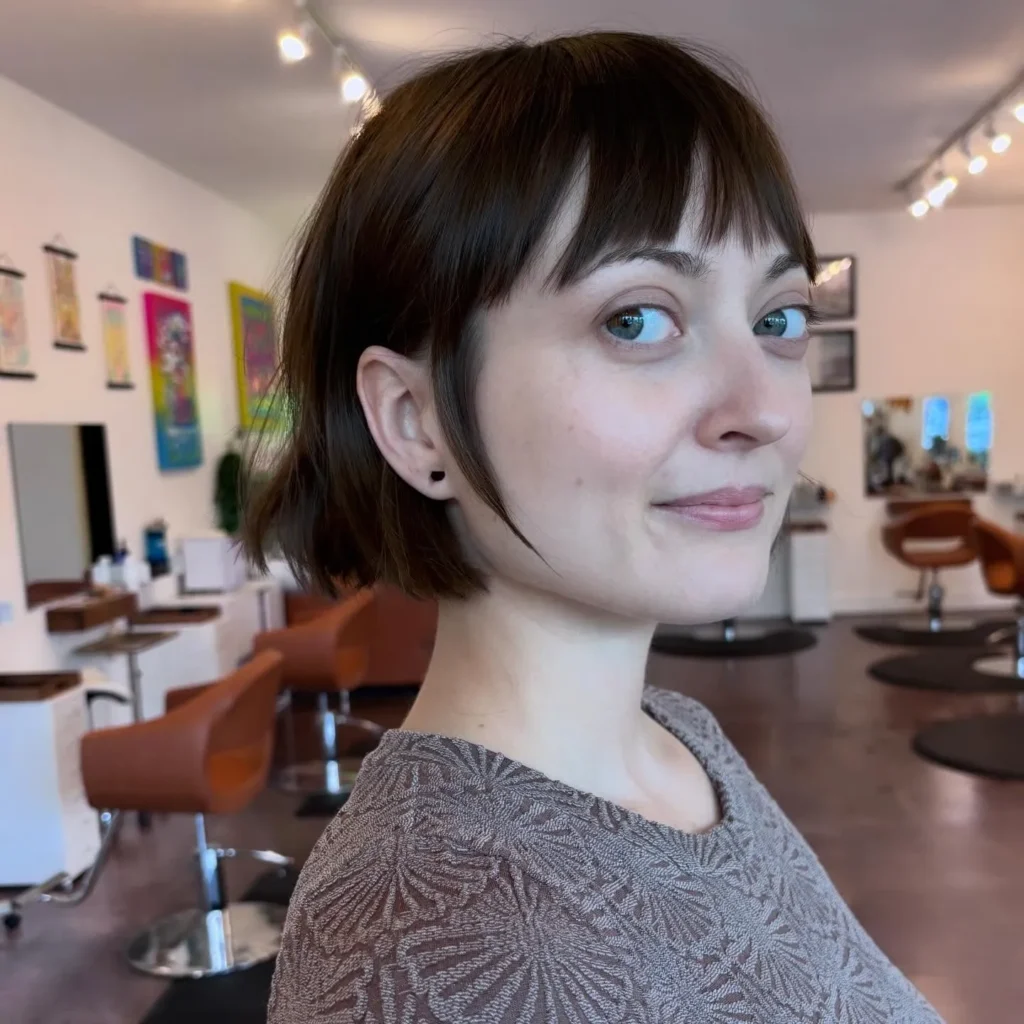
16. Baby Bangs
Baby Bangs sit high on the forehead, cut short enough to expose most of the brow bone underneath. Minimal graduation carries the straight line evenly from one side to the other. Density stays thick through the panel, giving the fringe a solid, block-like appearance. Consistently short length runs from the center out to both edges.
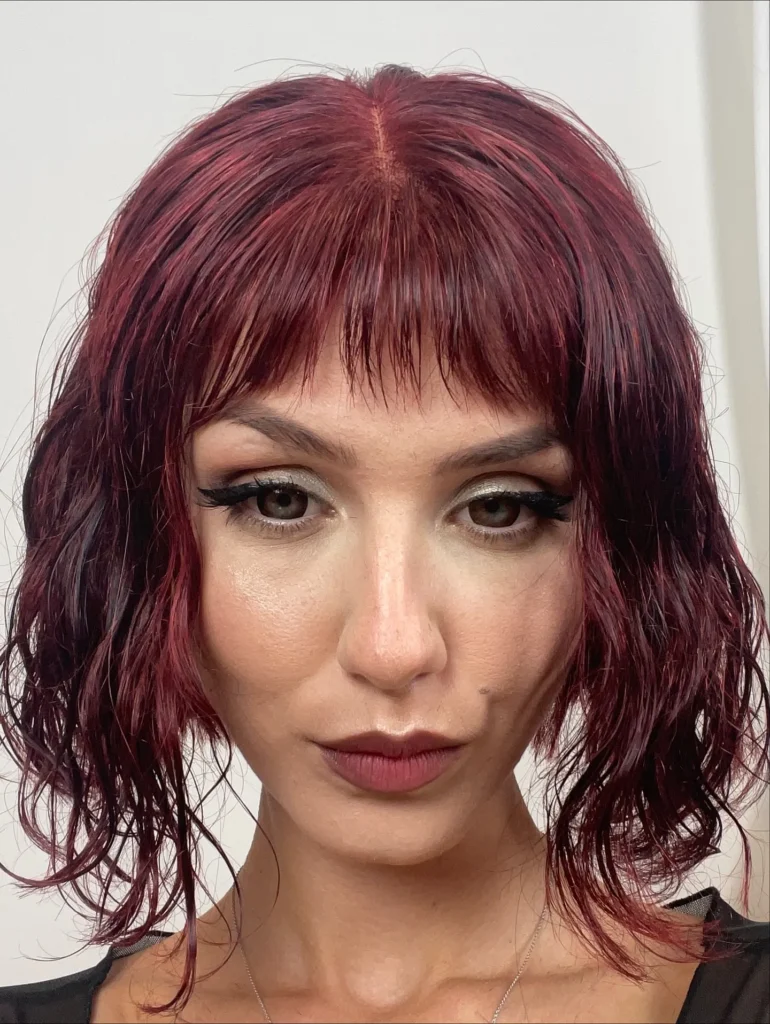
17. Deep Side Part
Deep Side Part shifts the parting line well beyond the center, typically starting above one eyebrow and running back toward the crown. Significantly more volume and length carry across the forehead on one side, while the opposite side pulls back tighter against the scalp. Draping forward, the heavier side often partially covers one temple. Cleanly holding the angle, straight strands avoid falling back toward center.
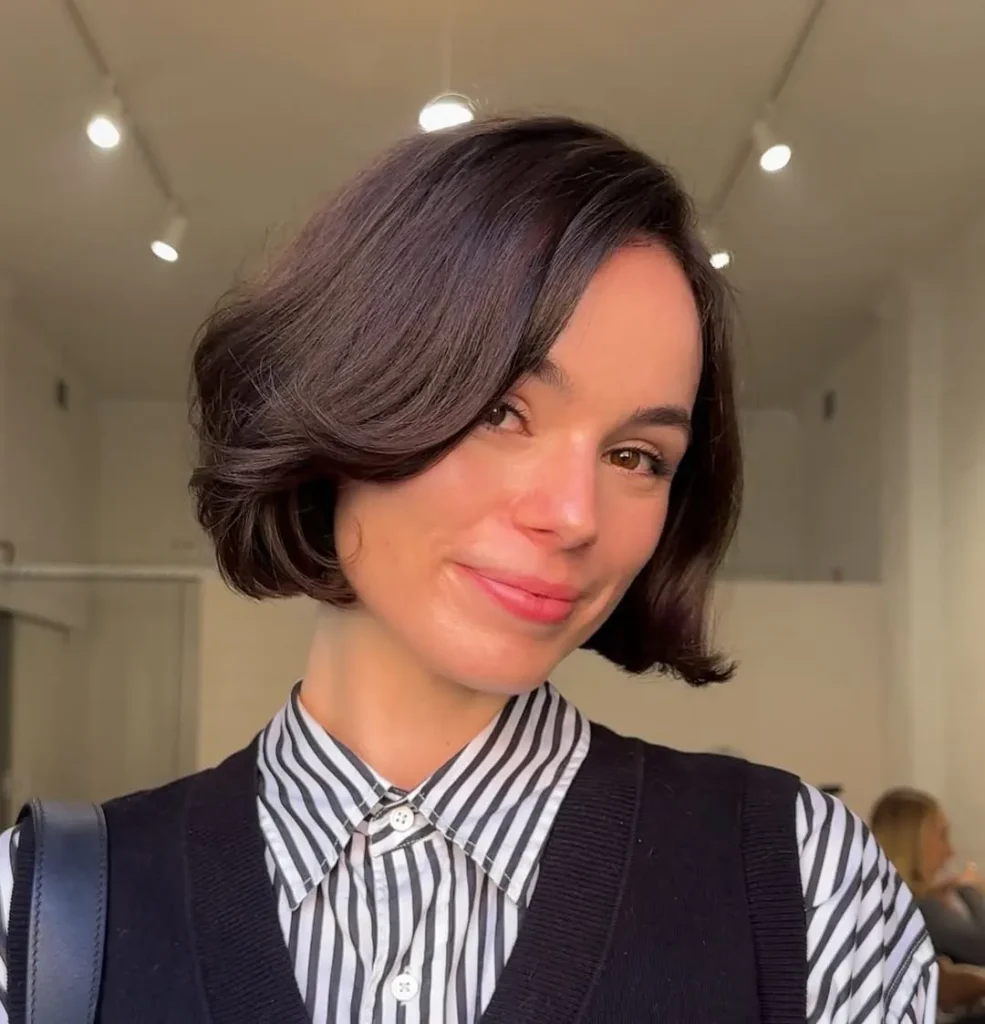
18. Center Part Style
Center Part Style divides the hair into two symmetrical sections, with the line running straight from the forehead to the crown. Evenly, both sides mirror each other in length and volume. Exposed evenly on both sides, the forehead favors no particular angle. Flat along the parting line, strands fall naturally outward toward the ears.
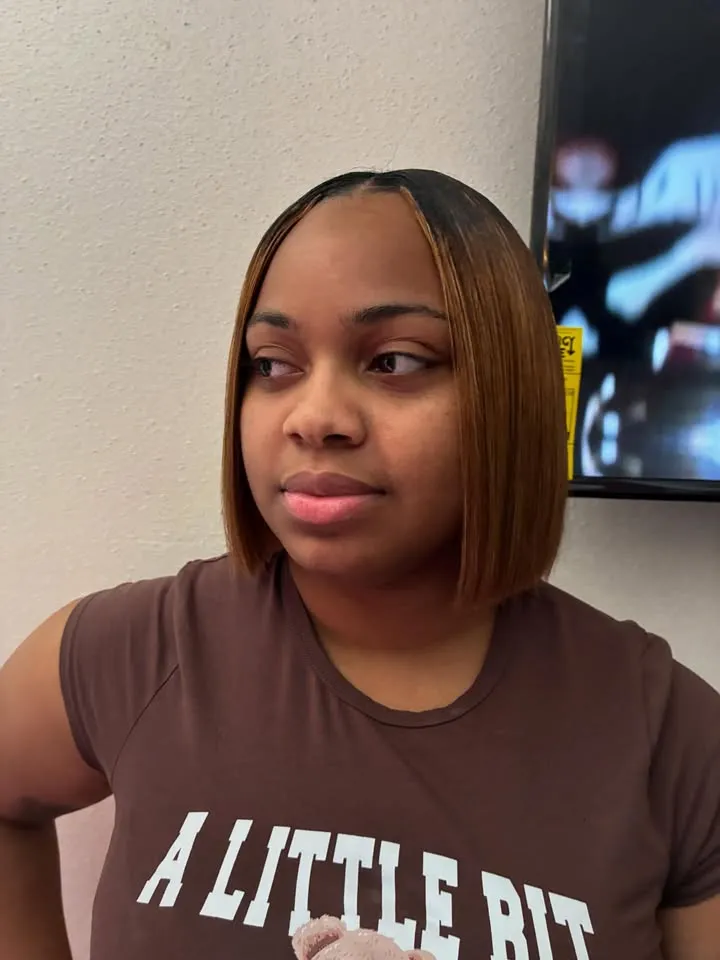
19. Glass Hair Finish
Glass Hair Finish smooths every strand into a single reflective surface, eliminating flyaways and separating no individual pieces. Continuous sheen replaces scattered texture as light bounces off the surface. Tucked and uniform, ends avoid flicks or separation breaking the line. Glossy and unbroken, the overall effect reads smooth from root to tip.
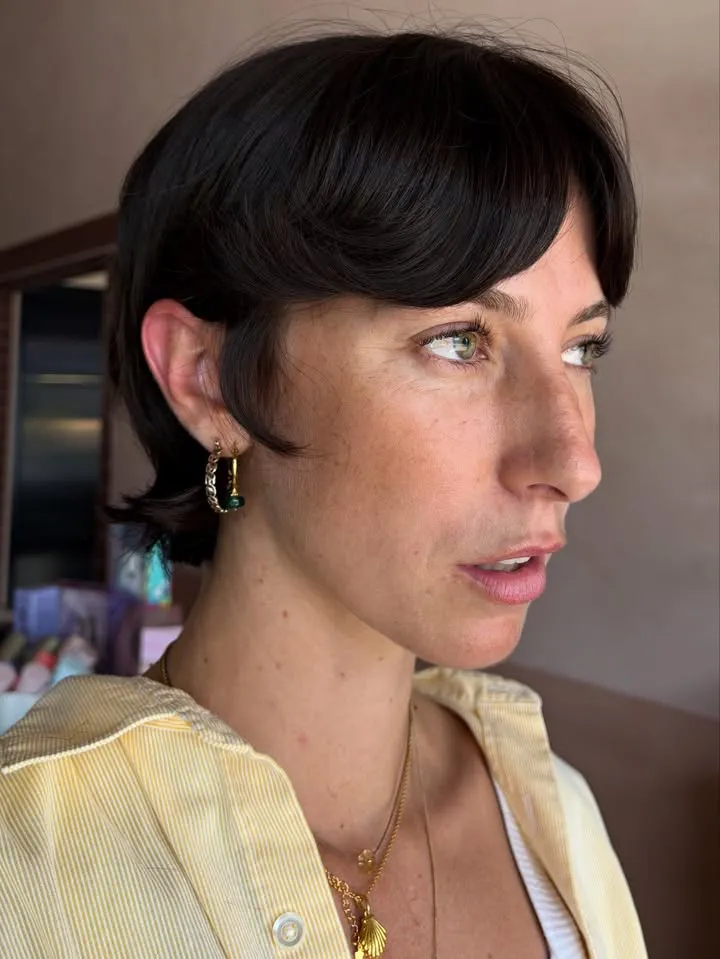
20. Sleek Tucked-Behind-Ear Style
Sleek Tucked-Behind-Ear Style pulls the sides flat against the head and secures the length behind one or both ears, exposing the earlobes and jawline. Smooth against the scalp, the front section holds no lift or volume at the crown. Falling past the ear, length rests flat against the neck or shoulder. Close to the head rather than flaring outward, strands stay controlled throughout.
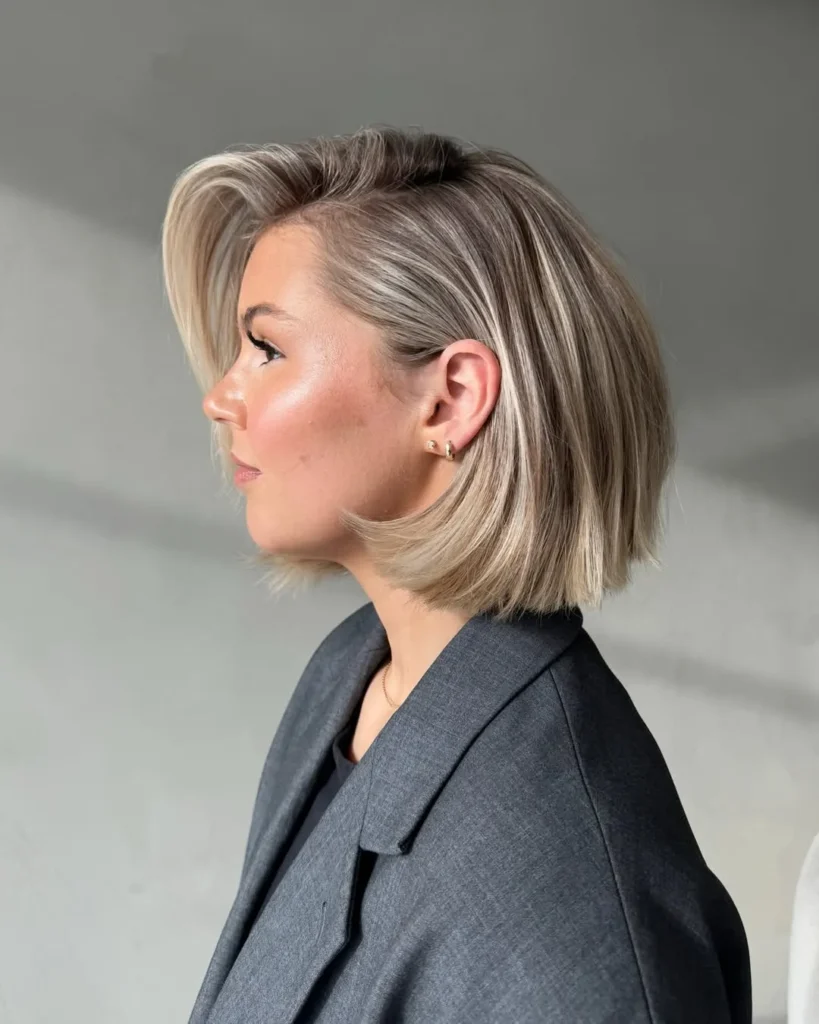
21. Slicked-Back Hairstyle
Slicked-Back Hairstyle pulls every strand away from the face and off the forehead, directing the length backward without a part. Fully visible near the hairline, the scalp shows no loose pieces framing the face. Flattening at the crown, volume gives way to a smooth, close silhouette. Depending on length, the back section lies against the head or neck.
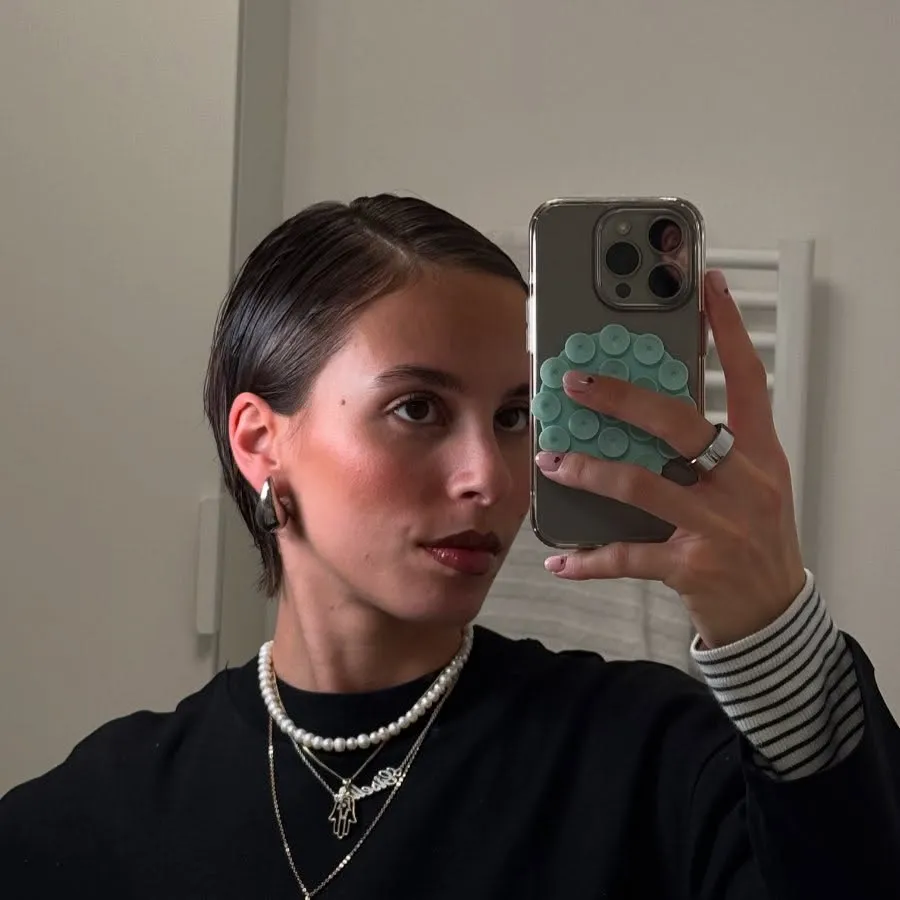
22. Wet Look Finish
Wet Look Finish coats each strand so hair appears saturated, clumping pieces together rather than separating them individually. Intense reflection off the surface gives a glossy, almost dripping appearance. Sticking close to the scalp, sections reduce overall volume throughout the crown. Flat and cohesive, ends stay away from splitting into loose strands.
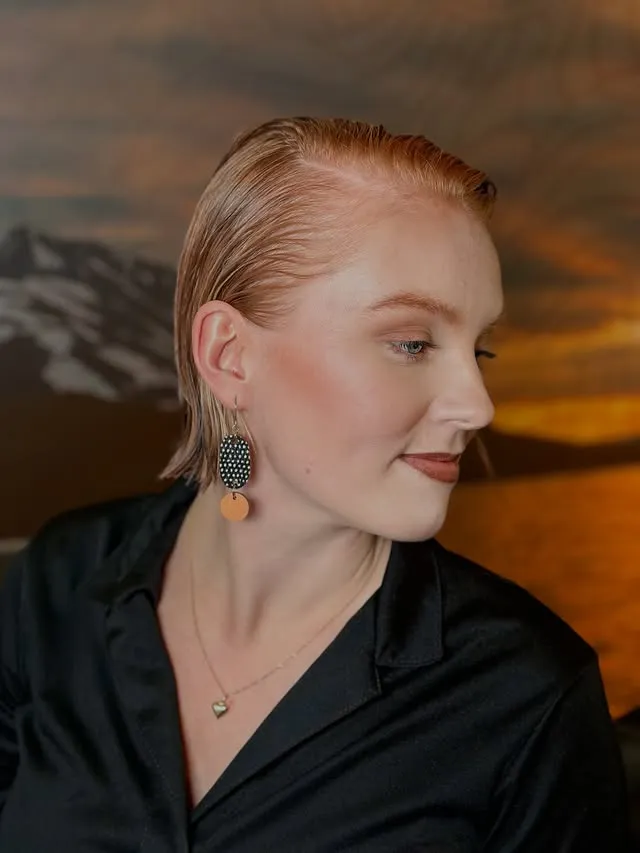
23. Flipped Ends Style
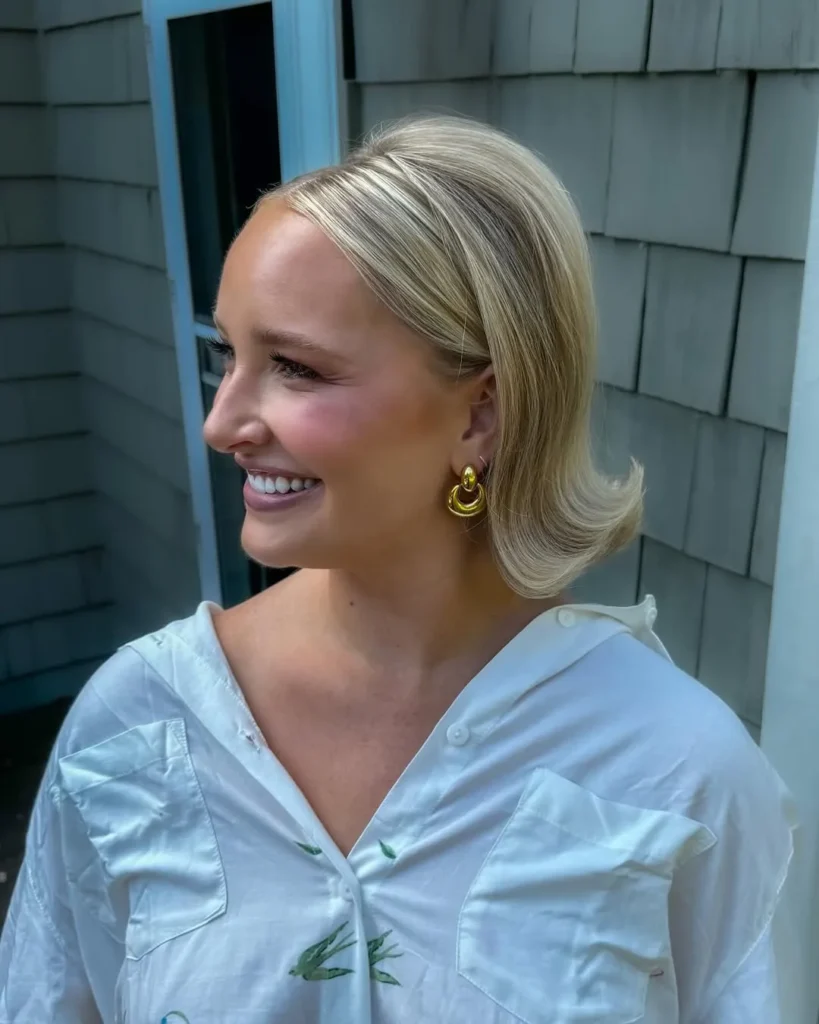
Flipped Ends Style curves the tips outward and upward at the bottom of the length, creating a subtle kick rather than letting ends fall straight down. Concentrated at the very bottom few inches, the flip leaves the rest of the length flat. Smooth crown and mid-lengths keep all the shape happening at the perimeter. Symmetrical on both sides, the outward curve stays balanced.
24. Face-Framing Layers
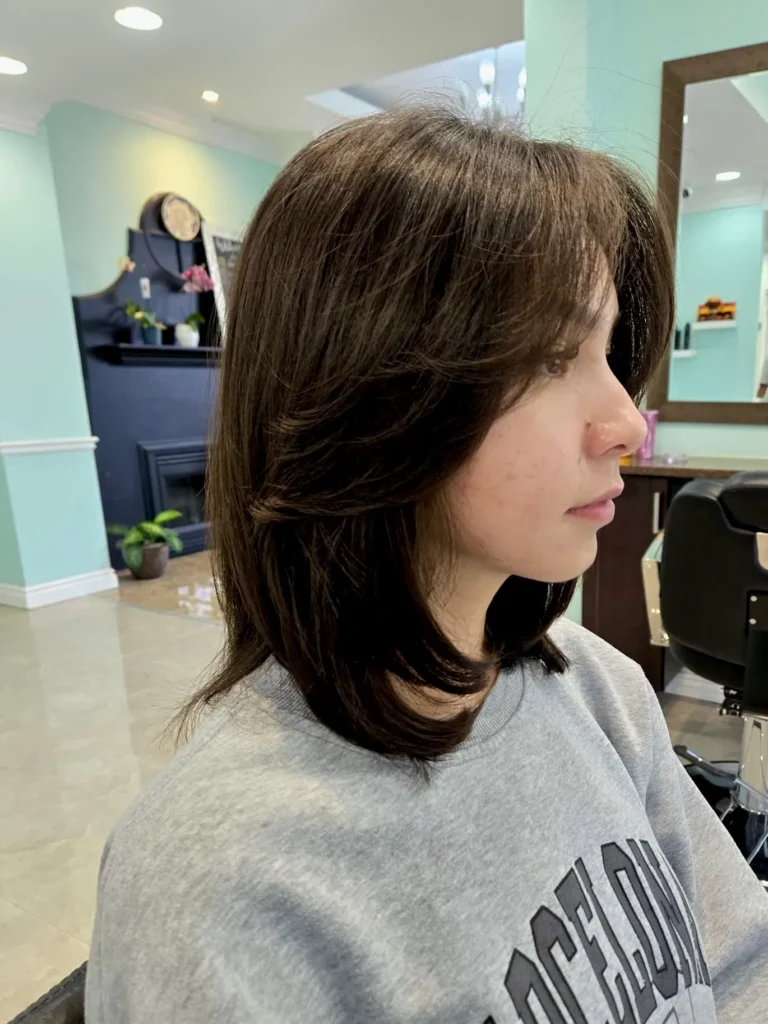
Face-Framing Layers cut shorter pieces near the cheekbones and jaw while leaving the rest of the length longer behind them. Angling inward, shorter strands follow the curve of the cheek toward the chin. Undisturbed elsewhere, the rest of the cut concentrates layering only near the front. Visible length differences separate the framing pieces from the back section.
25. Invisible Layers
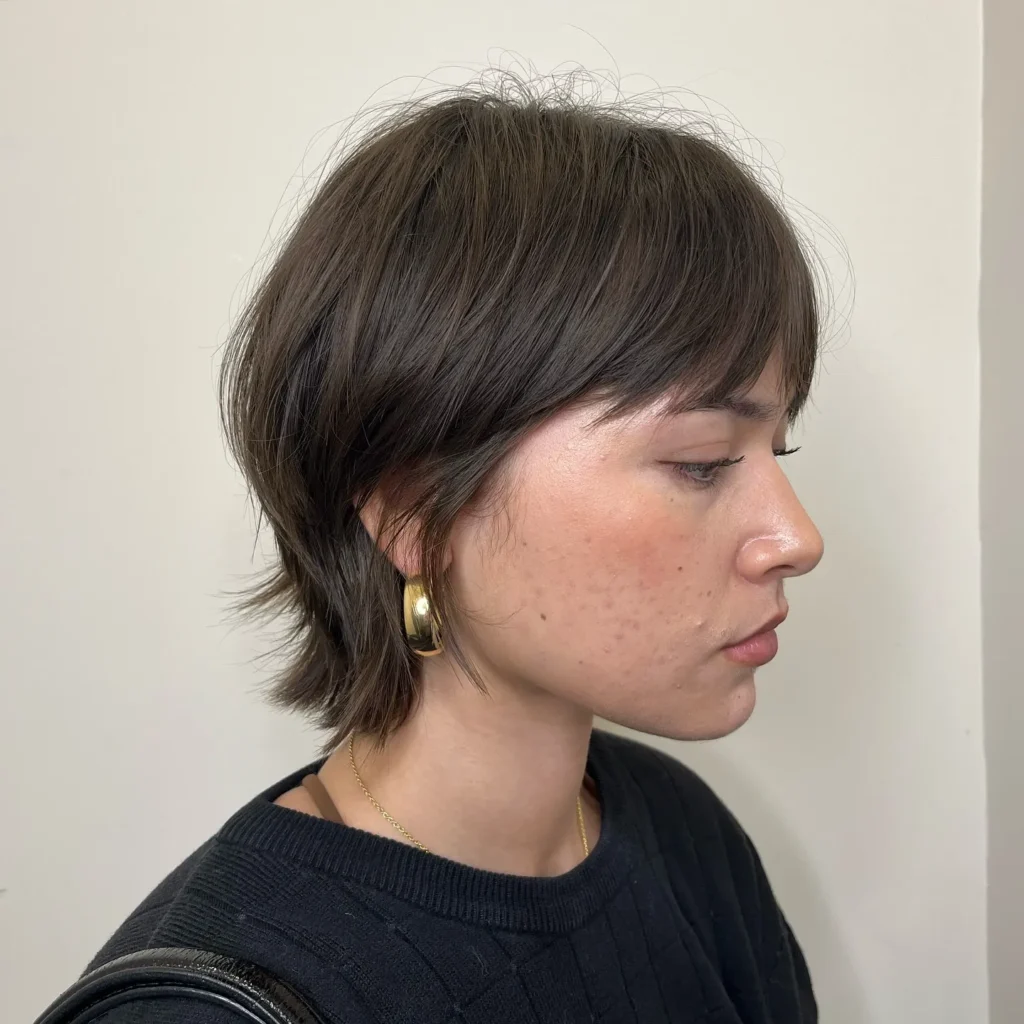
Invisible Layers blend so seamlessly into the length that no distinct steps or lines are visible when the hair falls naturally. Removed from underneath the surface rather than cut visibly at the ends, weight disappears quietly. Solid and one-length at first glance, the perimeter still carries looser movement than a true blunt cut. Straight strands settle into place without separating into obvious tiers.
26. Half-Up Twist
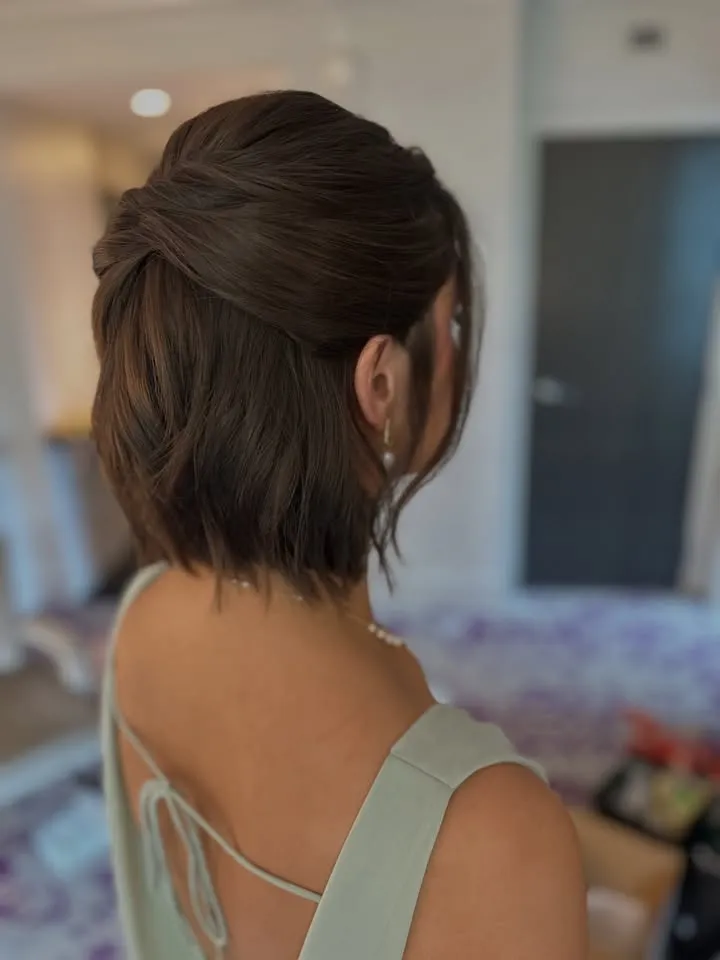
Half-Up Twist gathers the top section of hair and twists it back toward the crown, securing it while leaving the lower length loose underneath. Rope-like texture builds across the top of the head through the twisted section. Freely falling below the twist, loose strands stay uninterrupted by any additional styling. Close to the scalp rather than standing away from it, the twist holds its position.
27. Mini Half Ponytail
Mini Half Ponytail pulls a small section from the crown area and secures it into a short, compact tail near the back of the head. Close to the scalp, the gathered section extends minimal length past the elastic given the short overall hair length. Loosely, remaining strands fall on either side and underneath. Small and tightly gathered rather than full, the tail stays compact.
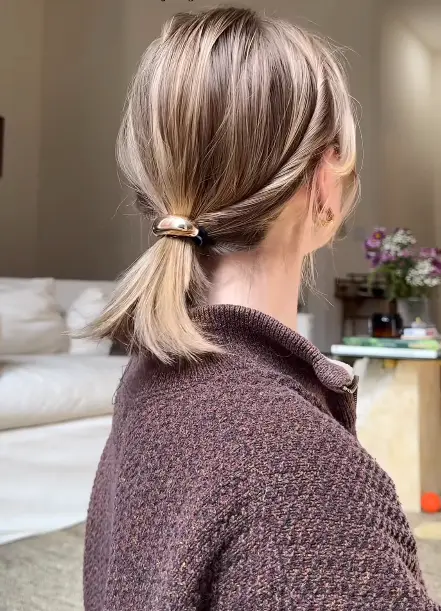
28. Crown Twist
Crown Twist twists a section of hair starting from one side of the part and winds it across the top of the head toward the opposite side. Directly along the crown, the twisted rope secures flat against the scalp. Loosely, remaining hair falls beneath and around the twisted section. Texture builds along the part line without altering the rest of the length.
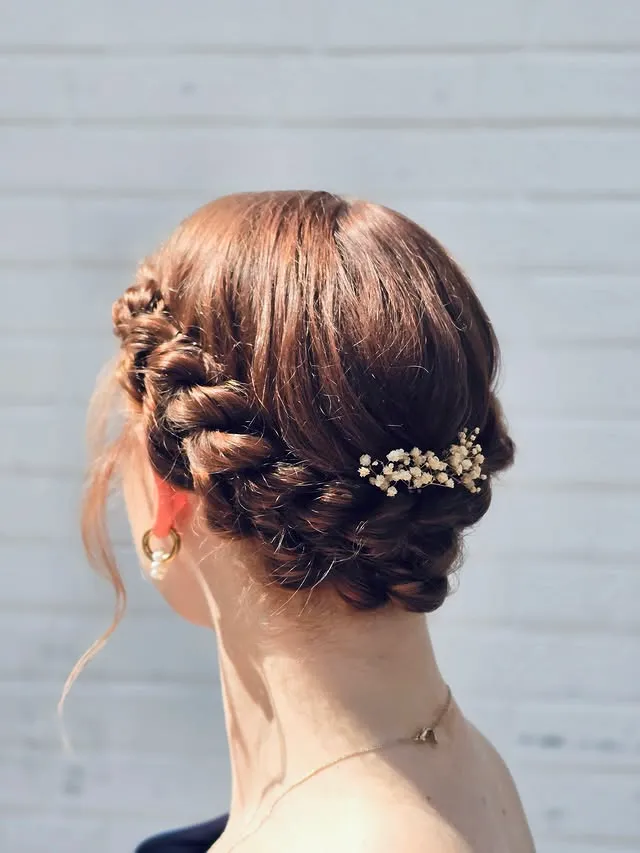
29. Front Twist Hairstyle
Front Twist Hairstyle twists two small sections near the front hairline and pulls them back away from the face, securing them at the back or crown. Spiral texture forms near the temples on both sides through the twisted strands. Loose and untouched, the remaining length stays behind the twists. Concentrated near the front, twisting begins close to the hairline and stops shortly after.
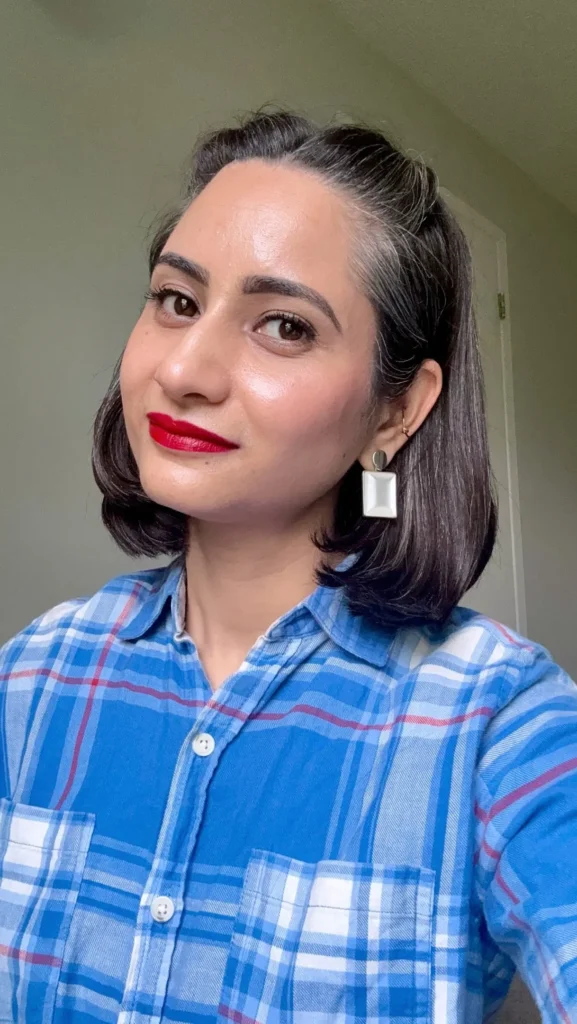
30. Double Mini Braids
Double Mini Braids plait two small sections near the front hairline, one on each side, leaving the rest of the hair loose. Thin and close to the scalp, each braid stays limited given the available length. Meeting or crossing near the back of the head, the braided strands typically connect. Freely, remaining hair falls beneath and around the two braided sections.
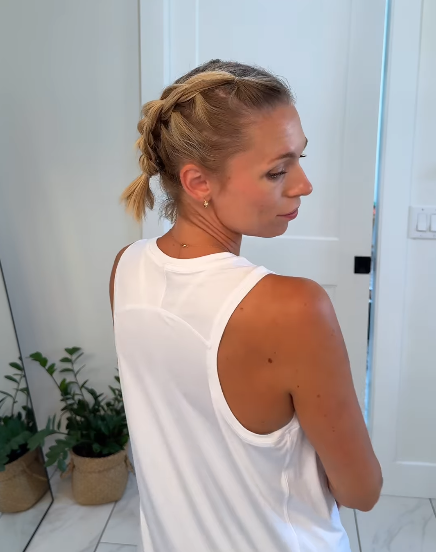
Conclusion
Choosing the right Fall Hairstyles for Short Straight Hair comes down to the shape, finish, and level of maintenance that fits your routine. Whether you prefer polished cuts, statement bangs, or simple styling details, the right look can make straight hair feel fresh throughout the season. Save your favorite short straight hairstyles for fall and autumn hairstyles for straight short hair before your next salon visit to make finding the perfect seasonal style much easier.