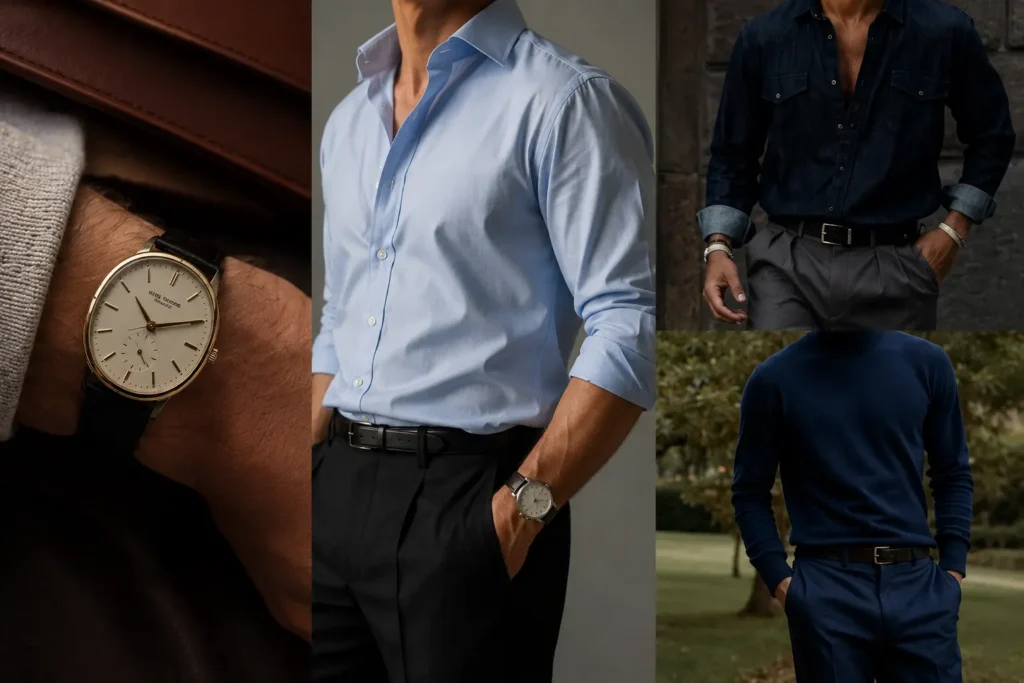
Have you ever tried on a pair of trousers that seemed to reach almost to your bust, or a dress with a waist seam sitting much higher than expected? These small fitting problems can make getting dressed more frustrating than it needs to be. Learning how to dress with long legs and a short torso starts with understanding where your clothes sit, how their proportions work together, and which cuts feel comfortable on your body. You do not need to hide your long legs or avoid fashionable pieces. A few thoughtful adjustments to necklines, waistbands, top lengths, and layers can make everyday outfits easier to put together.
Understand Your Proportions Before Changing Your Wardrobe
A short torso means the distance between your shoulders and hips is relatively short compared with your legs. It does not automatically mean you are petite or short overall. You can be tall, average-height, or petite and still have a shorter upper body with longer-looking legs.
Your clothes may give you a few clues. Jeans labelled high-rise might reach close to your lower ribs, while standard mid-rise trousers may feel much higher than expected. Dresses with fitted waists might gather just beneath your bust instead of following your natural waist. Long tops can also look oversized through the body even when their sleeves fit perfectly.
Before replacing anything, look at where your clothes actually sit. Stand naturally in front of a mirror and notice the distance between your neckline, waistband, and hip area. Try the same trousers with a tucked-in shirt and then with the shirt worn loose. The difference can tell you whether the issue comes from the rise, the top length, or the combination.
Remember that torso length and trouser rise are not identical measurements. A shorter torso does not automatically require low-rise jeans. Your preferred waistband depends on your body, comfort, and the cut of each garment. Once you understand those details, shopping becomes much more straightforward.
The Styling Adjustments That Make the Biggest Difference
You do not need a completely different wardrobe to improve how your outfits fit. Start by changing one element at a time. A slightly different neckline, a more comfortable waistband, or a top with a better hem length can change the way an entire outfit looks.
Give Your Upper Body More Visual Space
Necklines are worth checking when tops seem crowded around your chest and shoulders. V-necks, scoop necks, and open shirt collars expose more of the upper chest, creating a less enclosed appearance. You do not need a deep neckline to get this effect. Even leaving two buttons undone on a button-down shirt can make a noticeable difference.
Vertical details can help, too. An open row of buttons, a narrow placket, or a shirt worn beneath an unbuttoned jacket draws the eye along the upper body. If you prefer crew necks or high necklines, keep wearing them. Try balancing the neckline with a softer fabric or a longer top rather than treating one style as unsuitable.
Find a Waistband That Sits Comfortably
The label on a pair of jeans tells you less than its actual fit. Low-rise trousers can create more space between your bust and waistband, but they may not provide the coverage or support you prefer. Mid-rise styles are often a useful starting point because they sit between the hips and natural waist without reaching too high.
High-rise trousers are still an option. Look for a front rise that does not press into your lower ribs or leave little room between your waistband and bust. When trying on jeans, check the waistband while sitting down. A pair that feels comfortable standing but digs into your stomach when seated probably needs a different cut.
Let Your Tops Fall at the Right Length
A top does not always need to be tucked in to look finished. Shirts that fall just below the waistband can work well with jeans, tailored trousers, and skirts. Curved hems are especially useful because they create a natural finish without leaving a blunt horizontal line across the middle.
If you prefer a tucked-in look, try a loose half-tuck instead of pulling all the fabric tightly into your trousers. Leave enough material to move comfortably. Lightweight cotton, viscose, and fine knits are often easier to tuck without creating a bulky bundle around the waistband.
Use Layers Without Crowding Your Torso
An open cardigan, shirt, or blazer can add structure without forcing you to define your waist. Try a layer that extends a little below your waistband, particularly when a cropped jacket makes your upper body look shorter than you would like.
Pay attention to where the layer ends. A jacket that stops at the lower ribs may create an abrupt line, while one that reaches the upper hip can connect more naturally with your trousers. Neither length is automatically wrong; the important point is how the jacket works with the rest of your outfit.
The Outfits I’d Recommend for Your Proportions
If we were putting together your wardrobe, I would start with outfits that solve actual fitting problems rather than shopping for clothes based on a body-type label. You want pieces that sit comfortably, move with you, and work together without constant adjustments.
Here are seven combinations I would suggest trying first. Each serves a different purpose, from casual days to work and special occasions.

1. Mid-Rise Straight-Leg Jeans With an Open-Neck Top
For everyday wear, start with straight-leg jeans and a V-neck blouse or an open-collar cotton shirt. Mid-rise denim is worth trying if high-rise jeans sit uncomfortably close to your bust. Straight legs also offer a simple shape that works with many different tops.
Wear the blouse loose when you want a relaxed outfit. For a slightly neater finish, tuck just one small section into the front of your jeans. You can leave the rest hanging naturally instead of pulling the whole shirt tight around your waist.
This combination works for errands, coffee dates, casual lunches, and everyday outings. You can add a cardigan when the weather gets cooler without changing the basic outfit.
My fit tip: Check where the waistband sits when you bend and sit. If it presses against your ribs, try a lower front rise rather than sizing up automatically. A larger size may leave excess fabric around your hips without solving the actual problem.
2. Tailored Trousers With a Longline Blouse
For the office or a smart daytime event, pair tailored trousers with a blouse that falls below the waistband. Choose straight-leg or gently wide-leg trousers in black, navy, charcoal, or beige. A blouse with a relaxed shape keeps the outfit comfortable while providing enough structure to look professional.
Add an open blazer that reaches the upper hip or slightly below it. Leave the blouse untucked if the hem looks neat, or use a small front tuck if you prefer a defined finish. There is no need to force a sharply cinched waist just to make tailored clothes look polished.
A consistent colour palette can make the outfit feel coordinated without requiring every piece to match exactly. For example, charcoal trousers, an ivory blouse, and a navy blazer create a professional combination suitable for meetings or dinners after work.
My fit tip: Check the blouse length before buying. A hem that finishes just above the waistband may ride up throughout the day. One that falls a little lower can offer more coverage and stay in place more comfortably.
3. A Relaxed Knit With a Midi Skirt
A midi skirt offers an alternative to jeans when you want something softer. Pair a lightweight scoop-neck or V-neck knit with a fluid skirt that moves easily as you walk. Choose a waistband that sits comfortably instead of assuming that the highest possible rise will be most flattering.
For a relaxed daytime look, try a cream knit with a navy skirt or a muted green top with a brown skirt. You can wear the knit loose if its hem falls neatly over the waistband. A small front tuck is another option when the fabric is thin enough to avoid bunching.
This combination suits lunches, shopping trips, family gatherings, and casual dinners. The skirt provides movement, while the knit keeps the outfit practical and easy to wear. You can add a lightweight cardigan when you need another layer.
My fit tip: Pay attention to where the skirt waistband lands relative to your ribs. If it feels too high, try another cut or a softer waistband. Check the skirt length while walking, not just while standing in front of a mirror.
4. A Drop-Waist or Straight-Cut Dress
If dresses often have waist seams that sit directly beneath your bust, try a straight-cut dress or a design with a lower waist seam. These styles do not depend on a tightly defined natural waist, so they can be easier to fit when standard dress proportions feel awkward.
A shift dress in cotton, crepe, or another fabric with a little structure works well for daytime occasions. For a more relaxed appearance, choose a softly draped silhouette that skims the body without clinging. You can wear it on its own or add an open jacket when extra coverage is useful.
Drop-waist dresses are another possibility, but check where the lowered seam falls. Some designs create a comfortable, elongated shape, while others may feel bulky around the hips. A straight-cut dress is often the simpler alternative if you dislike extra fabric.
My fit tip: Look at the shoulder seams, bust, and armholes before judging the waist. A dress that fits correctly through the upper body is easier to wear than one that requires constant pulling or adjusting. If the hem is too long, a tailor can shorten it without changing the overall shape.
5. A Wrap Dress With Adjustable Waist Definition
For dinners, celebrations, or occasions that call for a dressier outfit, consider a wrap dress with an adjustable tie. Unlike a dress with a fixed waist seam, a wrap design often lets you decide where the fabric sits and how closely it follows your shape.
Look for a style with enough room across the bust and a tie that rests comfortably around your natural waist. You can choose a V-neck wrap dress for a more open neckline or a faux-wrap design if you prefer a little more security. Midi lengths work well for many occasions, although a shorter or longer hem may suit your plans better.
Pair the dress with a simple necklace, a small shoulder bag, and a lightweight jacket if needed. Keep the accessories understated when the print or colour already makes a strong statement.
My fit tip: Tie the dress while standing naturally, then sit down and move around. If the knot pulls the fabric upward or the neckline opens too far, try another cut or size. Adjustable does not automatically mean well-fitting, so check how the whole dress behaves.
6. A Coordinated Set With an Open Outer Layer
A coordinated set is useful when you want an outfit that looks finished without much effort. Try matching trousers and a simple top, or combine pieces in similar shades. An open shirt, cardigan, or blazer adds another layer without creating a tight horizontal line around the waist.
For a casual day, a soft knit set with an open cotton shirt can feel comfortable and relaxed. For a more polished setting, choose tailored trousers with a matching top and an unbuttoned blazer. You can also use tonal colours, such as beige and cream or navy and pale blue, if an exact matching set is not your style.
The advantage is convenience. You can get dressed quickly and change the outer layer to suit the weather or occasion. You also avoid relying on a single tucked-in top to make the outfit look complete.
My fit tip: Check the top and trousers separately before buying the set. Matching colours do not compensate for a waistband that sits too high or a top that bunches around your middle. If possible, try both pieces together and separately to see whether you will wear them beyond the matching outfit.
7. A Button-Down Shirt With Relaxed Denim
A button-down shirt and relaxed denim make a dependable outfit when you want something simple but put together. Choose straight-leg or gently wide-leg jeans with a soft cotton shirt. Leave the top buttons open, provided that feels comfortable, and let the shirt fall naturally over the waistband.
You can wear this combination with a structured bag for lunch or a casual meeting. For a more relaxed weekend outfit, choose a slightly oversized shirt and denim with a comfortable fit through the hips. Rolling the sleeves can make the shirt feel less formal without changing the silhouette.
This outfit is especially useful if fully tucking in a shirt creates a bulky area around your waist. It also gives you options: wear the shirt loose, tuck in just the front, or add a thin layer underneath when the weather changes.
My fit tip: Oversized and long are not the same thing. A shirt can have generous room through the body without extending so far that it overwhelms your frame. Check the shoulder seams and hem length together, and consider a tailor if the shirt is too long but otherwise fits well.
Common Styling Mistakes and How to Fix Them
Some outfits feel awkward because two pieces compete with each other. You do not necessarily need to stop wearing either item. Often, a small adjustment is enough.
Pairing a very high waistband with a bulky tucked-in top: The combination can leave little visible space between the bust and waistband. Try a lighter top, reduce the amount of fabric tucked in, or wear the shirt loose. If the waistband itself feels restrictive, experiment with a different rise.
Wearing a crop top that ends at an uncomfortable point: Crop tops can work well, but the distance between the hem and waistband matters. Try a slightly longer crop with mid-rise trousers, or wear the top with an open shirt. You can still enjoy the style without forcing a combination that feels awkward.
Adding a wide, contrasting belt near the lower ribs: A prominent belt may create a strong horizontal line exactly where your top and bottom meet. If that is not the effect you want, try a narrower belt in a similar colour to your trousers. You can also skip the belt if the waistband already fits securely.
Choosing a jacket that ends at an awkward point: A cropped jacket may finish too close to the bust, while an excessively long one can overwhelm a small frame. Try different lengths over your actual outfit rather than judging the jacket alone.
Buying a dress with a fixed waist seam that sits too high: A dress may fit through the bust but still feel uncomfortable because its proportions do not match yours. Look for a different seam placement or a straight-cut design. Alterations may help in some cases, but moving a seam can be expensive if the dress has complicated construction.
None of these styles is automatically wrong for a short torso. The useful question is whether the complete outfit fits comfortably and creates the look you want.
Small Fit Changes That Can Improve Your Existing Clothes
Before spending money on a new wardrobe, check whether a few adjustments could make your current clothes easier to wear.
Start with the front rise of your trousers. The rise measurement gives you more useful information than the label alone, although brands may measure or describe their products differently. Compare pairs that feel comfortable, and use them as a reference when shopping.
Always try trousers while sitting as well as standing. Notice whether the waistband digs into your ribs, slides down, or creates uncomfortable pressure. If the problem continues despite changing sizes, another cut may be the better solution.
For tops, pay attention to body length separately from sleeve length. You may need a regular-size shirt with a shorter body, or a longer style that can be worn untucked. Checking the shoulder seams and armholes helps ensure that changing the length does not compromise the fit elsewhere.
A tailor can assess whether a dress waist seam can be lowered or a jacket hem adjusted. Ask about the cost before committing, particularly if the garment needs substantial reconstruction.
Finally, take front and side photos in a few outfits you already own. Use the same mirror, similar lighting, and a natural standing position. Compare how the waistband, hem, and neckline sit together. The goal is not to judge your body; it is to identify the combinations you find most comfortable and appealing.
Frequently Asked Questions
What tops look good with long legs and a short torso?
V-neck tops, scoop-neck shirts, and open-collar blouses are useful starting points if you want more visual space around your upper body. Tops that fall just below the waistband can also work well when tucked-in styles feel crowded. Lightweight fabrics are helpful because they drape without creating excess bulk. However, you can still wear fitted tops, crew necks, and cropped styles. Focus on how the top fits with your chosen trousers or skirt rather than following a strict rule.
Should I wear low-rise or high-rise jeans with a short torso?
Neither rise is automatically the best choice. Low-rise jeans may create more space between your bust and waistband, while high-rise styles can offer the coverage you prefer. Mid-rise denim is a practical place to start if you are unsure. Compare the front rise, check how the waistband feels when sitting, and pay attention to whether the jeans stay in place. The most suitable pair is the one that fits comfortably without digging into your ribs or slipping down.
Can I wear crop tops if I have a short torso?
Absolutely. Choose a crop length that works with the waistband of your trousers or skirt. A slightly longer crop can pair comfortably with mid-rise denim, while a shorter style may suit a lower waistband. You can also layer an open shirt over a crop top if you prefer more coverage. Try the complete outfit before deciding whether the proportions feel right.
Which dresses work well for a short torso and long legs?
Straight-cut dresses, shift dresses, and drop-waist designs are worth trying when conventional waist seams sit too high. Wrap dresses can also work because their ties offer some flexibility in waist placement. Check the bust, shoulders, armholes, and hem as well as the waist. A dress that fits comfortably through the upper body is usually easier to wear than one chosen solely for its silhouette.
Can I wear a belt with a short torso?
Yes. A narrow belt that blends with your trousers can create a subtle finish, while a contrasting belt makes the waistband more noticeable. Try different widths and placements to see what works with your outfit. You can also skip a belt entirely when your trousers already fit securely. There is no need to add one just because a styling guide recommends it.
Conclusion
Dressing with these proportions becomes easier when you understand how garment lengths, waistbands, and necklines work together. Learning how to dress with long legs and a short torso does not mean giving up your favourite trends or hiding any part of your body. Start with comfortable trousers, tops that fall where you want them to, and layers that work with your existing wardrobe. Try a few combinations before buying anything new. The best outfit is one that fits well, suits your routine, and feels like you.