Holiday hair colour can bring warmth, brightness, or a playful twist to your December look. Rich burgundy, cherry cola, copper, rose gold, and golden blonde offer different ways to refresh your colour, while vivid green and red-and-green combinations make a bolder seasonal statement. These thirty examples show how colour placement, hair length, texture, and styling can change the final result. Some looks rely on subtle highlights, while others use dramatic gradients or all-over shades. Whether you prefer a natural-looking brunette refresh or an eye-catching transformation, each style offers a distinct approach to winter hair colour.
1. Vivid Red with Face-Framing Highlights
Deep burgundy-red colours the long, straight lengths, creating a rich base for brighter red sections around the face. Those vivid pieces stand out against the darker shade and draw attention to the front of the hairstyle. Smooth strands make the contrast easy to see, while the even fall of the hair keeps the colour placement clear. Rather than covering every section in bright red, the look concentrates its strongest colour near the face.

Placing the brightest sections near the front makes the colour especially noticeable when the hair is worn down or tucked behind one ear. A centre or slightly off-centre part can show both highlighted sections, while a sleek finish keeps the different tones distinct. Maintaining the darker burgundy through the back also leaves room for the vivid red to stand out without requiring an all-over bright shade.
2. Split Copper and Auburn Colour
A clean centre part divides this long, wavy hairstyle into two contrasting colour sections. One side features bright golden copper, while the other carries a deeper auburn-red tone. Both colours extend from the roots through the ends, making the split easy to recognise from the back. Loose waves soften the meeting point between the shades, adding movement to an otherwise striking colour design.

Keeping the part defined helps preserve the visual balance between copper and auburn. When the hair moves, individual waves reveal different levels of brightness, allowing the golden side to catch more light while the auburn side appears deeper. Styling with a wide-barrel curling iron can recreate the loose bends, although naturally wavy hair may need little shaping. Regular colour care can help both shades retain their richness.
3. Copper-Red Waves by the Flocked Tree
Shoulder-length waves carry a vibrant copper-red shade from the roots to the ends. The colour appears consistent throughout the hair, with curved sections catching the light and creating natural shifts between brighter copper and deeper red. A rust-coloured corduroy jacket echoes the warmth of the hair, while the flocked Christmas tree and glowing lights establish a seasonal setting. No contrasting highlights are needed to give the shade dimension.
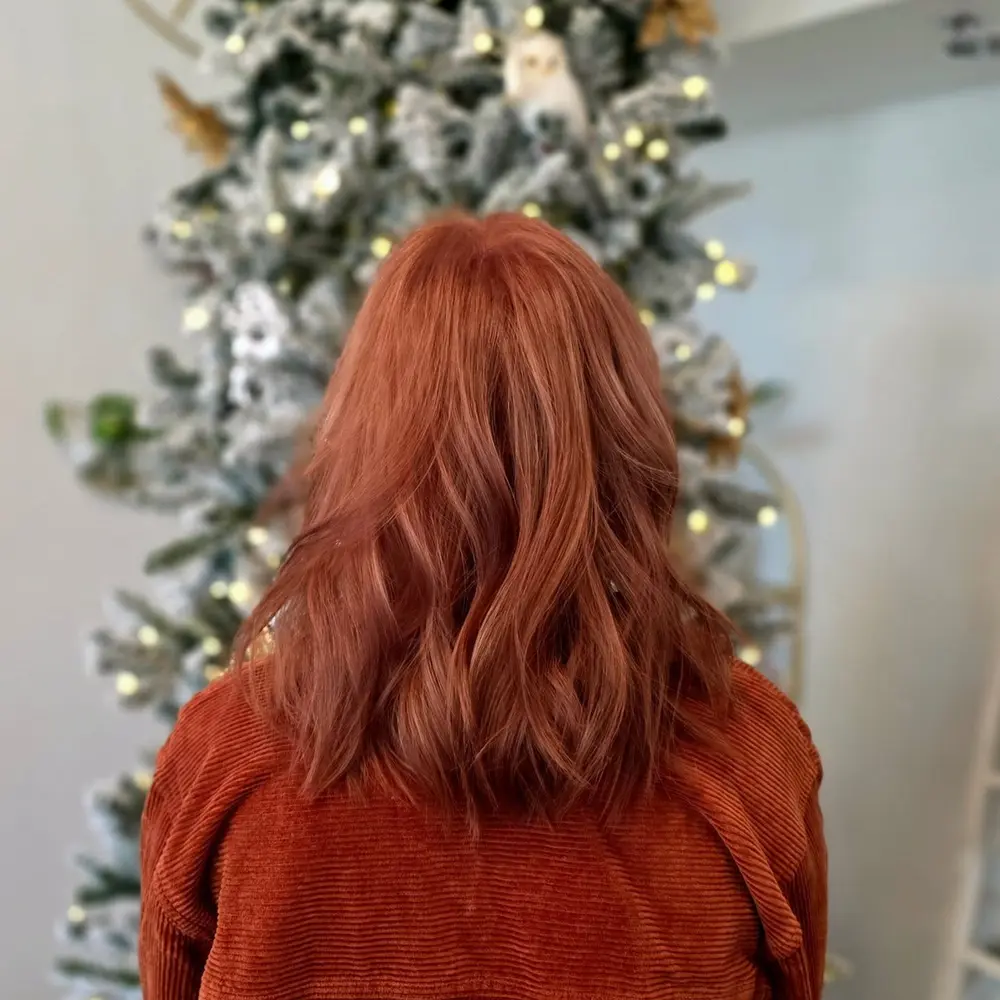
The shoulder-length cut keeps the waves compact enough for the colour to remain visible as one cohesive shape. A diffuser can help define natural waves without pulling them straight, while a curling wand can create similar bends on smoother hair. Warm indoor lighting brings out the copper undertones, although daylight may reveal more of the red in the shade. Colour-safe washing helps preserve the vibrancy between salon visits.
4. Dark Roots Fading to Burgundy Ends
Dark brown-black roots gradually transition into deep burgundy-red ends across these long, wavy lengths. The colour begins with a shadowed crown before becoming increasingly red toward the tips. Soft waves interrupt the gradient, creating areas of light and shade along the hair. From the back, the gradual fade is easy to follow, while the darker upper section provides a strong contrast against the coloured ends.

Leaving the natural-looking root area darker can make regrowth less noticeable than it would be with a solid red colour from root to tip. The burgundy ends may need more frequent colour refreshing because vivid red tones can lose intensity with washing. Loose curls or a gentle blowout will show the transition differently, with defined waves creating more visible changes between the darker and brighter sections. A colour-protecting conditioner can help maintain softness.
5. Burgundy Wavy Bob with Dark Roots
A shoulder-length bob combines deep burgundy-red lengths with darker roots that add contrast near the crown. The cut curves around the neck, while loose waves create a rounded outline rather than a straight, uniform edge. Colour extends through most of the visible hair, allowing the red to remain the main feature. Darker roots break up the saturation and keep the overall finish from appearing like one solid block of colour.
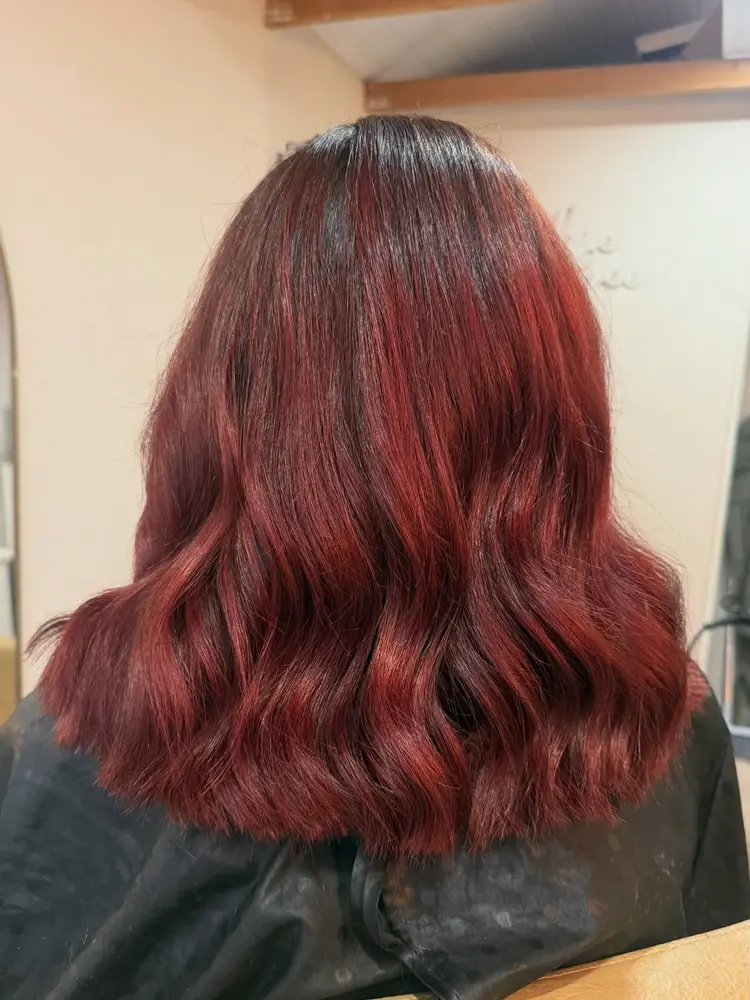
The bob’s shape becomes more noticeable when the waves turn inward near the ends, giving the cut a soft outline around the neck. A curling wand can add movement without creating tight ringlets, while a round brush can lift the roots during a blow-dry. Because the colour is concentrated through the lengths, refreshing the burgundy may be more important than colouring the roots each time. Trimming the ends also helps the rounded shape stay defined.
6. Even Coppery Auburn Waves
Very long waves fall down the back in a continuous coppery auburn shade. No obvious highlights or contrasting lowlights divide the colour, so the overall effect depends on the natural movement of the hair and the way light reflects from its curves. Bright copper reflections appear along raised sections, while deeper auburn tones show in the bends. A white curtain provides a neutral background that makes the warm colour easier to see.

Single-tone colour works especially well when the hair has enough movement to reveal subtle changes in brightness. Loose waves can be formed with a large curling iron, alternating the direction of each section to prevent the lengths from joining into one uniform curl pattern. A lightweight finishing serum may enhance shine, but too much can weigh down very long hair. Maintaining an even shade usually requires attention to both root regrowth and faded ends.
7. Brown Roots to Blonde Highlights
Long, voluminous waves combine brown roots with blonde highlights that brighten the mid-lengths and ends. The darker base remains visible between the lighter sections, creating contrast instead of an all-over blonde finish. Curved strands reveal the colour placement as they fall down the back, while the fuller shape gives the highlights room to catch the light. Santa decorations and a glowing star in the background add a seasonal touch to the salon setting.

Blonde highlights can be placed more densely around the ends or spread through the lengths, depending on how noticeable the contrast should be. Keeping some brown between the lighter pieces helps the blend retain depth as the hair grows. Loose waves also reveal more of the highlight pattern than a tightly curled finish. Purple shampoo may help manage unwanted yellow tones in suitable blonde sections, but excessive use can dull warmer honey shades.
8. Golden Balayage Beside Fairy Lights
Shoulder-length waves display a golden-blonde balayage that gradually brightens from the roots toward the ends. The colour blends warm gold with slightly deeper tones near the crown, creating a soft transition instead of a sharp dividing line. Loose bends help reveal the different shades along the hair, while frosted foliage and gold leaves frame one side of the portrait. Warm fairy lights on the other side echo the golden reflections in the lengths.
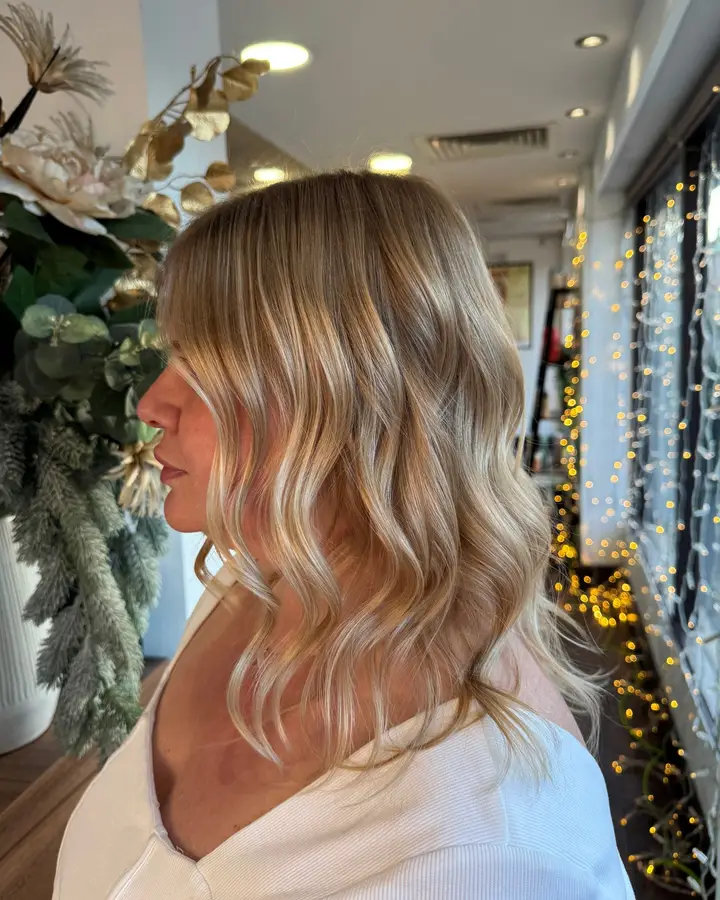
Balayage places lighter colour through selected sections, allowing the darker root area to remain visible. On shoulder-length hair, this placement can brighten the lower half without making the entire head look uniformly blonde. A loose blowout or broad waves will show the blend clearly, while pin-straight styling can make the colour transitions appear more subtle. Touch-ups depend on the desired brightness and how far the natural roots are allowed to grow.
9. Golden Roots to Platinum Ends
Long waves transition from golden and caramel tones near the roots to bright platinum blonde at the ends. The gradient extends across the full length, moving from warm shades at the crown toward a much cooler finish at the tips. A lifted section reveals the colour progression more clearly, showing how the shades connect along the hair. Small fairy lights and a green Christmas tree on the salon counter provide a quiet festive backdrop.

Moving from golden roots to platinum ends creates a strong contrast between warm and cool blonde tones. Achieving a smooth transition may require careful lightening, particularly when the hair begins with a darker natural colour. The palest ends can also become more fragile after extensive processing, so gentle detangling and heat protection are useful. Loose waves make the gradient easier to see, while a straight finish highlights the precise change in colour along each section.
10. Neon Grinch-Green Bob
Saturated neon green covers this shoulder-length bob from the roots to the ends. The vivid shade has a bright, electric quality that immediately separates it from traditional winter hair colours. Straight lengths and a blunt outline keep the shape simple, allowing the unusual colour to remain the central feature. Visible salon chairs in the background suggest an all-over colour transformation rather than a temporary accessory or a few isolated green streaks.
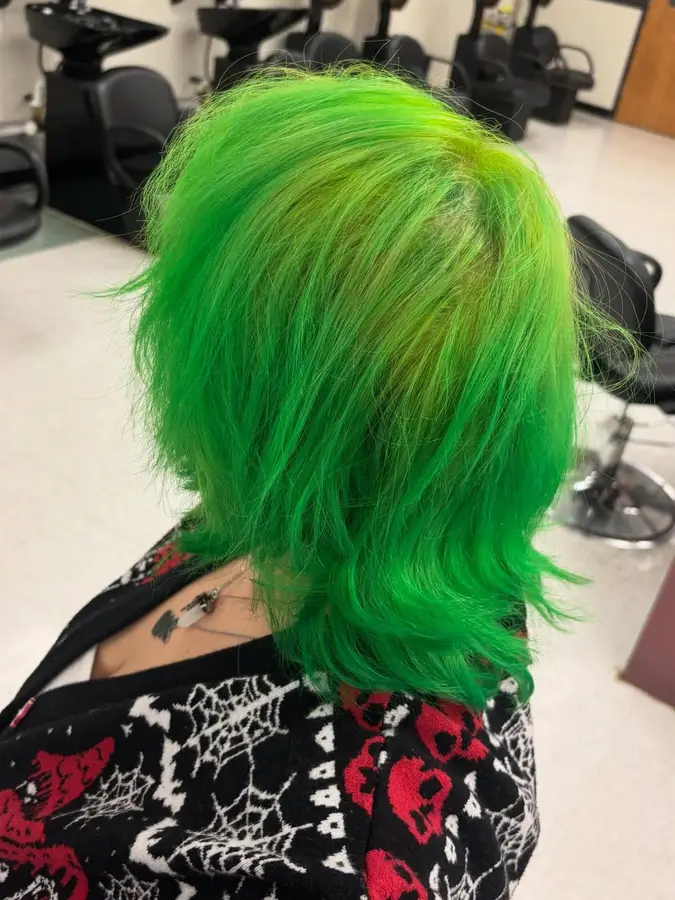
Maintaining a vivid green shade often requires more attention than keeping a natural brunette colour, as direct dyes can fade with repeated washing. Cooler water and colour-safe products may help slow that process, while frequent heat styling can contribute to fading and dryness. The bob’s straightforward shape also makes root regrowth easy to spot, so refreshing the colour may be necessary to preserve the uniform finish. A temporary colour product offers an alternative for anyone unsure about a longer commitment.
11. Dark Brown with Burgundy Highlights
Long, wavy dark brown hair features vivid burgundy highlights through the front layers and lower lengths. The red strands appear between the darker sections, creating flashes of colour whenever the waves shift. Placement near the face makes the highlights noticeable from a three-quarter angle, while the brown base keeps the overall result grounded. Against a white brick wall, the difference between the deep brunette shade and the red accents becomes especially clear.
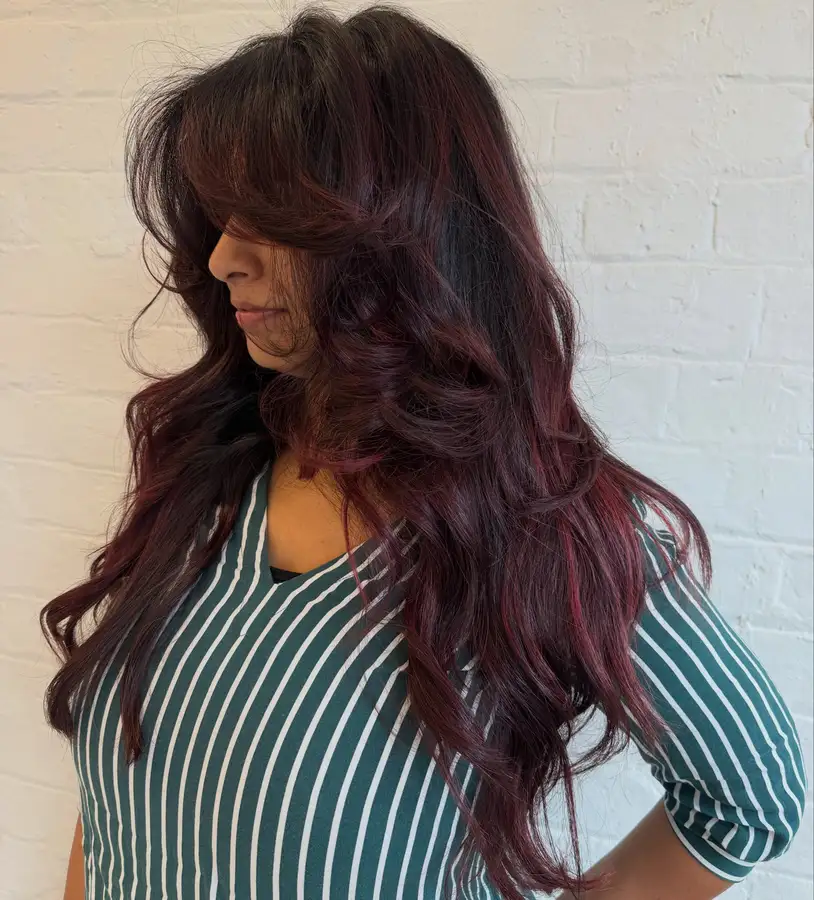
Burgundy highlights can vary in width, from fine ribbons that blend into the base to broader sections that create a stronger contrast. Concentrating them around the face and ends gives the colour a defined pattern without covering every strand. Loose curls help separate the highlighted pieces visually, whereas straight styling can make their placement look more graphic. Because the base remains dark, the final result can retain a brunette appearance even when the red catches the light.
12. Cherry-Cola Balayage to Wine Tips
Long, glossy waves begin with dark roots, move through a cherry-cola blend, and finish with brighter wine-red tips. The colour grows progressively warmer and more vivid along the lengths, creating a clear gradient without an abrupt boundary. Smooth waves reflect light across the surface, revealing the difference between the darker upper section and the saturated ends. The deepest tones remain near the crown, while the wine colour becomes most noticeable toward the bottom.
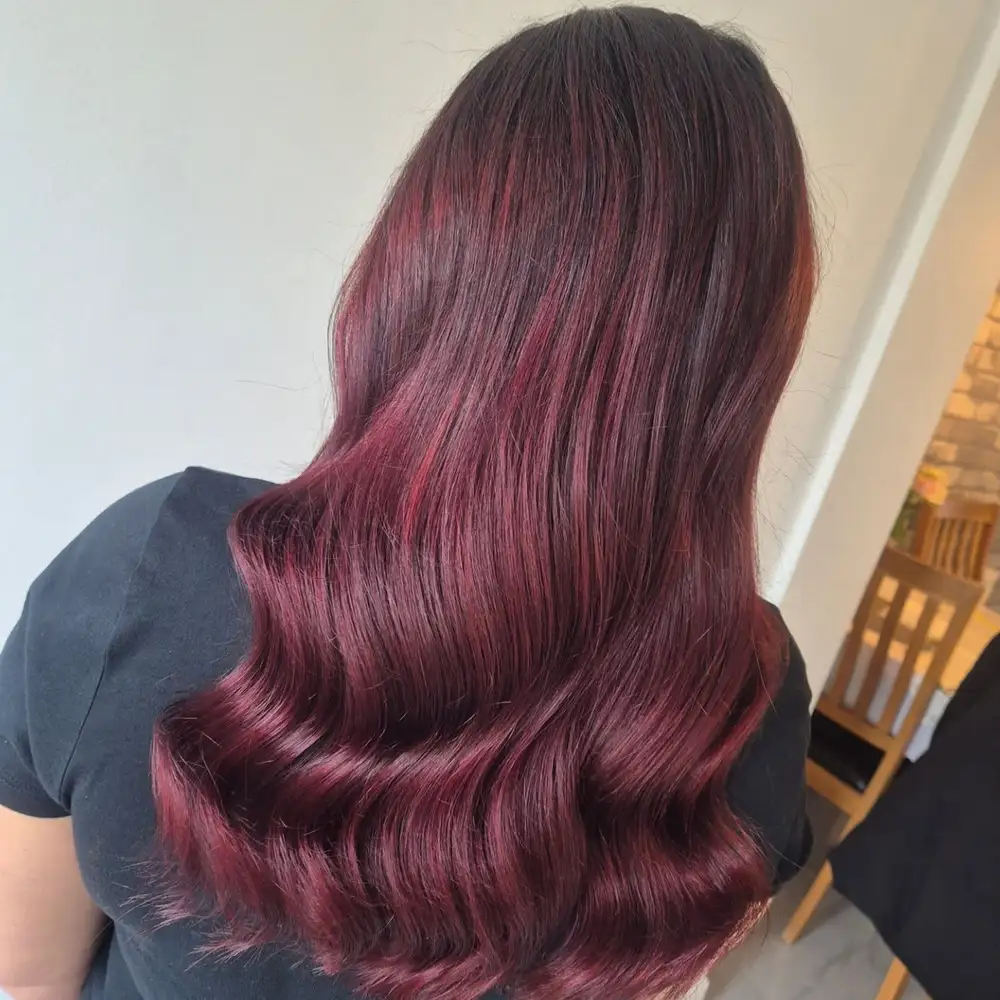
The graduated placement makes cherry cola a useful reference for anyone who wants a red-toned finish without colouring every section equally. Brighter ends can be trimmed gradually as the colour fades, although the overall gradient will change as the length decreases. A round-brush blowout creates a smoother surface for light reflection, while loose curls reveal more variation between the cherry and wine shades. Keeping the ends conditioned helps preserve their appearance, especially if lightening was needed before applying the red.
13. Cherry Brunette Beside the Tree
Long, wavy dark brown hair carries a subtle reddish-brown cherry tint that becomes more visible in the light. The colour remains close to brunette rather than shifting into a bright red, giving the lengths a warm, understated appearance. Waves help reveal the tint across different sections, with deeper areas appearing almost brown-black and lighter curves showing more red. Blue lights, silver ornaments, and a star topper on the Christmas tree provide a cooler contrast behind the hair.
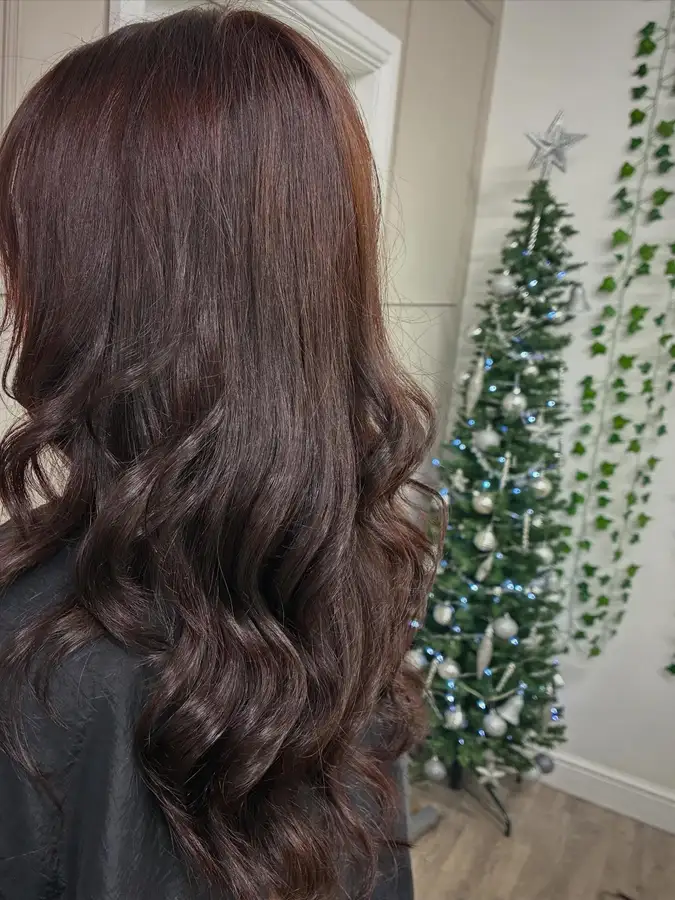
Cherry-toned brunette colour is suited to people who want a noticeable change without moving far from a dark base. The amount of red can be adjusted, ranging from a slight reddish reflection to a richer cherry-brown finish. Worn in loose waves, the shade changes with movement; a straight finish makes the overall colour look more uniform. Keeping the hair glossy helps the subtle red undertones remain visible, particularly under indoor lighting.
14. Glossy Deep Burgundy Waves
Medium-length hair falls just past the shoulders in loose, glossy burgundy waves. The shade is deep and even, with red undertones appearing as light travels across the curved sections. A stylist lifts part of the hair to reveal the colour through the inner layers, showing that the rich finish continues beyond the surface. The shoulder-grazing length creates a full outline without the weight of very long hair, while the waves add movement around the ends.

The medium length makes it easier to maintain a defined wave pattern without requiring as much styling time as longer hair. A curling iron can create loose bends, while a round brush gives the ends a softer, turned shape. Burgundy may appear almost brown in dim lighting and more distinctly red under brighter light, so reference photos taken in different settings can help clarify the desired shade. Gentle washing can also help limit premature fading.
15. Straight Burgundy with Face Layers
Straight deep burgundy hair falls past the shoulders, with face-framing layers curving gently around the cheeks. The remaining lengths stay sleek and relatively uniform, allowing the cut to create shape without introducing obvious colour variation. A black ribbed top and neutral beige background keep attention on the hair. The burgundy shade looks especially rich across the smooth surface, where the light reveals subtle red undertones.

Face-framing layers can be styled inward to follow the cheek area or brushed away from the face for a more open shape. A paddle brush and controlled blow-drying help maintain the smooth finish, while a flat iron can refine the lengths when needed. Heat protection is important if straightening is part of the routine. Since the colour remains consistent throughout the hair, the most visible change over time will usually come from root regrowth or gradual fading.
16. Platinum with Red and Green Ends
Shoulder-length straight hair pairs a very light platinum-blonde upper section with vivid red and green colour through the lower half. The festive shades begin at a similar level across the back, creating a distinct dip-dye effect. Red and green sections sit alongside one another, forming a graphic colour pattern against the pale blonde. Straight styling keeps the boundary between the blonde and the brighter ends easy to see, giving the hairstyle a bold, deliberate finish.
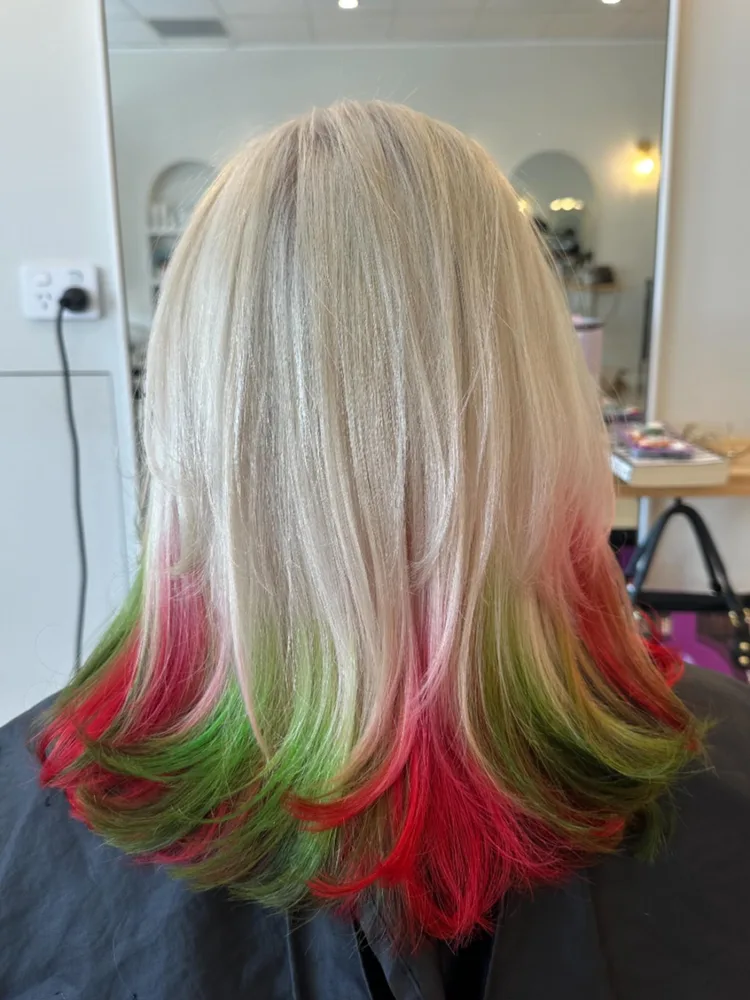
Keeping the lower colours separate during application helps preserve the clean blocks of red and green. The pale blonde section provides a high-contrast background, but achieving platinum may require significant lightening depending on the starting colour. Previously lightened hair can be more delicate, so gentle brushing and careful heat use matter. For a temporary seasonal version, coloured hair wax or other washable colour products may offer a shorter commitment, depending on the starting shade and product instructions.
17. Bright Pink-Orange Short Waves
Short waves glow in a vivid pink-orange shade that shifts between coral and warmer pink tones under indoor light. The compact length gives the hairstyle a rounded, textured shape, with individual waves creating small areas of brightness and shadow. Christmas lights appear through the window behind the subject, while a red wrap robe with a white floral print adds a cosy contrast. The colour is bold, but the loose texture prevents the overall shape from looking too rigid.

Pink-orange colour can be achieved with different mixes of pink, coral, and orange, so the balance between the tones matters when choosing a reference. On short hair, the shade remains visible even when the hair is tucked behind the ears or styled with extra volume at the crown. A diffuser can help maintain natural waves, while a small curling wand can define individual sections. Colour-safe washing is useful for preserving bright tones, which may fade faster than natural shades.
18. Red to Pink to Dark Ombre
Long, straight hair shows a vivid red section fading through pink before blending into natural dark brown-black. The colour transition runs along the lengths, creating a continuous sequence of warm and cool tones rather than separate blocks. A brush passes through the hair in this close-up, revealing how the shades sit together as the strands move. Pink forms the bridge between the fiery red and the darker natural colour, softening the overall gradient.
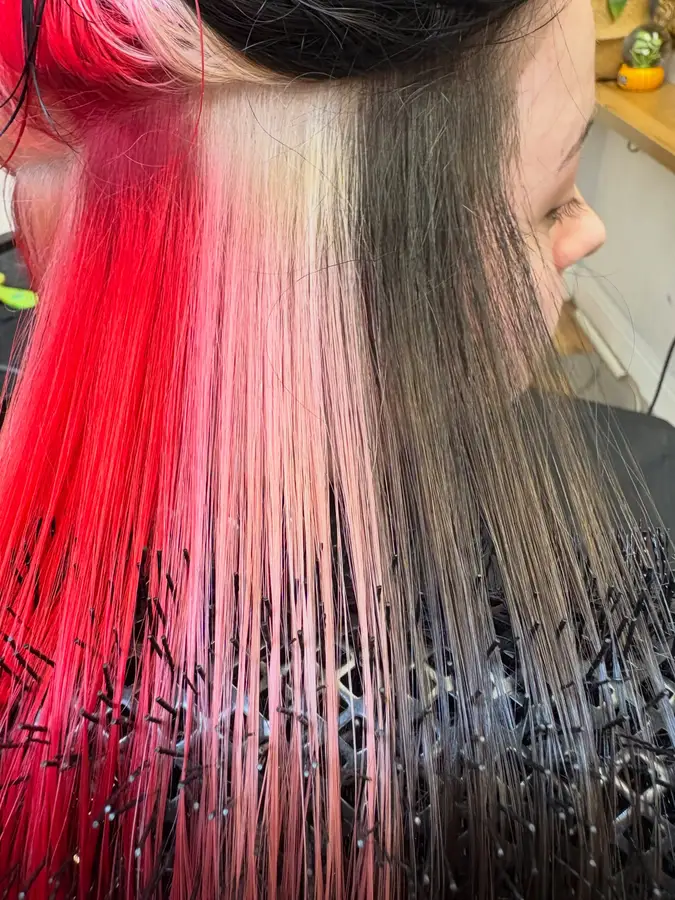
The pink middle section helps connect the brighter red with the dark finish, so the colour change appears gradual rather than abrupt. Straight styling makes each stage of the ombre easier to distinguish, while waves can blend the tones visually as they curve through the hair. Keeping the ends healthy is especially important if the coloured sections have been lightened before applying the red and pink. As the shade fades, the gradient may become softer and less defined.
19. Soft Rose-Gold Dimensional Blonde
Shoulder-length waves blend soft rose gold with pastel pink and dimensional blonde tones. Lighter platinum pieces run through the mid-lengths and ends, adding brightness against the darker roots. The different shades remain visible without forming harsh stripes, as the waves soften the transitions between them. A black salon cape frames the hair and provides a dark background, making the pale pink, rose, and blonde tones easier to distinguish.
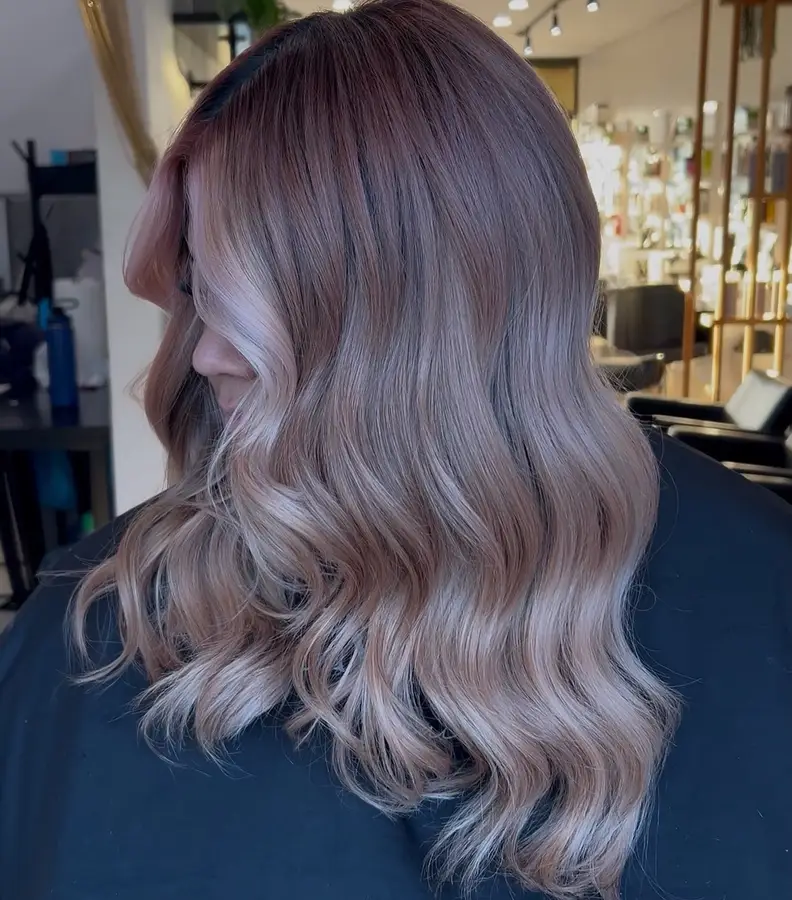
Rose-gold colour can lean more pink, copper, or beige depending on the balance of the underlying blonde and the chosen toner. Here, the lighter sections help prevent the pastel tones from appearing too dense, while the darker roots create contrast near the crown. Loose waves reveal the different shades from several angles, whereas straight styling can make the colour placement look more delicate. Pastel tones may fade relatively quickly, so refreshing the toner can help maintain the intended balance.
20. Rose-Gold Highlights on Brown Hair
Wavy brown hair features rose-gold highlights from the crown through the ends. Pink-copper reflections sit against the darker base, giving the hair a warm, dimensional finish without removing its brunette character. Highlights are distributed throughout the lengths rather than concentrated only at the tips, so the rose tone remains visible across the hairstyle. Loose waves reflect light along the highlighted strands, revealing the contrast between the warmer pieces and the deeper brown sections.

Rose-gold highlights offer a way to introduce pink and copper tones while keeping some of the natural depth of brown hair. Result depends on how light the highlighted sections become before the rose shade is applied. Fine highlights produce a softer blend, while wider sections make the pink-copper colour more noticeable. Because the lighter pieces may fade differently from the brunette base, colour-safe care can help maintain the balance between the two tones.
21. Copper and Strawberry Blonde Blend
Shoulder-length wavy hair combines copper, strawberry blonde, and lighter blonde highlights in a blended, multi-tonal finish. Warm copper sections sit alongside paler strawberry tones, so no single shade dominates the entire hairstyle. The waves reveal small changes in colour as they curve through the lengths, creating a soft mix of bright and deeper areas. A simple light grey top keeps the overall portrait understated and leaves the hair colour as the main point of interest.

Blending copper with strawberry blonde works best when the tones share enough warmth to connect without losing their individual character. Lighter blonde pieces can brighten selected areas, while copper sections keep the result from appearing too pale. Broad waves show the tonal mix clearly, but a smooth blowout creates a more continuous colour effect. Since copper shades can fade noticeably, occasional glossing or toning may help restore the intended balance between the warmer and lighter sections.
22. Golden-Honey Balayage with Babylights
Wavy hair combines golden-honey balayage with fine babylights running through the lighter sections. Darker roots gradually blend into warm honey-blonde ends, while the delicate highlights add brightness within the broader colour placement. The individual strands create a fine, light-catching pattern instead of strong, separated streaks. Waves carry the different tones from the crown through the lengths, producing a gradual shift from shadowed brown to golden blonde.

Babylights are finer than many traditional highlights, so they can brighten the overall colour without creating a strong striped effect. Combined with balayage, they add detail to the lighter sections while leaving enough darker colour visible near the roots. A loose wave pattern makes these small variations easier to notice. Maintenance depends on the amount of blonde desired; allowing the darker root area to grow can preserve the soft blend between appointments.
23. Warm Brunette with Honey Balayage
Voluminous waves pair a warm brunette base with honey-caramel balayage and lighter pieces around the face. Caramel ribbons brighten the mid-lengths and ends, while the front sections bring additional light to the portrait. The darker base remains visible between the highlights, giving the hair depth instead of an all-over blonde appearance. Full waves create a broad silhouette, allowing the warm colour placement to show across several layers.
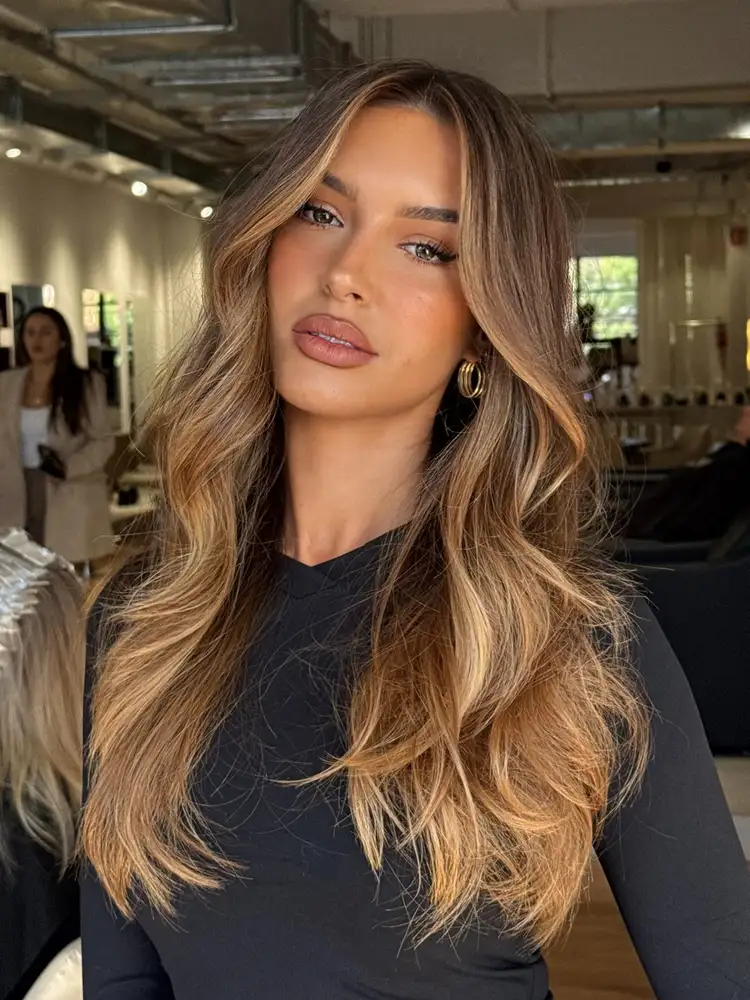
Lighter pieces around the face can be adjusted to create anything from a subtle glow to a more obvious blonde frame. Honey and caramel tones generally retain more warmth than cool ash shades, so the final colour can look golden under indoor lighting. A large-barrel curling iron helps reveal the placement through the lengths, while a round-brush blowout produces a smoother finish. Balayage also allows the roots to grow out without an immediate, sharply defined line.
24. Glossy Cherry-Cola Blowout
Hair is styled with a smooth crown and softly curled ends, giving the cherry-cola colour a polished blowout shape. Coppery red-brown tones run through the lengths, creating warmth without the brightness of a vivid red. The ends curve outward and inward in gentle bends, adding movement while keeping the overall silhouette sleek. Salon mirrors reflect the warm tones, and the smooth surface allows light to travel along the hair.

A round brush can create the curved ends that define this blowout, with the direction of the brush determining whether the tips turn inward or flick outward. Using smaller sections helps maintain control around the crown and sides. Cherry-cola colour often combines a dark brunette base with red or copper undertones, so its appearance may change under different lighting. Heat protection and moderate tool temperatures can help preserve the smooth finish without placing unnecessary stress on the lengths.
25. Long Deep Burgundy Defined Waves
Hair falls down the back in defined burgundy waves and curls, with each section holding a clear shape. The deep colour appears glossy across the raised curves and darker in the spaces between them. Unlike loose, barely visible bends, these waves form a fuller outline that gives the long lengths a more structured finish. A light grey fuzzy sweater and blurred salon shelves provide a muted background, allowing the burgundy shade to remain prominent.
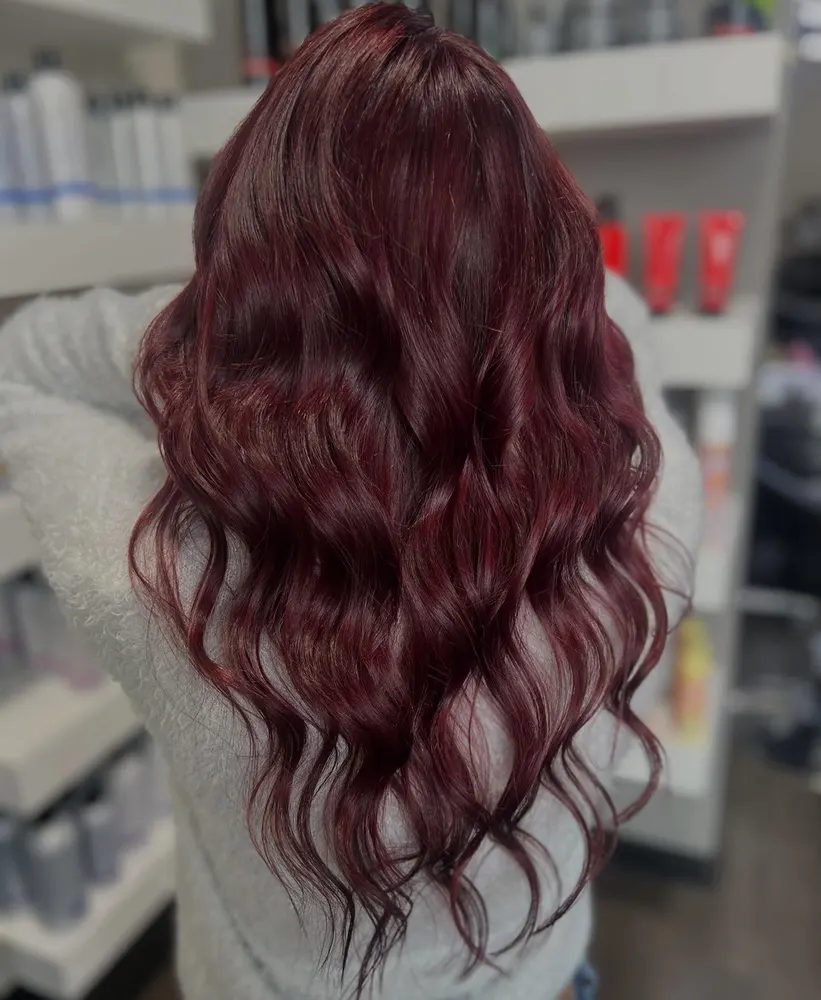
Defined waves usually require sections to be curled in a consistent size and allowed to cool before being brushed or separated. Leaving the curls intact creates a more structured result, while gently loosening them produces a wider, softer wave pattern. Burgundy can show both red and brown undertones, with the balance depending on the formula and lighting. A lightweight finishing product may help control flyaways, but heavy products can reduce the movement of long curls.
26. Dark Brown with Warm Red Highlights
Dark brown hair features warm red highlights woven through the lengths, with soft waves developing toward the ends. The red sections bring a subtle change in tone without replacing the brunette base, creating a warm effect rather than a bright, all-over colour. A red salon interior echoes the highlights, while a black top provides contrast against the hair. The overall shape remains relaxed, with the colour adding detail instead of changing the haircut itself.

Warm red highlights can be tailored to appear as fine ribbons or more visible sections, depending on how much contrast is wanted against the dark base. Softer waves help the red pieces emerge and disappear as the hair moves, while straight styling reveals their placement more clearly. Red tones may lose brightness with repeated washing, particularly on pre-lightened sections. Colour-safe products and lower heat settings can help maintain the finish between colour appointments.
27. Golden Blonde with Lighter Highlights
Long, wavy golden-blonde hair includes lighter highlights and darker roots that preserve depth near the crown. Blonde leans warm rather than icy, with brighter strands running through the lengths to create variation. Gentle waves keep the colour from appearing completely uniform, while the darker root area provides contrast against the lighter pieces. Diagonal bands of light and shadow cross the pale wall behind the subject, adding visual interest without competing with the hairstyle.

Golden blonde can look different under daylight, warm indoor bulbs, and salon lighting, so reference images are useful when deciding how yellow, beige, or honey-toned the finished colour should be. Lighter highlights brighten selected areas while the darker roots help the style retain dimension. A large curling iron can create loose waves that reveal the colour placement, or the hair can be worn straight for a simpler finish. Blonde sections may need toning if unwanted yellow or brassy hues develop.
28. Golden Hour Blonde Face Frame
Long, voluminous curls carry a warm golden-blonde shade, with brighter blonde pieces sweeping around the face. The crown has a smooth, full shape before the hair opens into defined curls through the lengths. Lighter sections near the front create a clear contrast against the deeper golden tones elsewhere, drawing attention to the face. A brown satin top complements the warmth of the colour, while the curled ends give the hairstyle a rounded, lively outline.

The face-framing pieces can be placed more heavily around the front or blended into the surrounding blonde for a softer transition. Styling the front sections away from the face helps expose the brighter colour and creates an open shape around the cheeks. Large-barrel curls add volume through the lengths, while a round brush can create a smoother, less defined finish. Keeping the lighter front sections toned consistently helps them retain the intended golden-blonde appearance.
29. Merlot Half Curled Half Straight
Very long hair in a deep burgundy-merlot shade is shown halfway through styling, with one side formed into tight spiral curls and the other left straight. A gold-barrel curling iron shapes a section while a stylist works through the lengths. The contrasting textures make the colour appear different across the same head of hair: the curls create compact areas of shadow and shine, while the straight side reflects light in longer, smoother lines. Arched salon mirrors glow in the background.

The half-finished styling provides a useful comparison of how texture changes the appearance of merlot colour. Tight curls make the shade look deeper between the coils, whereas straight lengths show a more continuous reflection. For a finished style, the curled sections can be left defined or gently loosened with the fingers. Using a heat protectant and allowing each curl to cool before handling can help the shape last longer, particularly on very long hair.
30. Vibrant Ginger-Copper Waves
Shoulder-length waves feature a vibrant ginger-copper shade with lighter highlights and deeper lowlights. Bright orange-copper sections catch the natural window light, while the darker pieces create contrast within the same warm colour family. The short, close rear view fills the frame with the texture and tonal changes, making the highlights easy to distinguish. Blurred plants and salon shelving remain in the background, leaving the hair colour and wave pattern as the main focus.
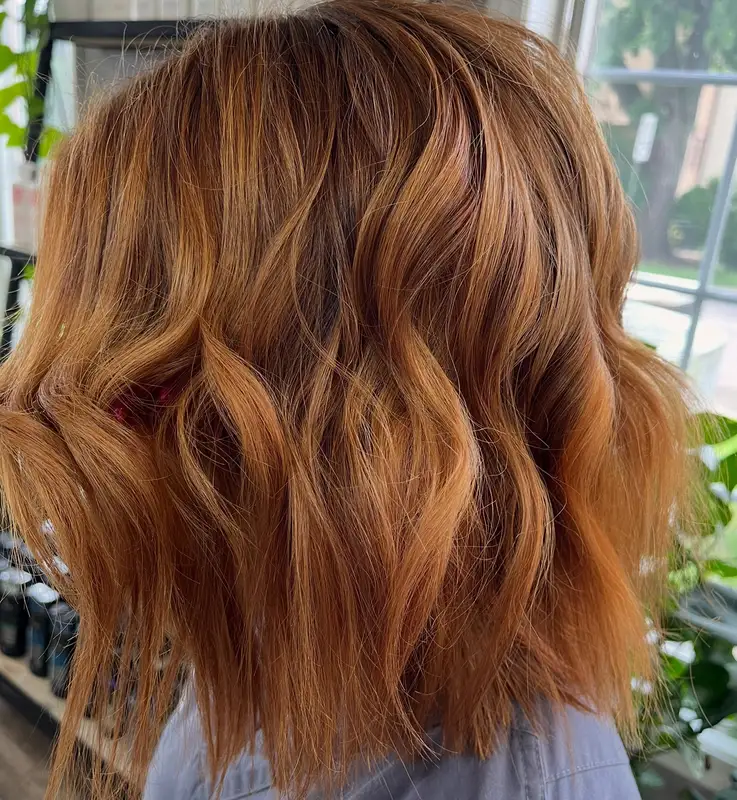
Ginger-copper can range from golden orange to a stronger red-orange, so the balance of warmth matters when choosing a colour reference. Highlights brighten selected waves, while lowlights keep the overall shade from looking flat. A diffuser can enhance naturally wavy texture, and a curling wand can create a similar pattern on straighter hair. Copper pigments may fade with regular washing, so gentle cleansing and careful heat use can help preserve the brightness between refresh appointments.
Conclusion
Festive hair color doesn’t have to mean going all in. A soft cherry glaze over brown can look just as polished as a bold emerald, as long as the shade suits your skin tone and your routine. Before you commit to any of these Christmas hair color ideas, think honestly about upkeep: reds fade quickly, silvers need regular toning, and bright greens demand extra care. Screenshot the look that made you stop scrolling and bring it to your stylist, along with questions about placement and maintenance. If you’re still undecided, browse more holiday hair color ideas or red and green hair shades until one feels like yours. The best choice is the one that makes you feel like yourself, just a little more festive.