Braided hairstyles take on a richer character as the season shifts, and fall hairstyles for black women braids bring plenty of shape, texture, and movement to explore. From flowing knotless designs to sculpted cornrows, this collection moves through braid patterns that range from intricate and defined to full and dramatic. Each idea has its own silhouette, whether built around a high ponytail, compact bun, rounded bob, or cascading length. Expect close-up details such as parting, braid scale, twists, curls, cuffs, beads, and warm-toned color placements that make each design easy to picture.
1. Boho Knotless Braids
Boho Knotless Braids use a knotless braid structure with loose pieces woven through the overall design. Fine sections break away from the cleaner braid pattern, bringing varied texture and an irregular outline through the length. Long strands fall freely between the structured braids, creating contrast between defined sections and airy movement. Varied strand placement keeps the silhouette from appearing uniform from root to end.
2. Goddess Box Braids
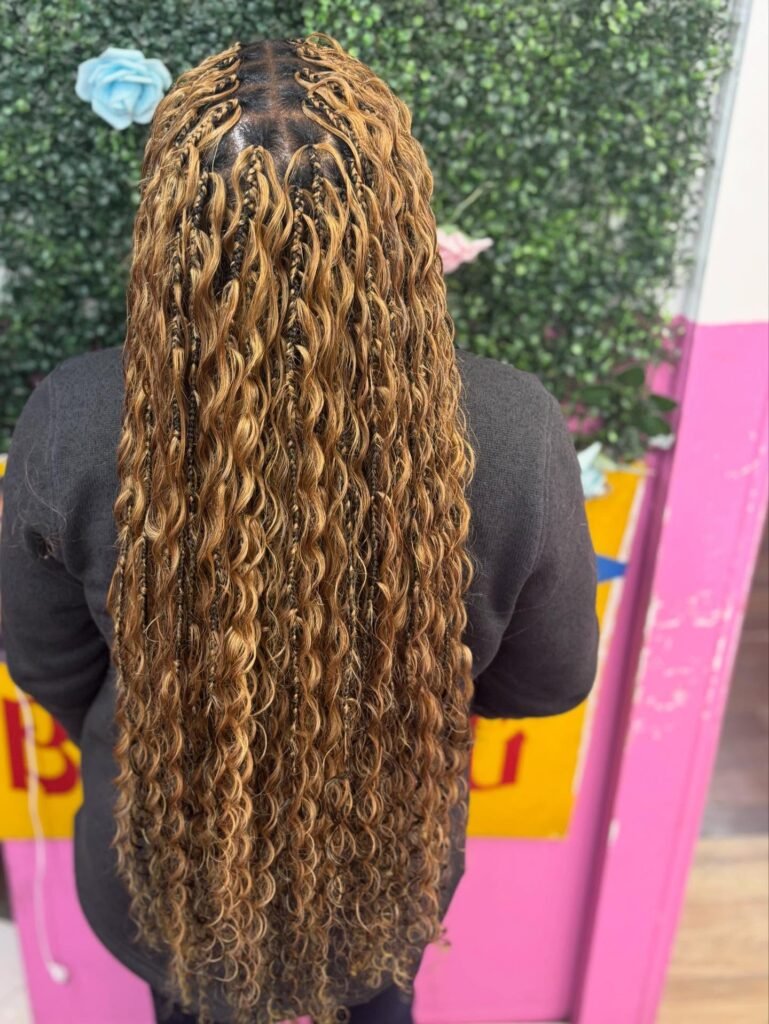
Goddess Box Braids pair square-shaped braid sections with loose, curly pieces that interrupt the structured pattern. Individual braids remain clearly separated at the roots, while softer strands extend outward along the length. Curled sections bring movement beside the straighter braid forms without changing the overall box-braid framework. Alternating textures give the hairstyle a layered visual rhythm from crown through the ends.
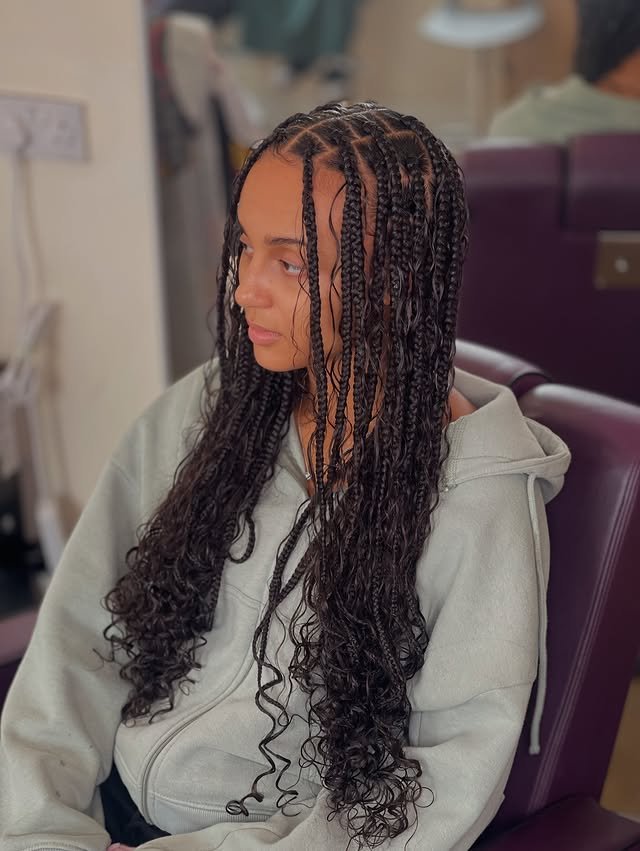
3. Tribal Braids with Cuffs
Tribal Braids with Cuffs center on defined braid sections arranged in an intricate pattern across the scalp. Carefully separated rows create visible geometry, while varying braid directions shape the crown with a more detailed structure. Small cuffs sit along selected braids, breaking up the repeated lines with subtle metallic accents. Close spacing near the scalp contrasts with the longer, flowing sections below.
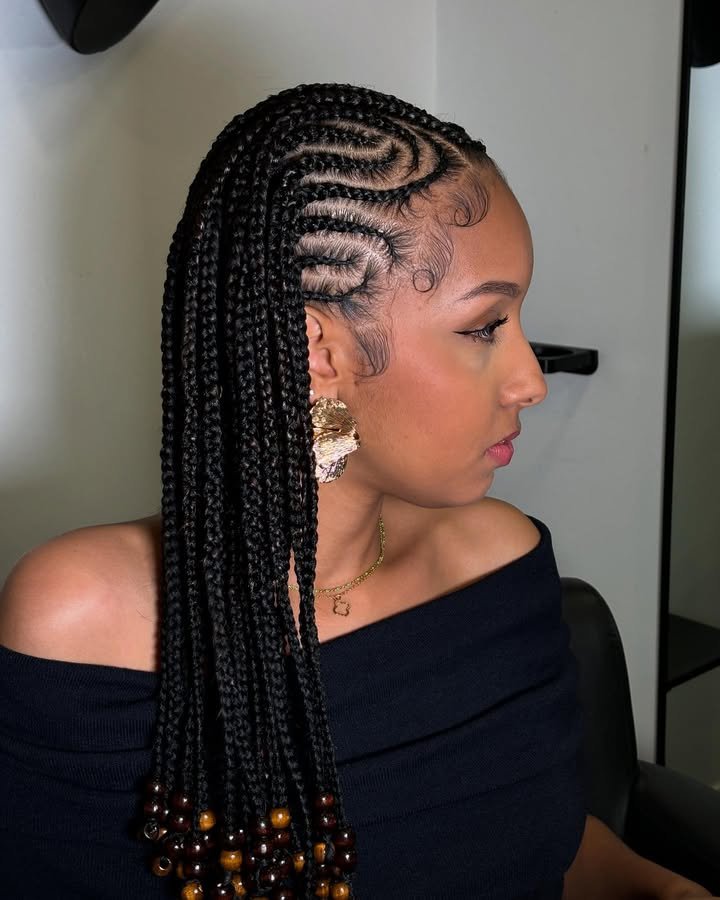
4. Jumbo Cornrow Bun
Jumbo Cornrow Bun brings thick cornrows into a compact bun shape at the back or upper portion of the head. Broad rows travel cleanly along the scalp before gathering toward the central bun, giving the hairstyle a strong directional flow. Larger braid proportions make each cornrow clearly visible against neighboring sections. Concentrated volume at the bun anchors the design while keeping the sides closely defined.
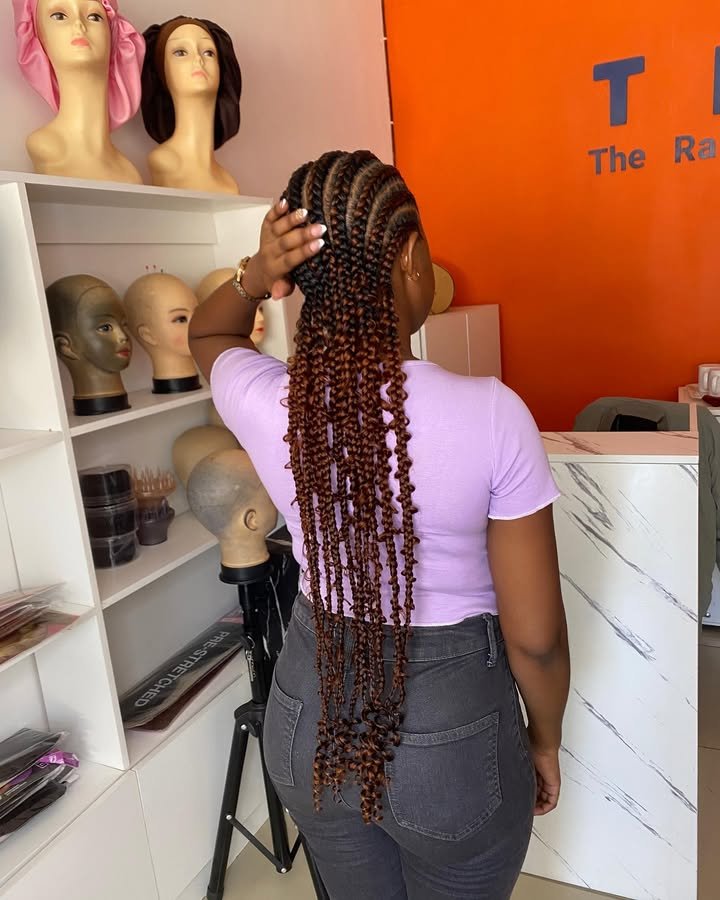
5. Lemonade Side Braids
Lemonade Side Braids sweep multiple cornrows toward one side, producing a strong diagonal direction across the head. Narrow braid rows follow curved or angled paths before gathering into longer lengths along the side. Side-focused placement creates an asymmetrical silhouette rather than an evenly distributed arrangement. Parallel sections remain visibly separated, allowing the braid pattern to read clearly from the crown through the lengths.
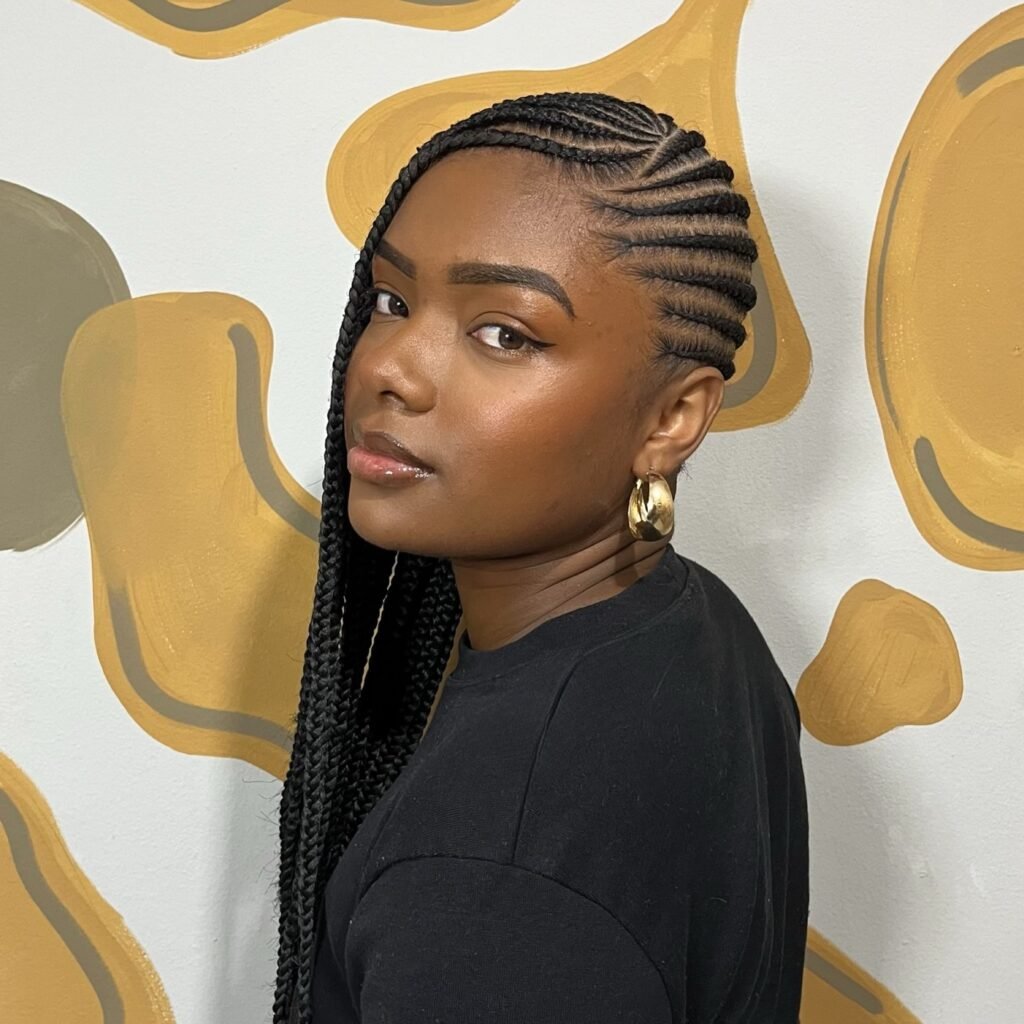
6. Braided High Ponytail
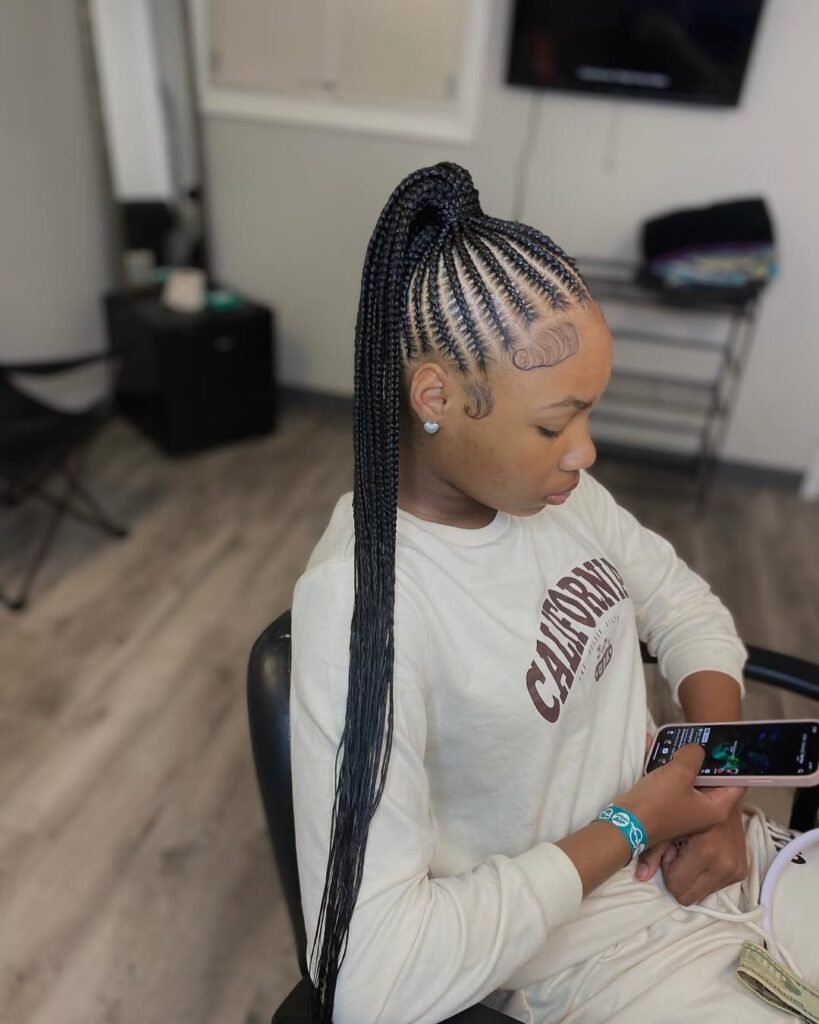
Braided High Ponytail gathers the hair into a raised ponytail built from defined braided sections. A lifted base gives the silhouette vertical height, while the braided length extends upward before falling away from the crown. Tightly gathered roots keep the upper shape compact against the head. Long braid lines then introduce length and downward movement beneath the elevated starting point.
7. Passion Twist Braids
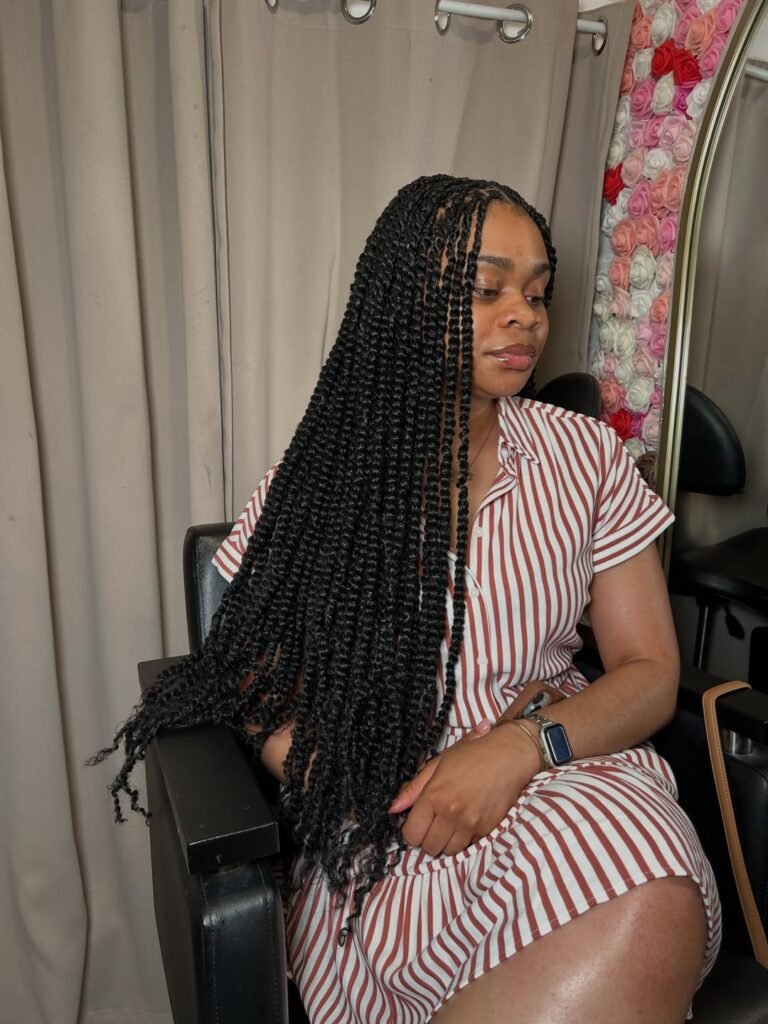
Passion Twist Braids form rope-like twists with a visibly textured surface and a gently irregular outline. Each twist carries a rounded shape rather than the flatter appearance of traditional braiding, giving the lengths more dimension. Twisted strands descend in flexible sections that bend naturally instead of holding a rigid line. Grouped together, the twists create a full silhouette with repeated spiral texture throughout.
8. Braided Bob with Beads
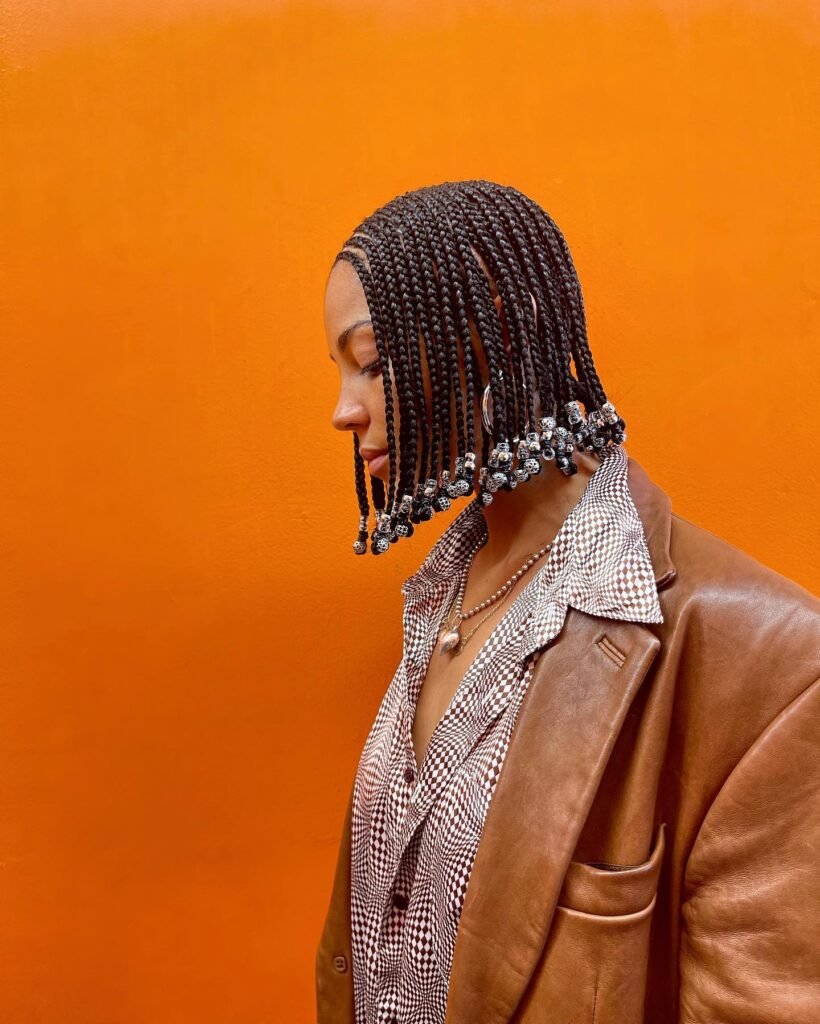
Braided Bob with Beads keeps the braided length around the jaw or neckline, forming a compact bob silhouette. Short braid sections fall close to the head before stopping at the defined lower edge of the cut. Beads placed along selected braids introduce small points of detail within the otherwise repeated structure. Concentrated length around the lower face keeps the shape distinct and neatly contained.
9. Stitch Cornrow Design
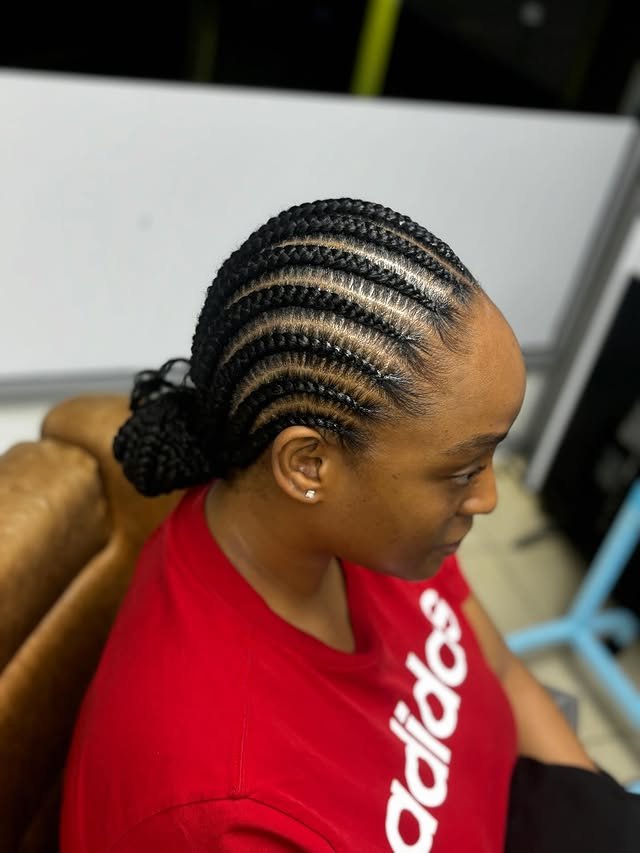
Stitch Cornrow Design uses sharply separated rows that produce a precise, graphic pattern across the scalp. Thin sections sit between the raised cornrows, making each braid line appear clearly outlined from root to end. Direction changes within the pattern create visual movement across the crown rather than a single straight path. Fine parting keeps the overall structure crisp while giving the design its intricate definition.
10. Burgundy Box Braids
Burgundy Box Braids use individually sectioned braids throughout the head, with burgundy coloring carried through the lengths. Square partings establish an even foundation before each braid descends into a distinct, elongated strand. Rich color gives the repeated braid pattern added depth without altering its recognizable box-braid structure. Consistent sections maintain a steady rhythm from the scalp through the ends.
11. Braided Space Buns
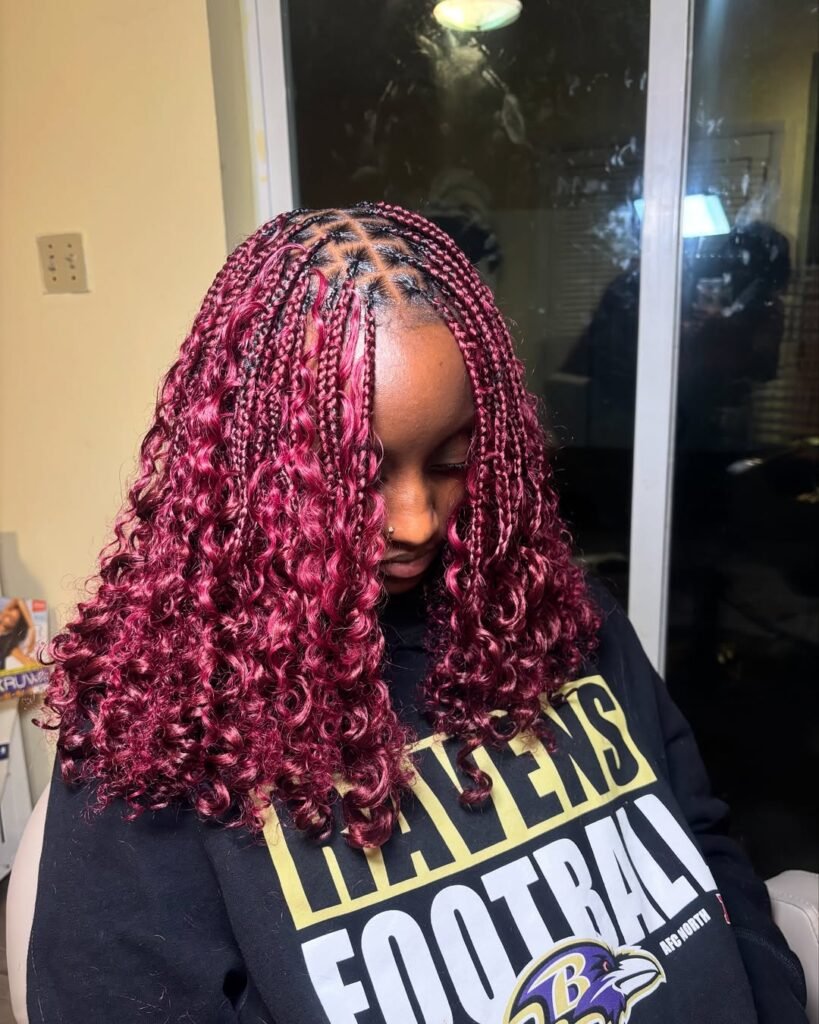
Braided Space Buns divide the hair into two distinct sections before gathering each side into a braided bun. Symmetrical placement creates matching rounded shapes on opposite sides of the head. Braided texture remains visible within each bun, giving the compact forms more definition than a smooth coil would provide. Open space between the buns emphasizes the two-part structure across the upper silhouette.
12. Micro Braids with Curls
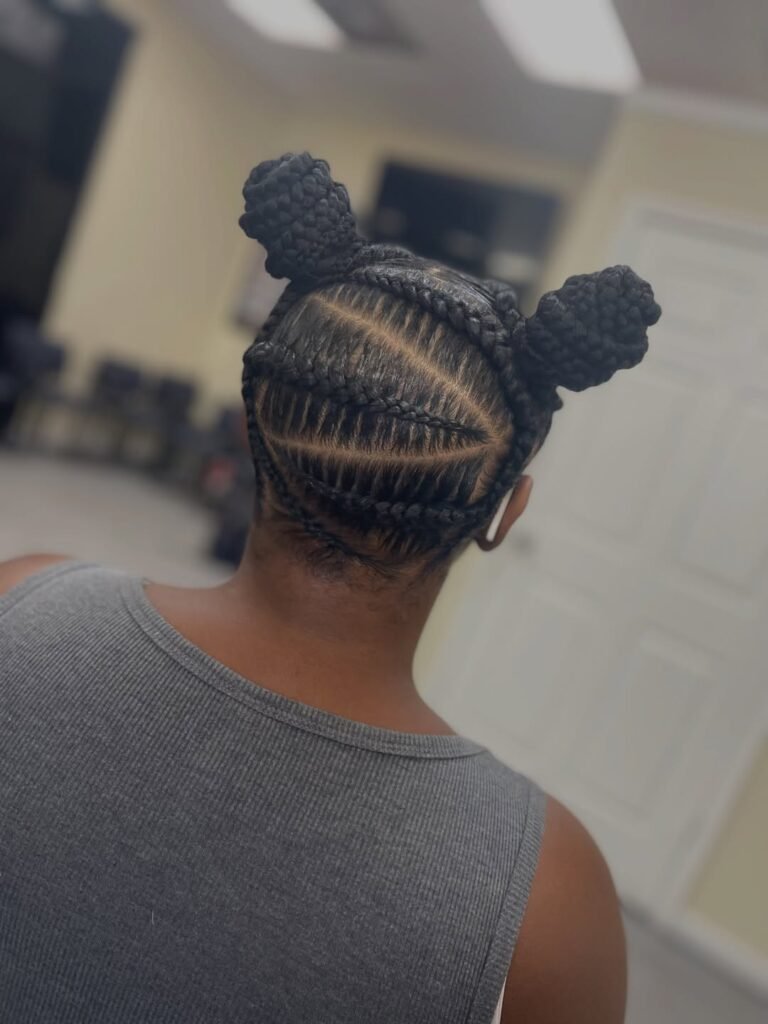
Micro Braids with Curls combine very narrow braids with loose curls woven visually through the overall arrangement. Tiny braid sections create a fine, detailed texture close to the scalp and along the structured lengths. Curled strands introduce rounded movement between the slimmer braid lines, breaking up the uniformity of the pattern. Fine and airy elements sit together without losing the definition of either texture.
13. Halo Braid with Puff
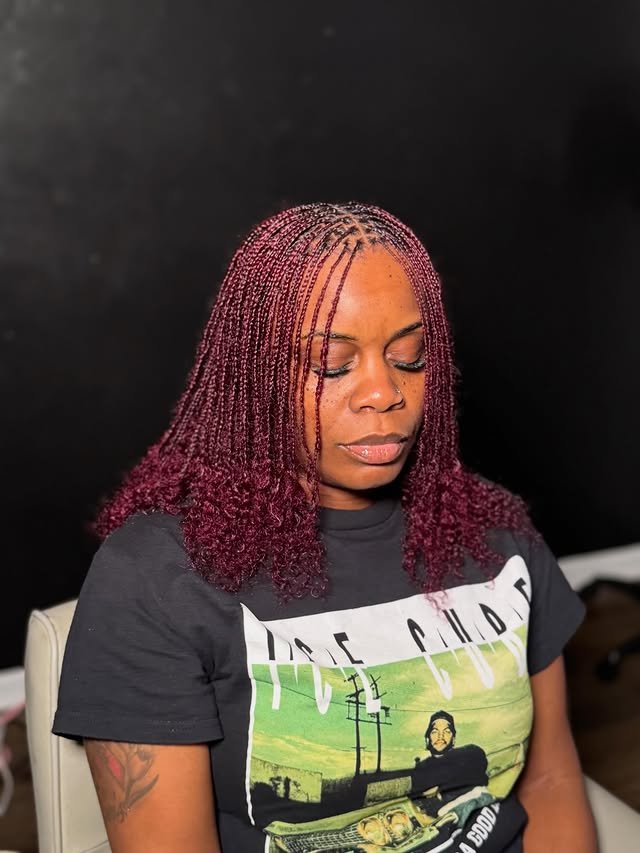
Halo Braid with Puff places a defined braid around the head while leaving a puff as the central or rear focal point. Circular braid placement follows the head’s contour, forming a continuous frame around the upper silhouette. Fuller texture gathers inside or behind the braided outline, producing a clear contrast in scale. Rounded volume within the halo keeps the design visually centered and distinct.
14. Copper Goddess Braids
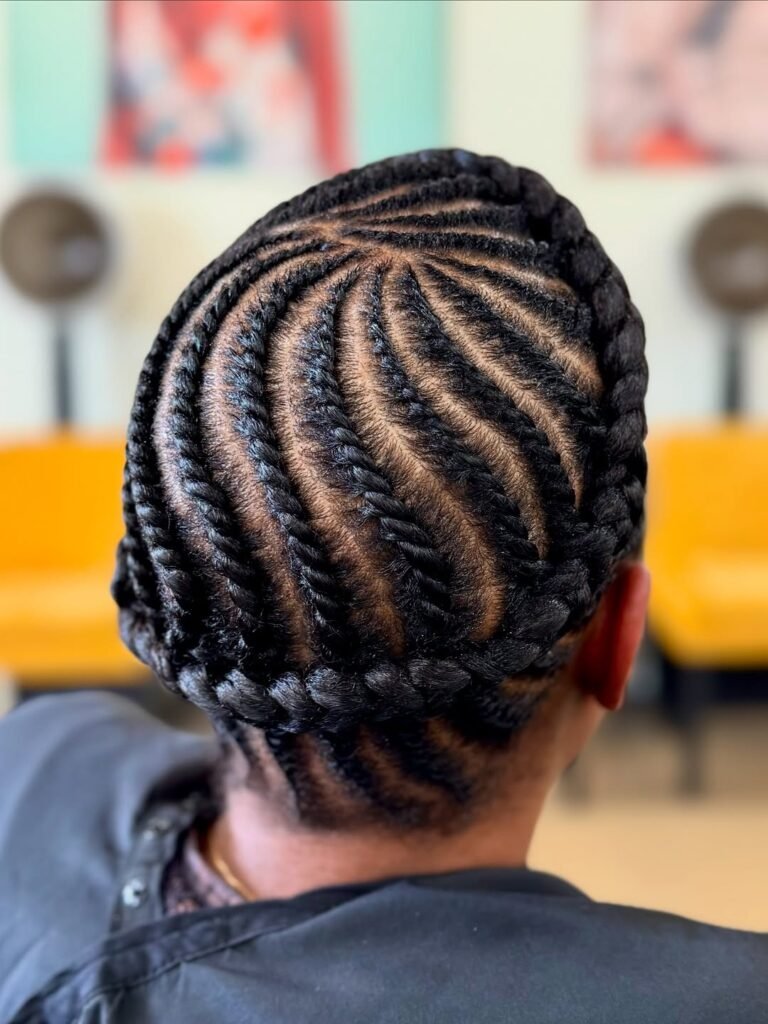
Copper Goddess Braids combine goddess-style braids with loose pieces and a copper color running through the design. Defined braid sections establish structure, while softer strands break away to create variation along the lengths. Warm copper coloring gives the loose and braided sections a unified visual tone without flattening their textural difference. Curved strands and separated braids together produce a layered, flowing silhouette.
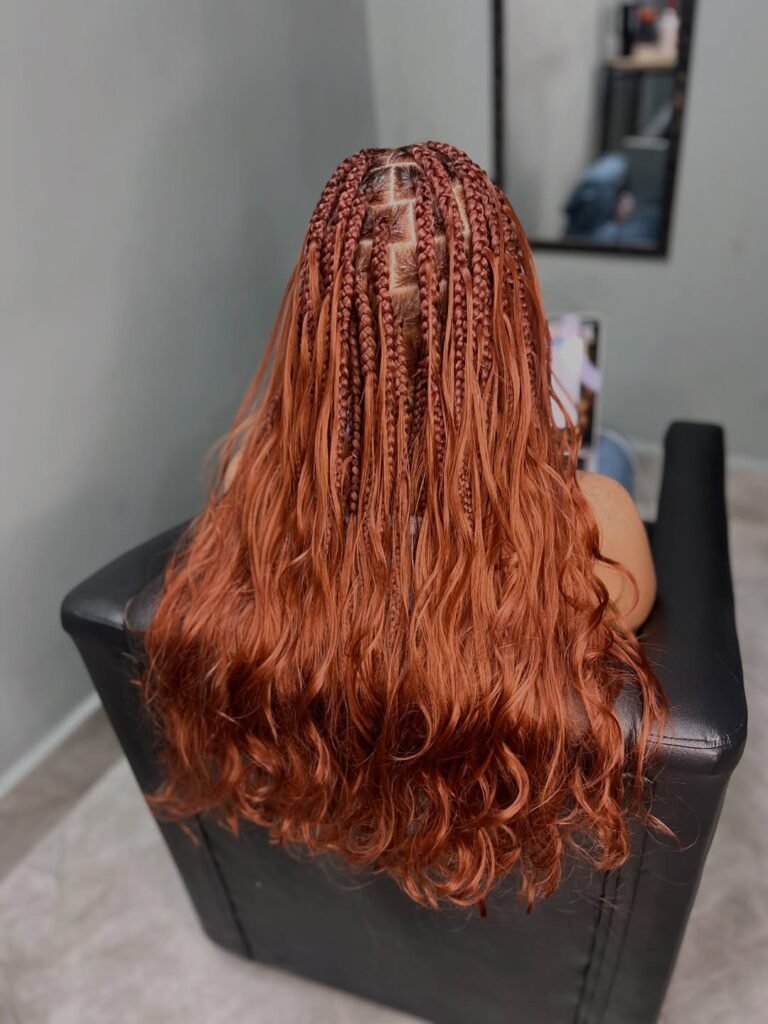
15. Braided Mohawk Style
Braided Mohawk Style concentrates the braid structure through the center of the head, creating a raised central silhouette. Closely arranged braids guide the eye along the middle section while the surrounding shape remains lower and more contained. Directional lines emphasize the lengthwise movement from the front toward the back. Central height gives the hairstyle its distinctive mohawk outline without relying on a loose, rounded shape.
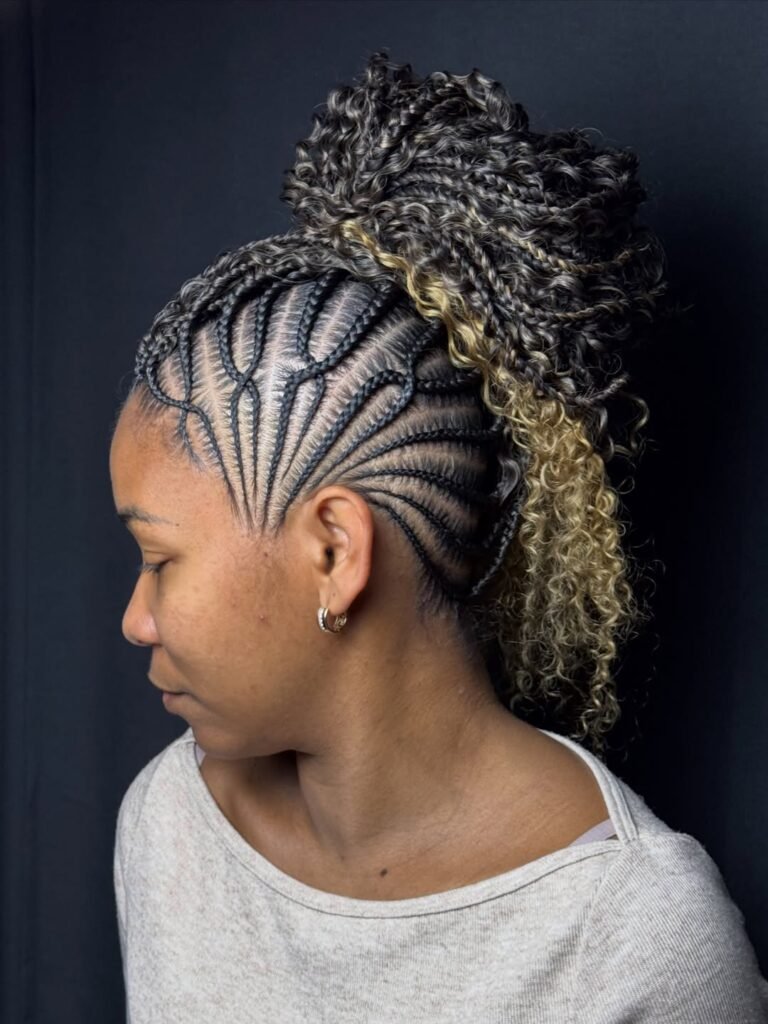
16. Crisscross Cornrows
Crisscross Cornrows use intersecting braid paths that form visible crossings across the scalp. Individual rows angle toward one another before overlapping in repeated X-shaped sections. Alternating directions prevent the pattern from reading as a simple set of parallel lines. Clean spacing around each crossing keeps the geometry easy to distinguish while the braid texture adds dimension across the crown.
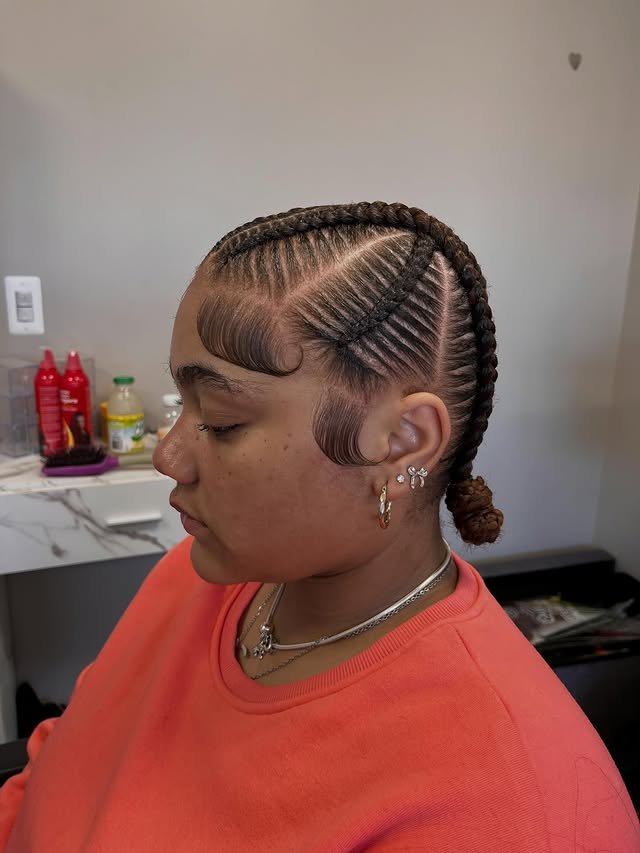
17. Honey-Blonde Feed-In Braids
Honey-Blonde Feed-In Braids build gradually from smaller sections into fuller braid lengths while carrying a honey-blonde color throughout the design. Narrow beginnings keep the roots visually close to the scalp before each braid expands into a broader shape. Feed-in construction produces smooth progression in braid thickness rather than an abrupt change. Warm color and gradual sizing work together to emphasize length and direction.
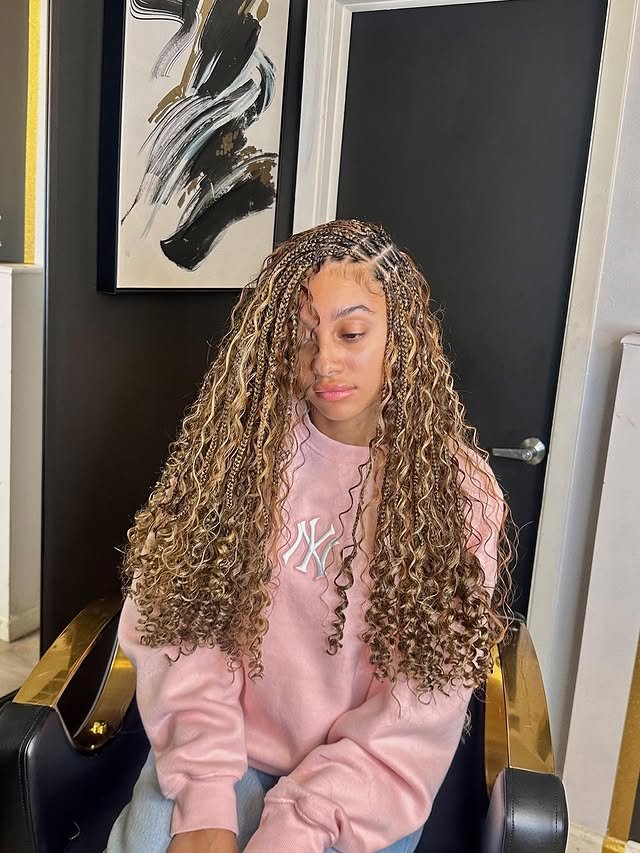
18. Side-Swept Ghana Braids
Side-Swept Ghana Braids direct fuller braid sections toward one side, creating a pronounced lateral flow across the head. Curved rows begin along the scalp before sweeping diagonally into longer braided lengths. Larger braid proportions make the directional movement easy to follow from the crown to the side. Uneven placement across the head gives the silhouette an intentionally asymmetrical shape.
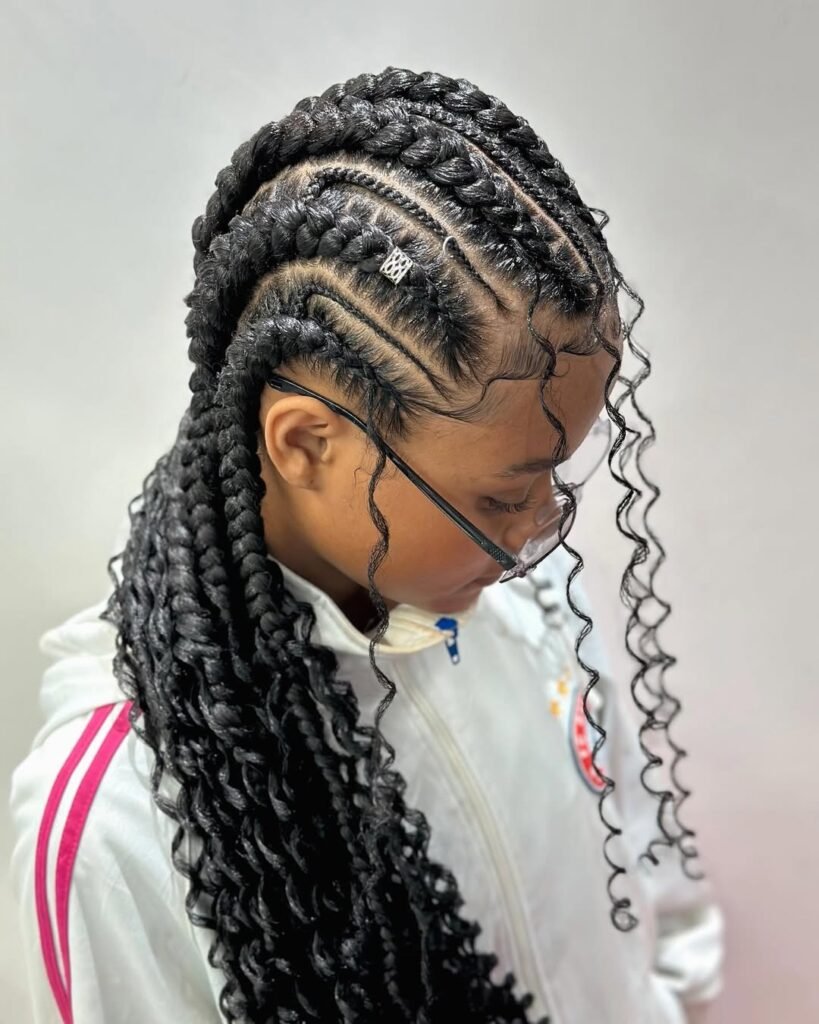
19. Braided Low Chignon
Braided Low Chignon gathers braided lengths into a compact chignon positioned low at the nape. Individual braids curve inward as they collect, gradually transforming the loose length into a rounded lower shape. Placement close to the neckline keeps the upper head visually streamlined while concentrating texture below. Wrapped braid sections give the chignon a defined structure rather than a loose or diffuse outline.
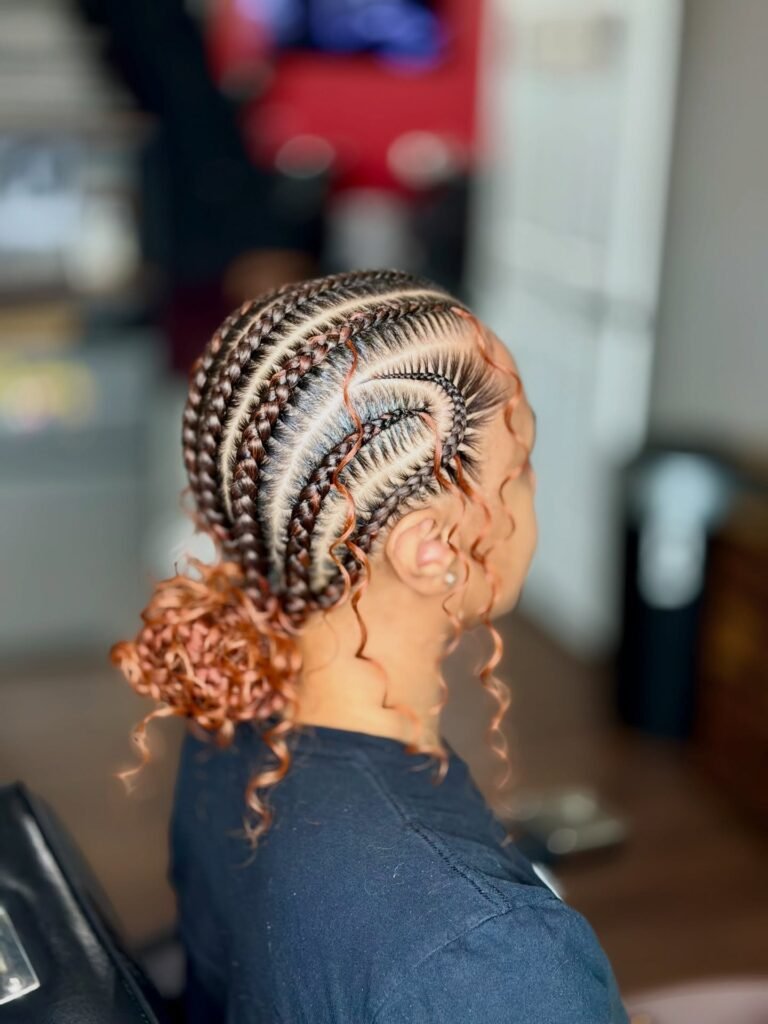
20. Mixed-Size Box Braids
Mixed-Size Box Braids alternate braid widths throughout individually sectioned square or rectangular parts. Larger braids sit alongside slimmer ones, creating visible changes in scale across the head and lengths. Varied proportions interrupt the regular rhythm associated with uniform box braids while preserving clear individual sections. Differences in thickness also bring dimension to the overall silhouette without requiring additional texture.
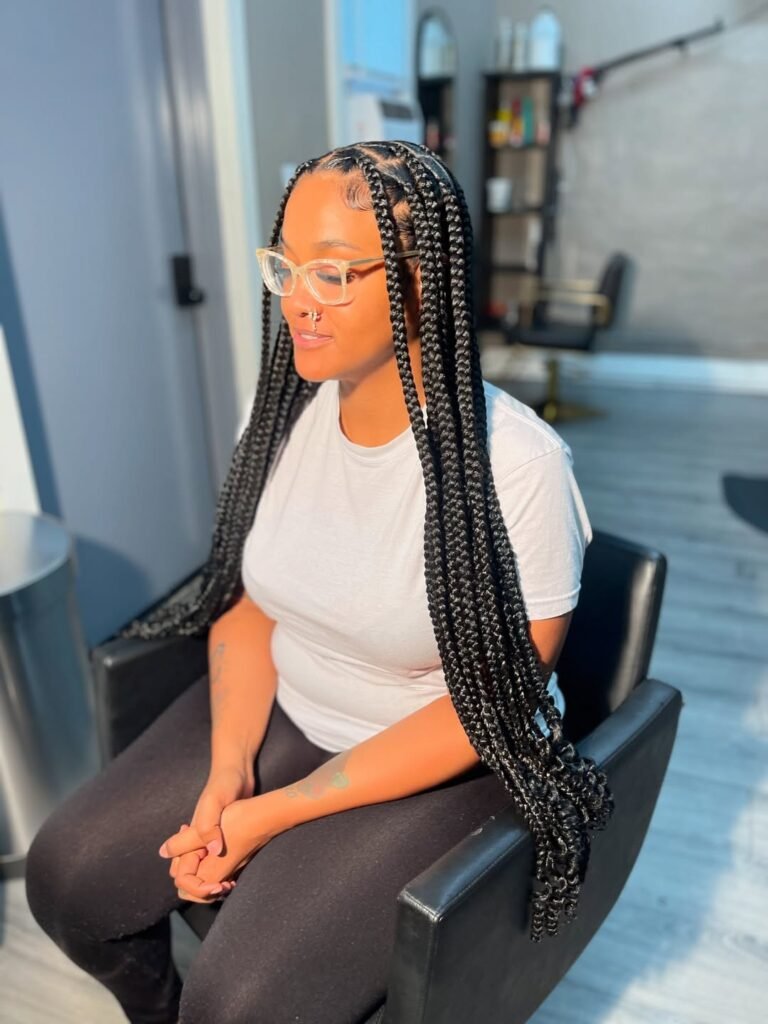
21. Curly-End Knotless Braids
Curly-End Knotless Braids keep the roots and main lengths in a knotless braid structure before transitioning into curls at the ends. Defined sections remain orderly through most of the length, while curled tips introduce a rounded change in texture. Loose ends move away from the straighter braid lines, creating a softer visual break at the bottom. Contrast between structured lengths and curled ends gives each braid a distinct finish.
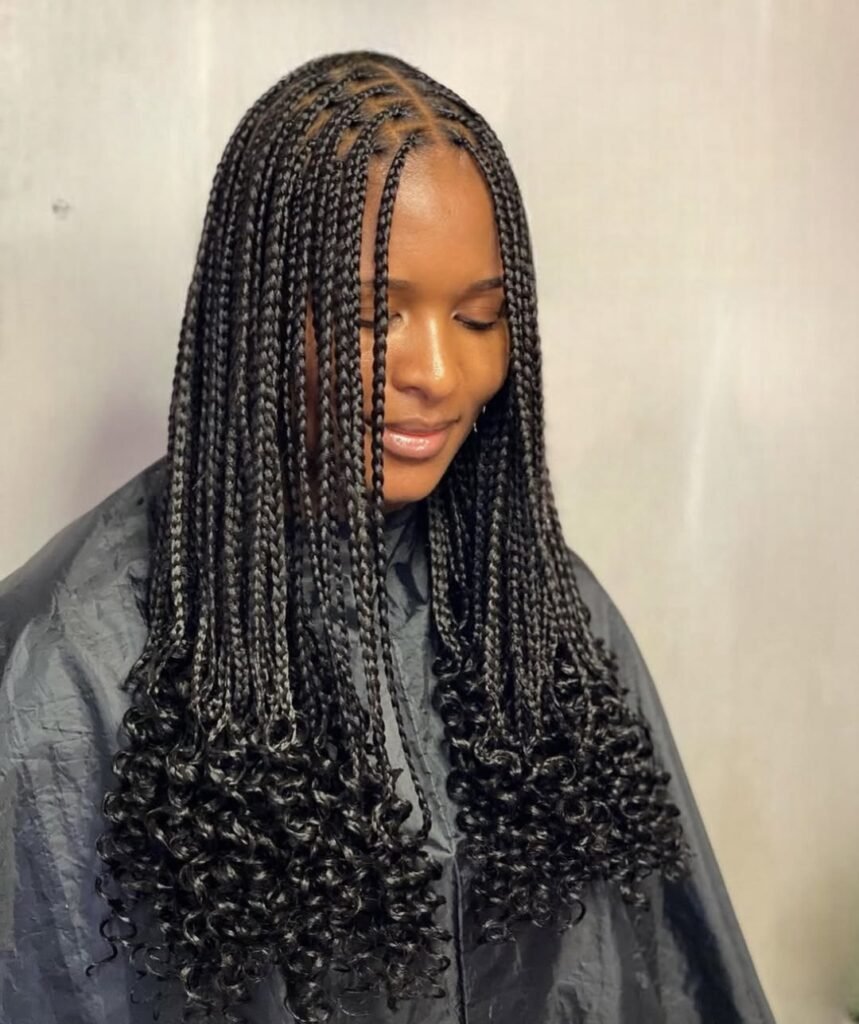
22. Braided Crown Updo
Braided Crown Updo arranges braids around the head in a crown-like shape before gathering the remaining structure upward. Circular placement gives the hairstyle a continuous outline that follows the upper head. Raised sections bring additional height toward the top, shifting the silhouette from a flat arrangement into an elevated form. Interwoven braid lines remain visible within the updo, keeping texture at the center of the design.
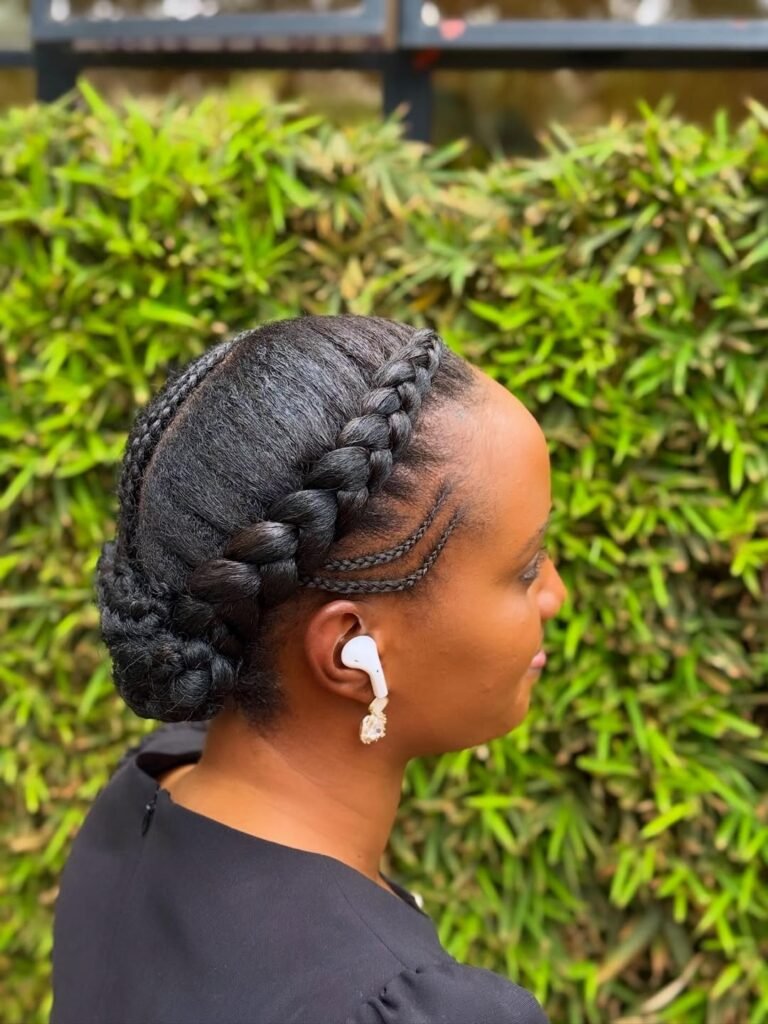
23. Senegalese Twist Braids
Senegalese Twist Braids form smooth, rope-like sections with a consistent twist running from root to end. Each strand maintains a rounded profile, giving the lengths a clean tubular appearance rather than a flat braided surface. Even twisting keeps the individual sections visually distinct as they fall alongside one another. Long, continuous lines emphasize the repeated spiral structure throughout the overall shape.
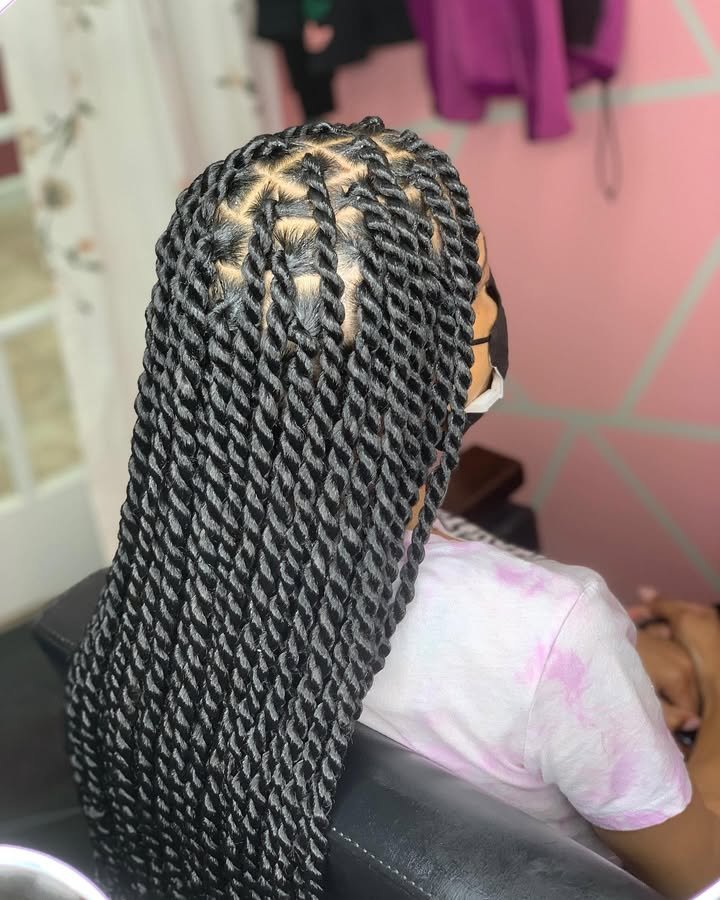
24. Zigzag Cornrow Braids
Zigzag Cornrow Braids follow angular paths that shift direction across the scalp rather than traveling in straight rows. Repeated turns create a noticeable zigzag pattern, with each braid tracing a sharp change in direction before continuing onward. Defined partings separate the angled sections and make the geometry easier to see. Alternating lines bring movement to the crown while keeping the braid structure close and controlled.
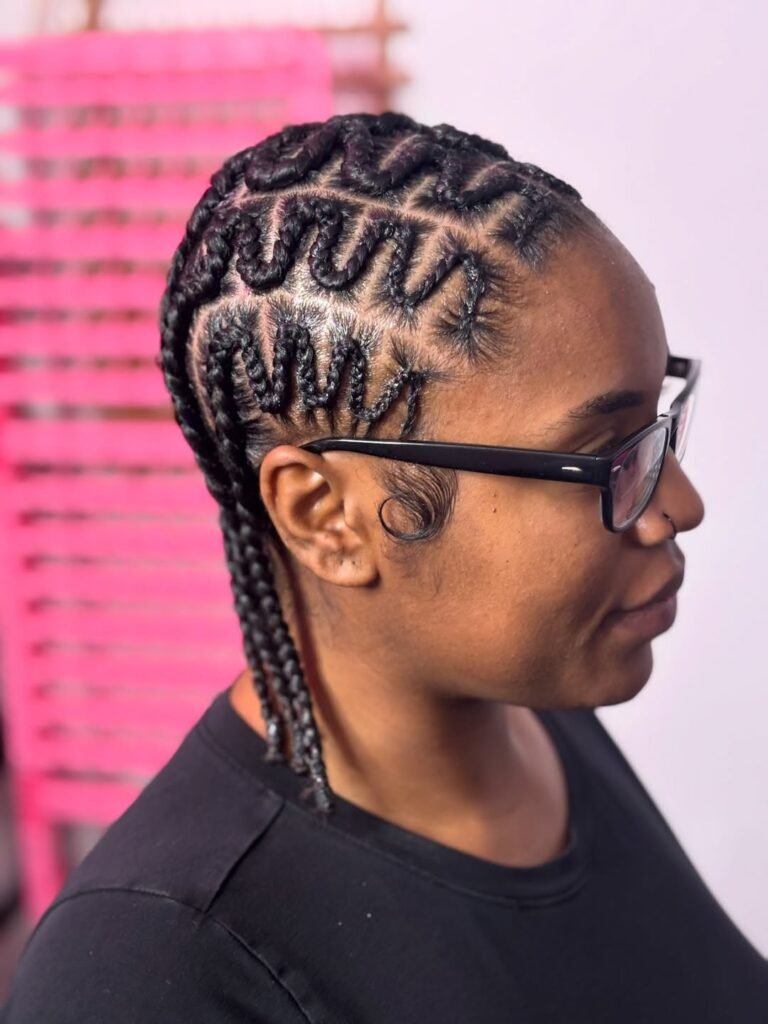
25. Ombre Passion Braids
Ombre Passion Braids pair rope-like passion twists with a gradual shift in color through the lengths. Rounded twists retain their textured form while the ombre transition changes the visual depth from one section to another. Color progression follows the length instead of appearing as separate blocks, allowing each twist to carry a continuous tonal movement. Spiral texture and graduated color give the silhouette layered dimension from root to tip.
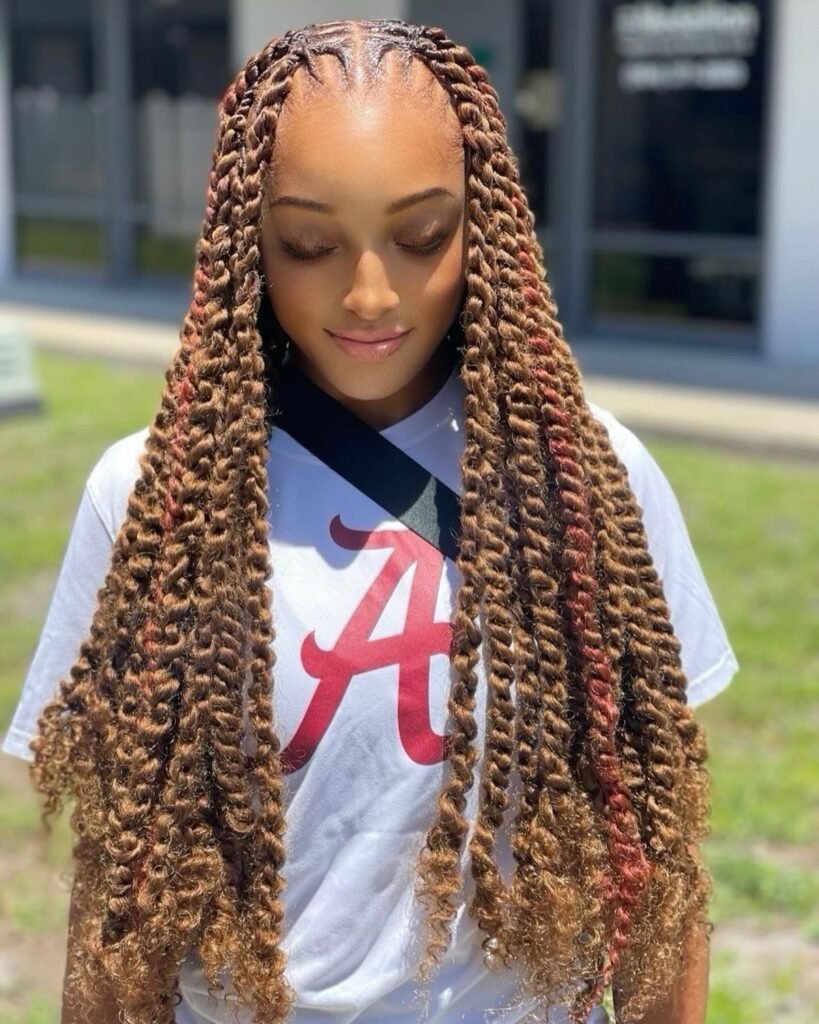
26. Braided Half-Up Style
Braided Half-Up Style gathers the upper portion of the hair into defined braids while leaving the lower section flowing freely. Concentrated braid placement at the crown creates a clear division between the secured upper area and the remaining length. Lower strands preserve a looser silhouette beneath the structured section. Contrast between gathered and released portions gives the hairstyle a distinct two-level shape.
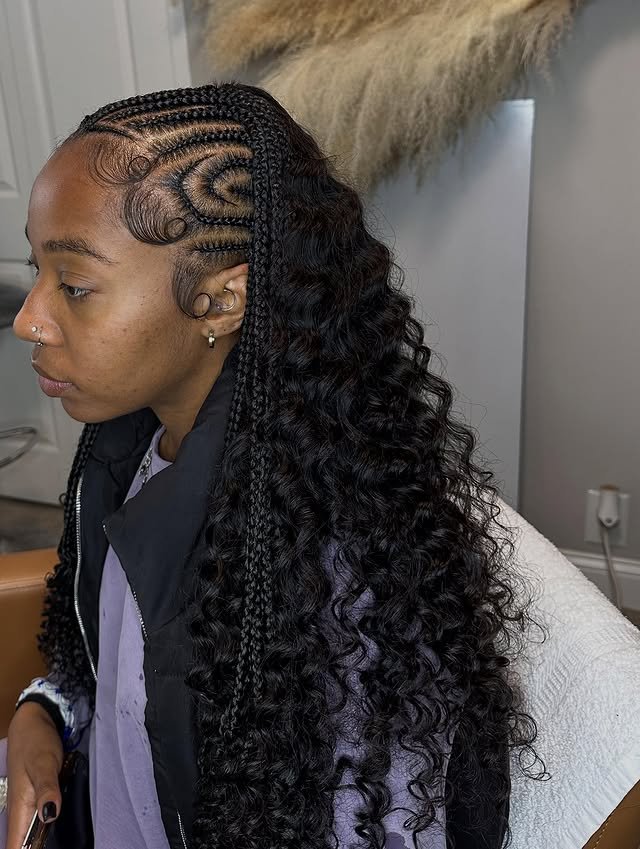
27. Short Tribal Bob Braids
Short Tribal Bob Braids combine intricate tribal braid patterns with a compact bob length around the lower face and neck. Detailed sections across the scalp guide the eye into the shorter braided lengths, where the ends form a contained outline. Varying braid directions give the crown visual complexity without extending the silhouette downward. Cropped proportions keep the overall shape compact while preserving the pattern’s strong definition.
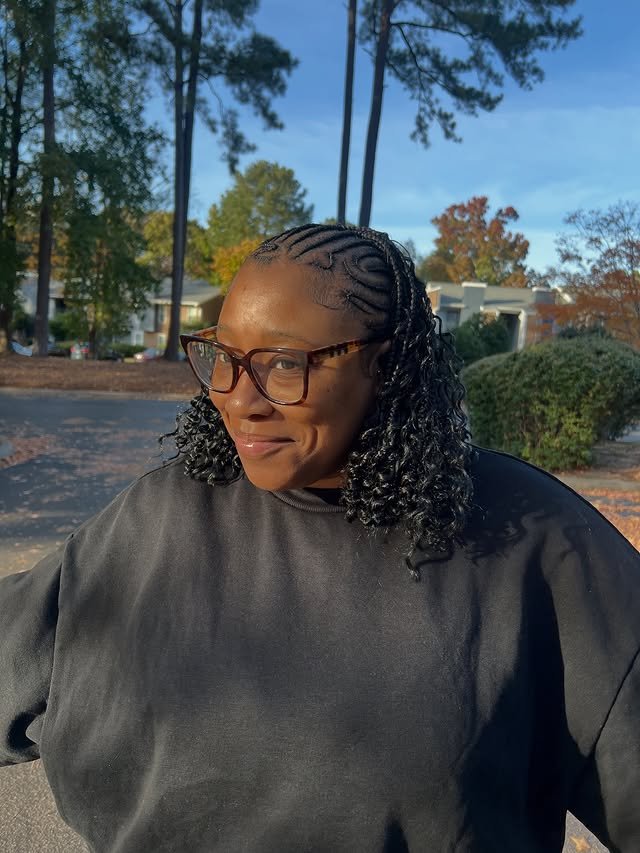
28. Feed-In Ponytail Braids
Feed-In Ponytail Braids gradually build from smaller root sections into longer braids that gather into a ponytail. Progressive thickness creates a smooth visual transition from the scalp toward the fuller lengths. Multiple braid lines converge at the ponytail base, concentrating the direction into one raised or trailing shape. The gathered structure emphasizes length while maintaining clear separation between individual braids.
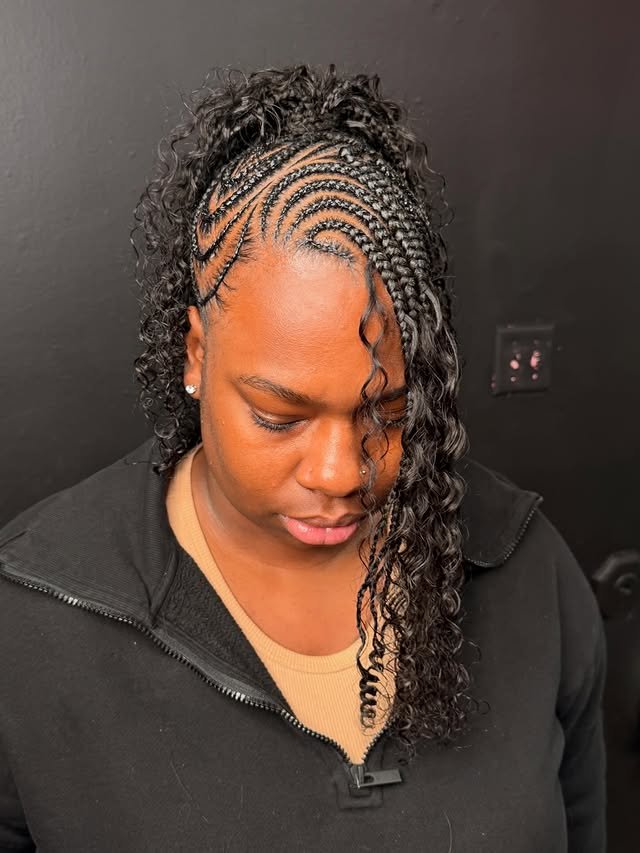
29. Braided Side Bun
Braided Side Bun collects braided lengths toward one side before winding them into a compact bun. Off-center placement shifts the visual weight away from the middle of the head and gives the silhouette a distinct lateral focus. Individual braids remain visible as they curve around the bun rather than disappearing into a smooth surface. Rounded volume at the side contrasts with the directional movement leading into it.
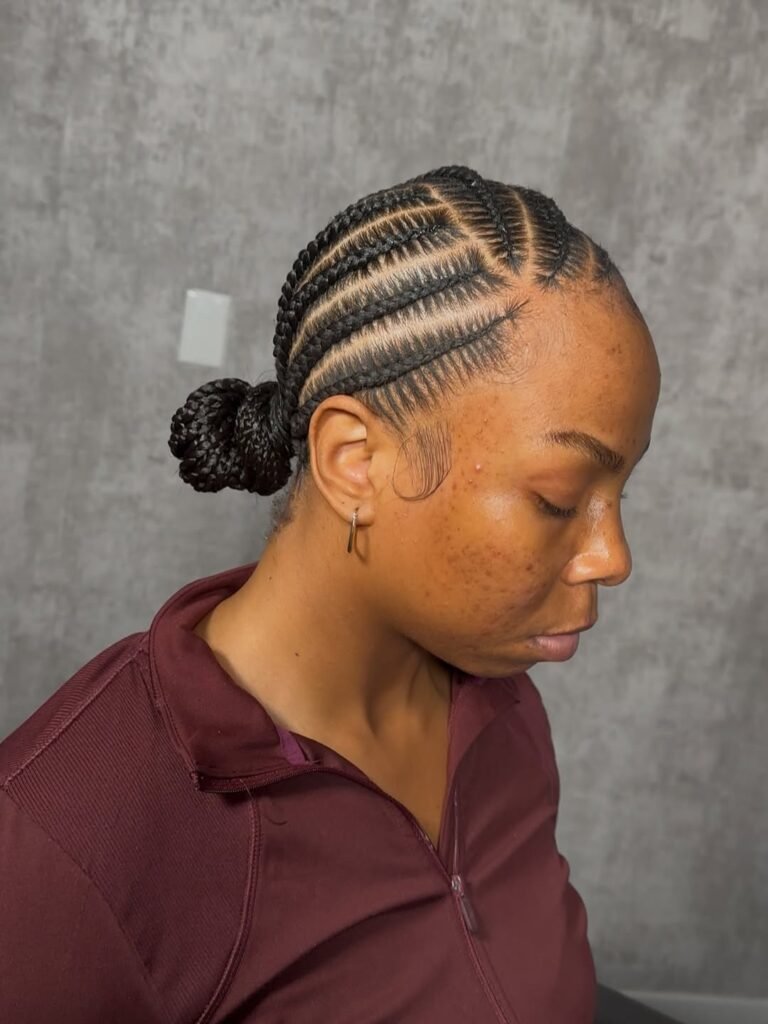
30. Autumn-Tone Accent Braids
Autumn-Tone Accent Braids place warm seasonal tones through selected braid sections rather than across the entire design. Natural-looking braid structure remains visible while isolated colored strands create points of tonal variation within the pattern. Strategic placement keeps the accents separated enough to remain noticeable without overwhelming the braid arrangement. Warm hues distributed through individual sections bring visual dimension to the overall braided silhouette.
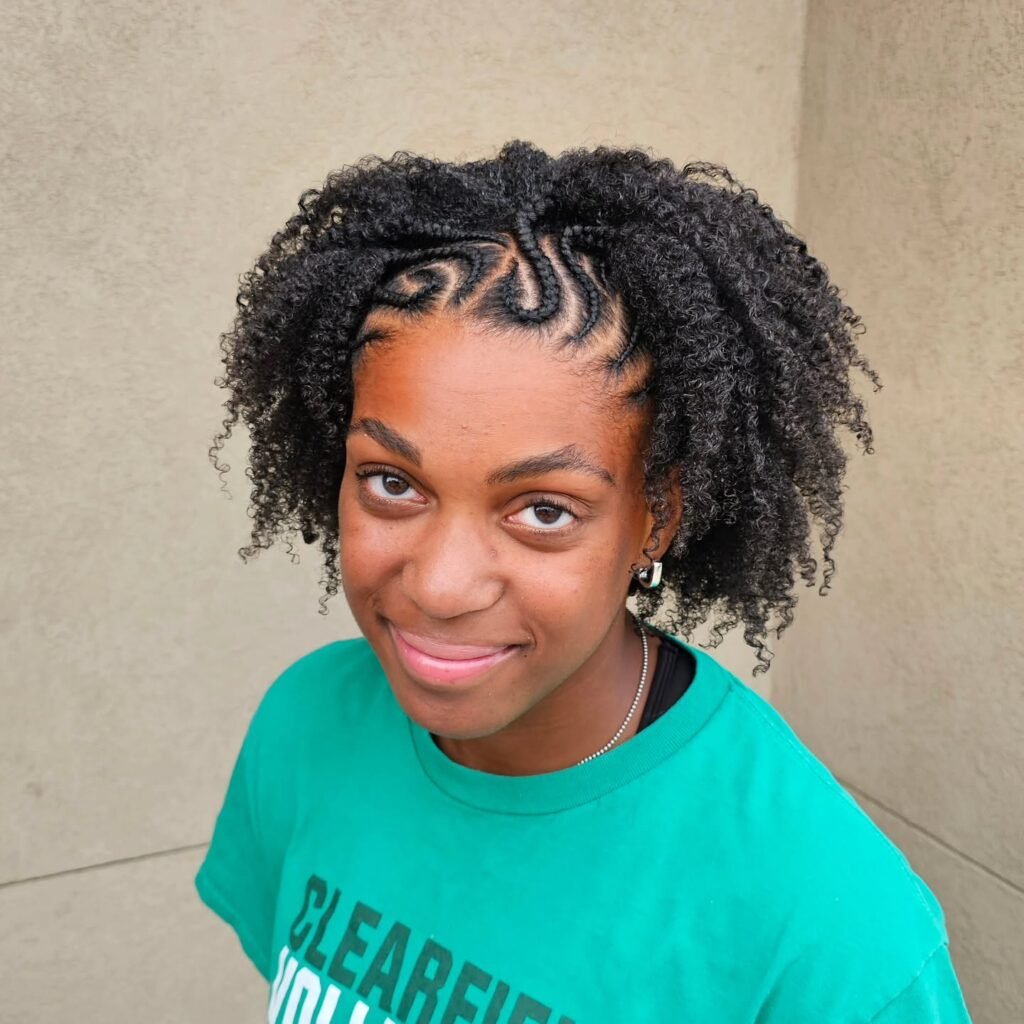
Conclusion
Choosing among fall hairstyles for black women braids comes down to the details that feel most natural for you: braid size, overall shape, texture, length, and the amount of maintenance you genuinely enjoy. A compact braided silhouette can feel very different from long twists or intricate cornrow patterns, even when both rely on similar techniques. Consider how your hair texture responds to the structure, how much time you want to spend maintaining the design, and which proportions feel most like your own. Personal preference becomes the strongest finishing detail when the hairstyle reflects both your texture and your routine.